

LONDON (Realist English). One hundred days after the start of the Middle East war, global energy markets remain in a state of deep turbulence.
The blockade of the Strait of Hormuz, direct exchanges of strikes between Israel and Iran, and uncertainty in negotiations between Washington and Tehran have created a “perfect storm” that analysts compare to the oil crises of the 1970s.
Investors are frozen in wait‑and‑see mode: either diplomacy will prevail and prices will collapse, or the escalation will continue and the barrel will soar into triple digits.
Consolidation with Risk of a Sharp Spike
After falling to a seven‑week low in early June, prices have rebounded but have so far failed to break through the psychological $100 per barrel level.
- On June 9, Brent fell to $90.85–93.77/barrel because of the announcement of a temporary ceasefire between Iran and Israel. However, on June 10, on news of new US strikes on Iran, futures rose 0.9% to $92.29/barrel, while WTI gained 0.8% to $88.97/barrel.
- Over the 100 days of the war, Brent has jumped more than 31% and WTI almost 37%. Prices briefly reached $130 at one point, but current quotes remain below that peak.
- Rystad Energy analysts warn that if the conflict drags on, oil could spike to $150/barrel because of the depletion of world stocks, which are at their lowest since 2003.
- Major banks (J.P. Morgan, Goldman Sachs) have revised their 2026 forecasts to a range of $90–100/barrel, building in a long‑term geopolitical risk premium.
- The EIA’s June report expects Brent to average $95.39/barrel in 2026, falling to $79.39/barrel in 2027. Prices could temporarily jump to $105 as early as June–July of this year.
The Strait of Hormuz – The Main Vulnerability
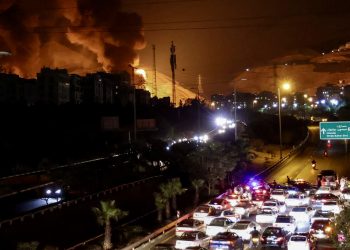
The main driver of oil prices remains the military confrontation in the Persian Gulf, where the world’s most important energy artery is effectively closed.
- Real supply has collapsed. About 11–14 million barrels per day of oil (roughly 14% of pre‑war global supply) are not reaching buyers. More than 160 tankers are stranded, and since February 28 there have been 42 attacks on vessels, with 11 sailors killed.
- The sides are trading blows. On June 8, Iran fired 11 ballistic missiles at northern Israel in response to Israeli strikes on Beirut. On the night of June 10, the US struck Iranian radar stations after, according to Trump, Iranians downed an American Apache helicopter. Iran’s retaliatory strikes hit bases in Kuwait and Bahrain.
- US‑Iran negotiations are at an impasse. Iran demands the release of $24 billion in frozen assets and an end to the Israeli operation in Lebanon (where Israel continues to expand its ground operation), while Washington insists on nuclear concessions. President Trump told the Financial Times that he is the one who decides: “I’m in command here. I give the orders. He (Netanyahu) does not command.”
- OPEC+ is powerless. The alliance formally raised quotas by 188,000 bpd for June, but this has no real effect because about 9 million bpd have been lost because of the war, and members cannot make up the shortfall.
Imbalance and Uncertainty
The demand picture is mixed: fears of a recession in the US and China are holding prices back, while the depletion of stocks is supporting them.
- Demand remains weak. For the first time since the pandemic, the EIA forecasts a contraction in global demand in 2026 by 1.1 million bpd because of high inflation and slowing economies. Growth in China and India does not exceed 0.2 million bpd.
- Stocks are being drawn down quickly. OECD countries are losing roughly 8.5 million bpd in the second quarter. In the US, stocks fell by 9.1 million barrels in the week ending June 5; the total decline over eight weeks was 44 million barrels, and the Strategic Petroleum Reserve (SPR) is at its lowest since 2023.
- Russia is rerouting flows. China and India have increased imports, buying an additional 1 million bpd in May. However, in June, Urals temporarily returned to a discount of $2–3/barrel because of weakening Asian demand, interrupting a period of record premiums of $7–8/barrel in the spring.
Forecasts for the Second Half of 2026
The oil market is frozen, waiting for a trigger. ING analysts warn that stocks will continue to shrink in the third quarter, making the market extremely vulnerable and requiring “significantly higher prices to destroy demand.”
Fitch Ratings, citing the strait’s inability to function normally, has raised its 2026 Brent forecast to $87/barrel from $70; in a worst‑case scenario (at $100/barrel), US growth would slow to 0.8% and eurozone growth to 0.3%.
The EIA believes that even if negotiations succeed, it will take months to restore normal shipments. The coming days will be decisive: either Washington and Tehran find a compromise, or a new wave of escalation will finally push the market into a protracted crisis with prices under $150/barrel.