TEHRAN (Realist English). Oil prices jumped sharply after Iran carried out a massive missile strike on Israeli territory for the first time since the April ceasefire.
The escalation, which occurred on the night of June 8, was a direct response to an Israeli air strike on the southern suburbs of Beirut, where facilities of the Tehran‑backed Hezbollah group are located.
The price of Brent crude surged to $97, completely wiping out investor hopes for a quick end to the conflict and the reopening of the strategic Strait of Hormuz, through which a fifth of the world’s oil passes.
Missile Exchange: From Tel Aviv to Isfahan
On the evening of June 7, the Islamic Revolutionary Guard Corps (IRGC) fired several volleys of ballistic missiles at Israeli territory. According to the Israeli military, three salvos totalling 10–11 missiles were recorded. The Iron Dome and Arrow air defense systems worked effectively — all targets were intercepted, and no casualties or major damage were reported.
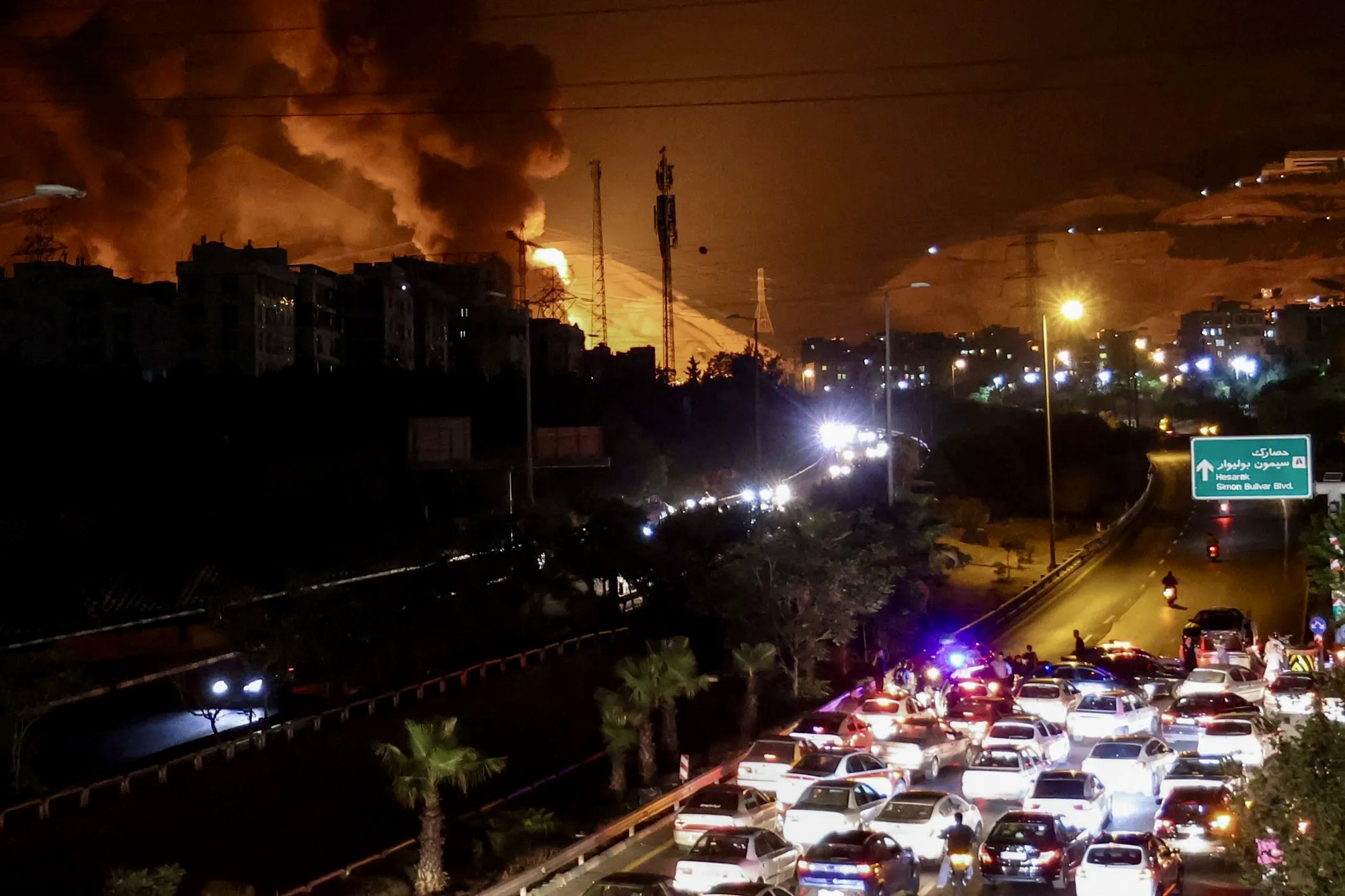
On the morning of June 8, Israel responded: Air Force jets struck about ten military targets in central and western Iran. Explosions were heard in Tehran, Isfahan, Karaj and Tabriz. Iranian state media confirmed the aerial attack.
For the first time since the war began, an energy facility — the Mashhor petrochemical complex in southwestern Iran — was hit, with damage reported by the semi‑official Fars news agency.
Oil Shock: Prices Jump to $97
Global markets reacted immediately. Oil prices rose as Asian trading opened. Peak values on Monday morning were recorded at $96.47–97.33 per barrel for Brent and around $94 per barrel for WTI. In the first hours of trading, Brent gained about 4.4% and WTI about 4.5%.
These spikes erased last week’s price decline, which had been driven by growing hopes for a peace deal between Washington and Tehran. Oil prices have risen more than 50% since the war began on February 28. In March, Brent briefly exceeded $120 per barrel.
The Lebanese Knot: Main Irritant for Iran
Experts point to the resumption of hostilities in Lebanon as a key cause of the current escalation. The day before, Israel struck the southern suburbs of Beirut, which it calls a “Hezbollah stronghold.”
Iran’s leadership directly links a ceasefire on the Lebanese front to the possibility of a peace deal with the United States. Tehran has repeatedly stated that a truce with Washington “unequivocally means a ceasefire on all fronts, including Lebanon.” Israel, by contrast, has officially announced the start of a ground operation in southern Lebanon and demanded that Hezbollah withdraw north of the Litani River.
Fighting in northern Israel has become the factor that the Iranian parliament and IRGC command use as justification for violating the shaky ceasefire established on April 8.
Stalemate and Rising Risk Premium
The latest round of escalation between Iran and Israel has pushed prospects for a peaceful settlement far away. Despite Trump’s unsubstantiated claims that “a deal is close,” markets assess the likelihood of a long‑term ceasefire as extremely low.
Even if an agreement between Washington and Tehran is reached, analysts warn that normalising shipments through the Strait of Hormuz will take months: the waterway must be demined, damaged infrastructure repaired, and oil fields gradually brought back to full capacity.
The loss of physical oil volumes due to the blockade is already irreversible, and OPEC+’s attempts to increase production are being offset by members’ inability to meet quotas in the midst of war and sanctions.
In this situation, the oil market continues to trade in a zone of high uncertainty, and every new clash will add tens of dollars of geopolitical premium to the price of a barrel.