

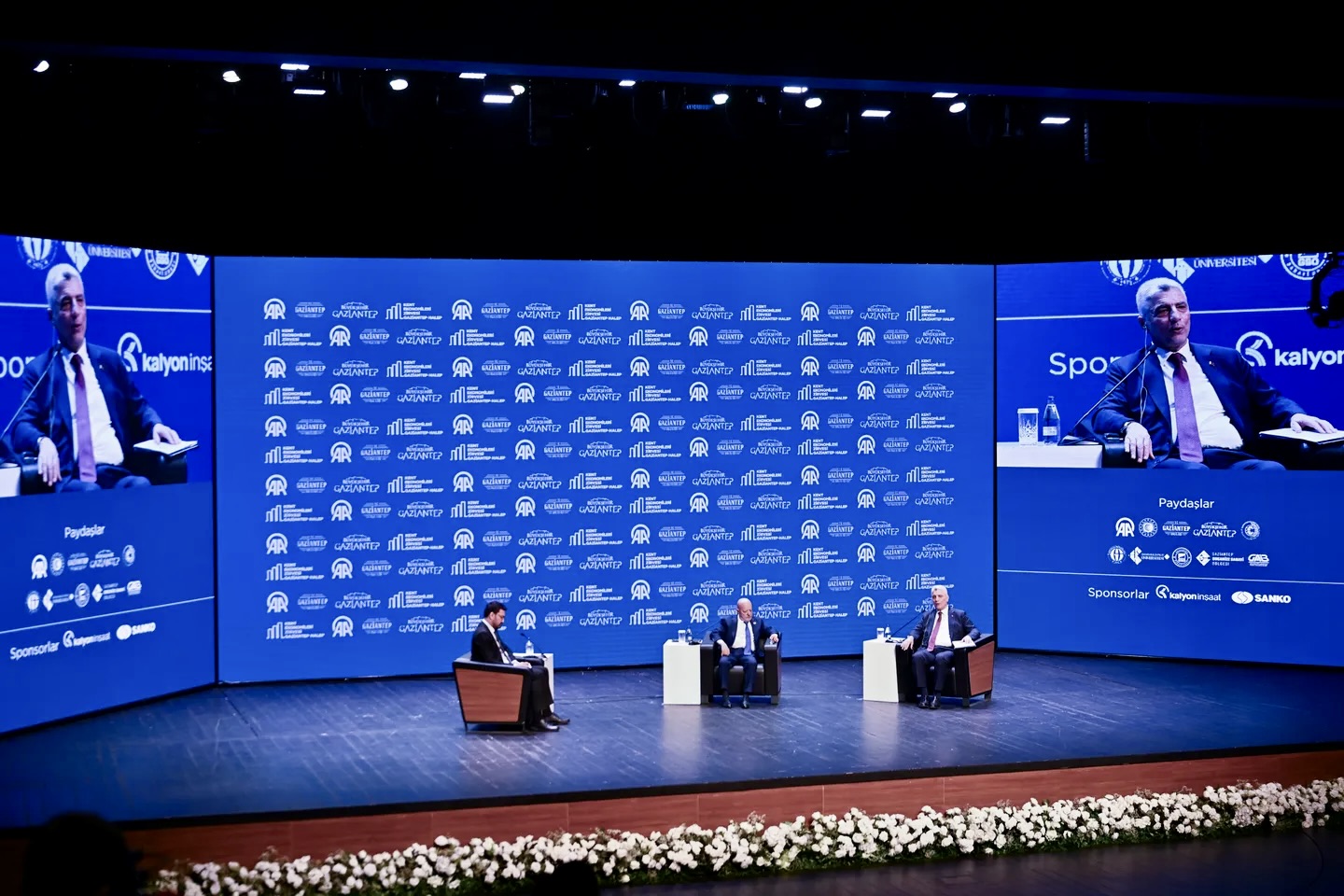
ANKARA (Realist English). Turkey and Syria, on the sidelines of the “Anatolia. City Economies – Gaziantep – Aleppo” summit, have announced wide‑ranging plans for economic integration.
The parties intend over the coming years to increase mutual trade turnover from $3 billion to $10 billion, create joint industrial zones, open Turkish banks in Syria, and turn the border region into a new economic hub in the Middle East.
These decisions became possible after the fall of Bashar al‑Assad’s regime in December 2024 and the subsequent normalisation of bilateral relations.
Strategic Goals: From $3 Billion to $10 Billion
The key outcome of the meeting was the setting of ambitious targets for bilateral trade growth. Turkish Trade Minister Ömer Bolat stated that trade turnover between the two countries has exceeded $3 billion**. Ankara intends to increase this figure to **$5 billion within two years and reach $10 billion by the early 2030s.
According to Bolat, Gaziantep exported $900 million worth of goods to Syria last year and $350 million in the first five months of this year. The Turkish minister stressed that trade relations between the countries have reached a fundamentally new level following the fall of Assad’s regime on December 8, 2024, and the subsequent transition to stability.
Infrastructure Projects: Industrial Zones, Free Zones and Borders
Joint production projects in the border regions are to form the basis of the integration. Minister Bolat said that joint investments are being discussed, as well as preparatory work for the creation of a free zone and a joint industrial zone between Turkey and Syria.
The parties plan to establish organised production and trade zones between Gaziantep and Aleppo. These zones are intended to stimulate investment, create cross‑border production systems and accelerate regional economic integration. According to the Head of the Aleppo Chamber of Commerce, Mohammad Sheikh al‑Qara, joint projects using Turkish technology could be implemented in less than five years, speeding up the country’s recovery.
Turkey’s Ambassador to Damascus, Nuh Yılmaz, recommended that investors pay attention to the Aleppo‑Idlib region, which he called a priority investment zone. According to him, the region has a stable energy supply and a skilled workforce.
Banking and Finance: Turkish Banks in Syria and Currency Printing
As part of strengthening economic ties, Turkey and Syria have reached an agreement allowing Turkish banks to open branches in Syria. According to Minister Bolat, the central banks of the two countries are continuing mutual consultations, and work is under way to amend Syria’s banking legislation. In addition, the printing of the Syrian national currency is being discussed.
Syrian Minister of Economy and Industry Mohammad Nidal al‑Shaar called this step a priority and noted that millions of Syrians living in Turkey are already accustomed to its advanced banking system.
Transport and Logistics: Corridors and Border Crossings
Turkey plans to open several key border crossings in the near future to boost bilateral trade. Minister Bolat said Ankara is fully ready to open the Islahiye customs gate between Gaziantep and Syria. The opening of a customs gate between Nusaybin and Qamishli is also under discussion. Ambassador Yılmaz noted that the resumption of air traffic and the modernisation of border crossings are already contributing to trade growth.
The Turkish minister separately stressed the importance of the Turkey – Syria – Jordan – Saudi Arabia transit corridor, which, he said, has become critically important for regional trade in light of recent events in the Gulf. Bolat said that this corridor has been operating continuously and successfully since April 15. Syria, in turn, is viewed as a strategic logistics corridor linking Turkey to the Middle East and the Gulf states, while Turkey is seen as Syria’s “gateway” to world markets and Europe.
Political Support and Positions of the Parties
Turkish Foreign Minister Hakan Fidan previously stated that Ankara is coordinating with Azerbaijan on normalising relations with Armenia, but on Syria, Ankara is acting independently. Turkey, according to Bolat, has provided and continues to provide strong support to Syria in securing its political and territorial integrity.
Minister al‑Shaar called Turkey a “natural partner” for Syria, emphasising that the two countries’ relations serve as a source of confidence amid regional instability. “We share a common fate with Turkey,” he declared. The Syrian minister also said that the country is reviewing laws on trade, investment, banking and industry. According to him, once parliament becomes operational, new laws and regulations are expected to be introduced to support economic reforms.
Al‑Shaar noted a significant revival in Syria’s industrial sector: more than 15,000 factories have resumed work, about 1,200 new production lines have been created, and hundreds of plants are still under construction. Turkish businessmen play an important role in industrial investment, especially in the Hama region. “Syria is ready. Our country is your country too. Please come,” he said to Turkish investors. He stressed that opening border crossings and speeding up transit procedures are key to improving trade and facilitating movement between the two countries.
The economic integration plans agreed at the Gaziantep summit mark a turning point in relations between Turkey and Syria, which were severed more than a decade ago.