Realist: news and analytics

Русский / English / العربية

  • News
  • Russia
  • Caucasus
  • Opinion
  • Interviews
  • Experts
No Result
View All Result
Realist: news and analytics
  • News
  • Russia
  • Caucasus
  • Opinion
  • Interviews
  • Experts
No Result
View All Result
Realist: news and analytics

China escalates pressure on Japan after Taiwan remarks, but holds back its rare-earths weapon

Beijing opts for calibrated retaliation as U.S. watches closely and risks of global backlash rise.

   
November 21, 2025, 06:47
World
India investigates toxic cough syrup deaths as probe focuses on solvent contamination and regulatory failures

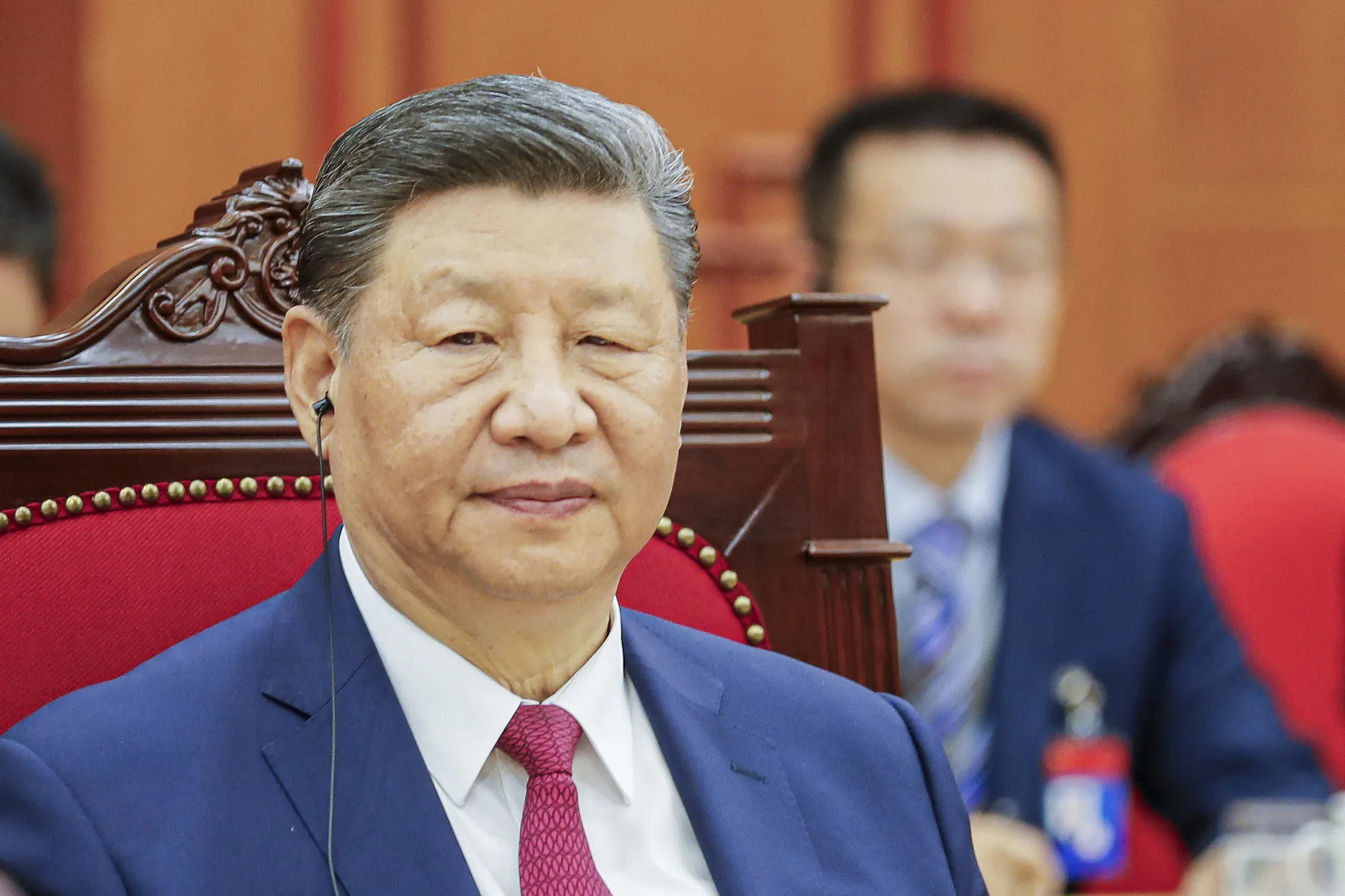
TOKYO (Realist English). China has rolled out a familiar set of economic countermeasures against Japan following Prime Minister Sanae Takaichi’s comments linking a potential Taiwan conflict to Japan’s national security — but has so far avoided the most powerful tool in its arsenal: restrictions on rare-earth exports.

Beijing has warned Chinese tourists against travelling to Japan, paused the phased resumption of Japanese seafood imports, and seen a wave of cancellations of Japanese cultural events on the mainland. Yet analysts say China is unlikely to reprise the rare-earth embargo it used in 2010, despite Tokyo’s heavy dependence on Chinese supplies of the critical minerals used in electric vehicles, smartphones and defence systems.

Former U.S. officials and China specialists note that Beijing’s calculation today is very different from 15 years ago. China now dominates rare-earth mining and processing globally, and recent disputes — not only with Japan but with Europe and the U.S. — have heightened concerns that Beijing could weaponise supply chains.

A dramatic move against Japan, they say, would risk accelerating global diversification efforts, undermine China’s claim that export controls are “non-discriminatory,” and jeopardise the fragile trade détente reached last month between President Donald Trump and Xi Jinping in South Korea.

Washington has openly signalled support for Japan in the dispute, with U.S. Ambassador to Tokyo George Glass saying the United States “has Prime Minister Takaichi’s back.”

Why Beijing is being cautious

Several analysts told Bloomberg that using rare earths as a retaliatory tool now carries higher strategic costs:

• It could alienate trading partners already seeking to reduce reliance on China.
• It could trigger coordinated responses with the U.S. and Europe.
• It would contradict Xi’s recent commitment to Trump to stabilise rare-earth exports “for the world.”

“Using the rare-earths card would be risky,” said Wendy Cutler, former U.S. trade negotiator. “Other partners would view it as confirmation that they must accelerate alternative supply chains — likely in cooperation with the United States.”

Beijing appears instead to be opting for pressure that hurts Japan economically but avoids global alarm. Its travel warnings, seafood restrictions and cancellations of Japanese performances mirror tactics used during previous disputes, including against South Korea during the 2016 THAAD missile-defence controversy.

Japan’s vulnerabilities — and greater resilience since 2010

Japan remains heavily reliant on China for rare earths — around 70% of imports this year, up from 60% a few years ago. But Tokyo has spent more than a decade building buffers after the 2010 crisis, when China briefly halted exports amid a territorial dispute over the Senkaku/Diaoyu islands.

Japan has since:

• built strategic stockpiles of rare earths,
• diversified suppliers — including major imports from Australia’s Lynas Rare Earths,
• invested in domestic and Southeast Asian processing capacity.

Analysts say this makes Japan more resilient than most advanced economies to supply disruptions, though not immune to prolonged pressure.

What escalation could look like

If China intensifies retaliation, experts expect measures short of a formal embargo, such as:

• regulatory slowdowns and “paperwork pressure” on exporters,
• quiet guidance to suppliers to reduce volumes to Japanese buyers,
• further restrictions on tourism and imports,
• pressure on Japanese firms operating in China — from automakers to retail chains.

Japanese companies including Toyota, Uniqlo, and leading convenience-store operators could face scrutiny similar to what South Korean firms experienced in 2017, when Chinese retaliation caused Korean car sales in China to collapse almost overnight.

A dispute with no easy off-ramp

Takaichi’s remarks — describing a Chinese attack on Taiwan as a “survival-threatening situation” for Japan — struck at one of Beijing’s most sensitive red lines. Chinese officials continue to demand a retraction; Tokyo insists its policy has not changed.

Analysts say neither side can easily back down, and tensions are likely to persist for months.

Beijing, meanwhile, appears determined to push Tokyo without triggering the kind of global counter-reaction that a rare-earths shock would almost certainly unleash.

As Allen Carlson of Cornell University noted: “The more China exercises this kind of leverage, the more other countries will ask: if they can do this to Japan, why not us?”
AsiaChinaChina-Japan RelationsChina’s Foreign PolicyJapanJapan’s Foreign PolicyMost Popular
Previous Post

India investigates toxic cough syrup deaths as probe focuses on solvent contamination and regulatory failures

Next Post

Russia’s parliament approves 2026 federal budget with expanded social spending and higher support for war veterans

Related Posts

Tech giants pledge hundreds of billions for India’s AI expansion
World

Saudi academic’s criticism of UAE–Israel ties exposes deeper Gulf tensions

22 February, 2026
Zaluzhnyi breaks silence on rift with Zelenskyy as political speculation grows
World

US envoy says Trump team has “woken up” Europe on security and migration

19 February, 2026
Zaluzhnyi breaks silence on rift with Zelenskyy as political speculation grows
World

White House urges Iran to strike deal as Trump again signals possible military action

19 February, 2026
U.S. envoy cites “substantial progress” after first day of Ukraine talks in Geneva
World

U.S. envoy cites “substantial progress” after first day of Ukraine talks in Geneva

18 February, 2026
Macron moves to shield French institutions ahead of 2027 election
World

Macron moves to shield French institutions ahead of 2027 election

17 February, 2026
US and China strike cautious tone at Munich Security Conference
World

US and China strike cautious tone at Munich Security Conference

15 February, 2026
Most Popular
Most Popular
Adolf Shayevich: Bringing Jews Back to Judaism Is Our Goal

Adolf Shayevich: Bringing Jews Back to Judaism Is Our Goal

23 February, 2026

MOSCOW (Realist English). Adolf Shayevich, the Chief Rabbi of the USSR and Russia (according to KEROOR), whose biography uniquely bridges the...

Putin signs law expanding telecom operators’ obligations at FSB request

Trump unveils new 10% global tariff after Supreme Court curbs emergency powers

21 February, 2026

WASHINGTON (Realist English). U.S. President Donald Trump said he would immediately impose a new 10% global tariff and pursue alternative...

Shoigu warns Armenia against replacing Russian railway operator

Shoigu warns Armenia against replacing Russian railway operator

19 February, 2026

MOSCOW (Realist English). Russia’s Security Council Secretary Sergei Shoigu warned that Armenia’s reported plans to replace Russia in managing the...

Zaluzhnyi breaks silence on rift with Zelenskyy as political speculation grows

White House urges Iran to strike deal as Trump again signals possible military action

19 February, 2026

WASHINGTON (Realist English). The White House on Wednesday warned that Iran would be “wise” to reach an agreement with the...

Opinion

Star Wars without fiction: how space became the next battlefield

Star Wars without fiction: how space became the next battlefield

27 January, 2026

MOSCOW (Realist English). “Star Wars” stopped being science fiction long ago. Unfortunately, over ten thousand years of civilisation, humanity has...

Armenian monastery Dadivank

Dadivank: The Legacy of Christ’s Apostles in Artsakh

17 December, 2025

YEREVAN (Realist English). In Artsakh, before the ethnic cleansing and forced deportation – simply put, genocide – carried out by...

An unusual phenomenon at the Church of the Holy Savior in Shushi

An unusual phenomenon at the Church of the Holy Savior in Shushi

3 November, 2025

YEREVAN (Realist English). In the distant year 1979, as a third-year university student, I used to visit the Church of...

War with Iran seen as inevitable, Armenia warned of looming regional storm

War with Iran seen as inevitable, Armenia warned of looming regional storm

21 September, 2025

YEREVAN (Realist English). The war with Iran is drawing ever closer. And once again, this pulls Armenia into a zone...

All rights reserved.

© 2017-2026

  • About Us
  • Mission and Values
  • Contact Us
  • Privacy Policy

Follow Realist English

No Result
View All Result
  • News
  • Russia
  • Caucasus
  • Opinion
  • Interviews
  • Experts

Русский / English / العربية