

MOSCOW (Realist English). Doctor of Political Sciences, State Counselor of the Russian Federation First Class Tatiana Poloskova, in an authorial column for Realist English, analyzes China’s foreign policy strategy, comparing it to the game of Go — a “double underground game.” According to her, Beijing masterfully uses investments, bribery and blackmail to expand its influence, while perceiving Russia merely as a tool to contain the United States, not shying away from intelligence activities and economic expansion in Russian regions, including Crimea.
China has its own geopolitical chessboard, where the rules do not always coincide with those described by Zbigniew Brzezinski in his famous book. The Chinese rules of the game on the Great Chessboard more closely resemble the game of Go, which German writer Günter Karau dubbed the “double underground game.”
Most countries declare the priority of protecting and promoting national interests in foreign policy. But, perhaps, only China has masterfully learned to use the potential of political and business circles and influential figures from other countries to expand its political influence and, above all, the investment presence of Chinese corporations. This is often done under the slogans of friendship, mutual interests, or through outright bribery, sometimes even blackmail.
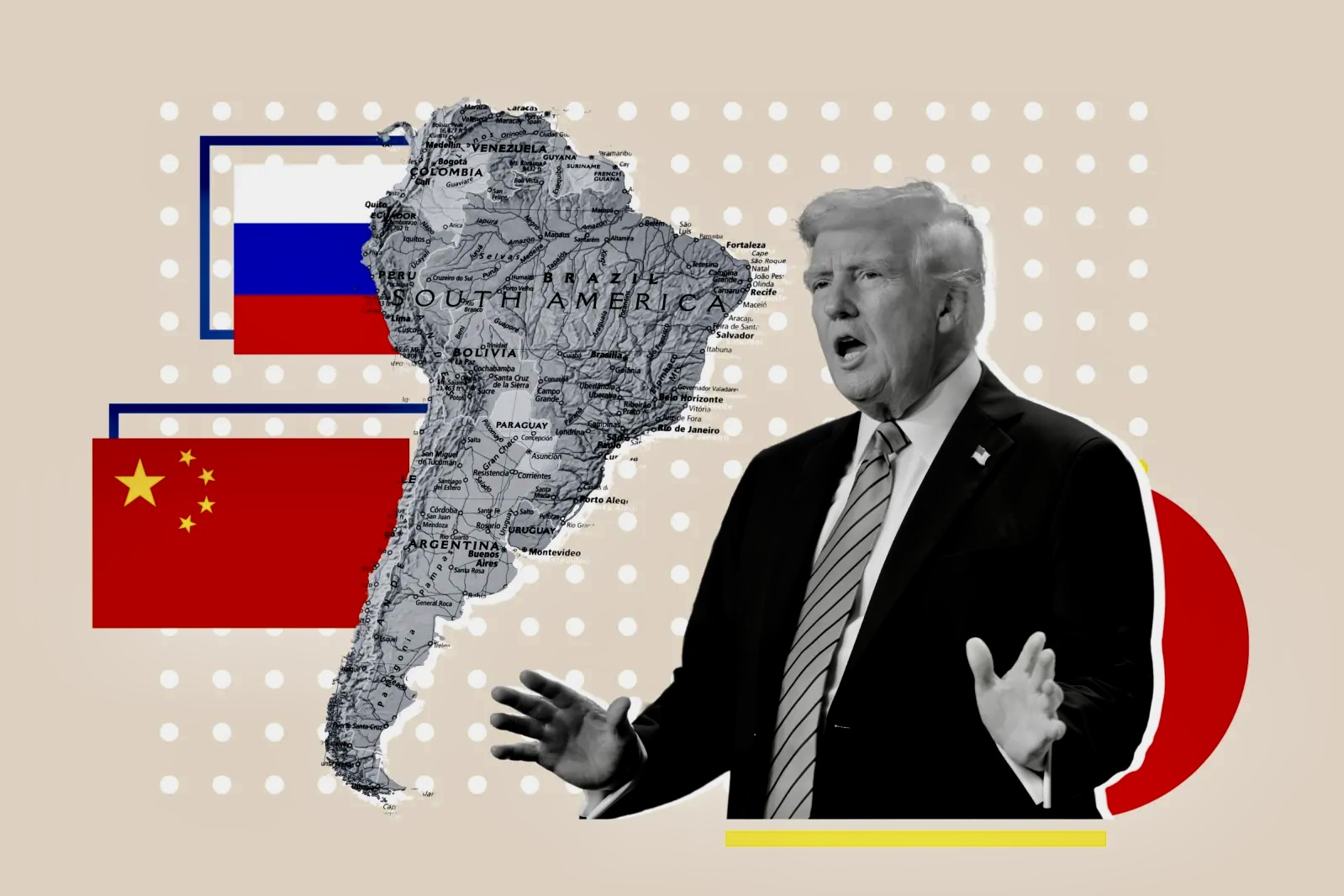
Any stories are suitable to justify active presence in other countries. The fight against capitalist values — although there are no more elements of socialism in modern China than in Sweden. Also popular is the theme of fighting American hegemony, especially actively played out in Latin American countries. In recent years, China, like an octopus, has entangled many countries in a network of investment projects. This is presented as help and care for the population. But it looks more like strangulation in an embrace. First investments, and then the object of aid finds itself in real dependence on its Chinese benefactor. And now even the recognized leftist leader and friend of China, Brazilian President Lula da Silva, states, whether jokingly or seriously, that Beijing has “occupied” his country with its investments.
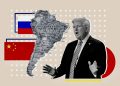
It is precisely the desire to reduce, and if possible minimize, China’s activity in Latin America that explains Donald Trump’s actions in the former US backyard. For the real competitor of the United States in Central and South America today is not Russia, but China. True, Trump does not intend to quarrel with the PRC and the Chinese diaspora. Chinese business is the main taxpayer in the States. China and the US are long-time trading partners. Trump, being a player by nature and a pragmatic businessman by vocation, is playing his own game with China. And this game is not on the honest battlefield and intellectual chessboard, but precisely a “double underground game.”
Long experience of cooperation with Chinese colleagues, both from expert and business circles, and trips to different regions of this truly Great country have convinced me of the truth of a long-known truth: “China has no friends, only temporary allies. China works only for China.” All of China’s foreign policy is aimed at creating favorable conditions for the advancement of Chinese corporations. By the way, the Chinese diaspora is also such a giant corporation, thanks to whose potential and injections into China’s economy, considerable success has been achieved.
Now the Chinese colleagues, having somewhat recovered from the loss of their multi-billion dollar investments in Venezuela’s oil industry, are bombarding with questions, including me: will Russia help them protect their investments in Cuba? And here, in more detail, so that it is clear why, in fact, we are needed by China.
First, we are perceived as an ally in the fight against US imperialist pretensions.
Second, taking advantage of the not-so-good state of our economy now and the difficulties in the social sphere (for obvious reasons), the Chinese are increasing investment activity in various regions of Russia, giving preference to the metallurgical sector, logistics facilities, and recreational and health complexes. By the way, Crimea is no exception. What about sanctions? China enters Crimea through affiliated Russian companies, like other foreign firms, including Ukrainian ones.
Third, China is conducting active intelligence work in Russia. We regularly read in the media about the exposure of Chinese agents from among recruited Russians. But it is not so easy to identify all those who have fallen into the tender hands of Chinese James Bonds. The principle of operation of Chinese intelligence services is to collect a small amount of necessary information by a large number of different people. To form a pool of agents of influence, China widely uses scientific exchanges, training and internships at universities, and business missions.
As for our great friendship with China in third countries, as one Russian expert noted a year ago, before the figurative “arrival of Trump in Caracas”: Venezuela was then a Chinese oil fortress in the American “backyard.” China’s CCRC, for example, planned to invest more than $1 billion in the development of Venezuelan fields in 2025 alone. And in total, tens of billions of dollars were invested, including in the development of oil fields in the Orinoco and the purification of heavy oil with Chinese inhibitors. And the roles were distributed as follows: “China pays (and earns), Russia scares.” The last function did not work out. It didn’t work to scare.
Now Beijing is trying to negotiate with Washington and bargain for at least something from the Venezuelan oil industry. At least get something back from the multi-billion dollar investments. And Trump cheerfully reports that oil supplies from Venezuela to the United States have increased by more than 102 percent over the past month.
When the kidnapping of the century took place, with the delivery of Nicolas Maduro and his wife (by the way, a very intelligent and worthy lady) to the United States, Chinese colleagues nervously asked: will Russia send troops to Venezuela to protect their stores? Very little of ours remains there. Now the same story with Cuba – will Russia help Cuba militarily to defend itself against Trump? At the same time, our brothers from the Celestial Empire forget that times have changed. On the Island of Freedom, the majority of the population does not have anti-American sentiments. These are not empty words: I have been to Cuba more than twenty times, visited all its regions, met with different social strata. The revolutionary spirit among the young and middle generation is hardly noticeable. Although my peers rightly note that the Northern neighbor will not simply share chicken legs.
On Cuba, the Chinese presence is many times more noticeable than ours, and personally, I see no reason for Russian Ivan to defend Chinese business on the Island of Freedom with weapons in hand. By the way, data on the amount of investment from the Celestial Empire in Cuba is classified. But it is also measured in billions. And I do not think it will come to military action on the part of the United States, but Cuba is on the threshold of big changes. And we will see them soon.
China is playing its game in the Go format, it is not familiar to us. But that does not mean that we should not cooperate with China. It is our big neighbor. And we are destined to coexist together. Only we must do this without illusions, firmly defending Russian interests and playing a skillful game. And for this, professionals and statesmen are needed.
Tatiana Poloskova — Doctor of Political Sciences, State Counselor of the Russian Federation First Class, exclusively for Realist English