Realist: news and analytics

Русский / English / العربية

  • News
  • Russia
  • Caucasus
  • Opinion
  • Interviews
  • Experts
No Result
View All Result
Realist: news and analytics
  • News
  • Russia
  • Caucasus
  • Opinion
  • Interviews
  • Experts
No Result
View All Result
Realist: news and analytics

General Petraeus: Some NATO countries let the US down in the Iran war, Spain outright refused bases

NATO should have been more accommodating, and Iran’s control of the Strait of Hormuz could turn into a “Panama Canal” for Tehran, believes the former commander of alliance forces in Europe.

     
April 10, 2026, 13:19
Security & Defense
General Petraeus: Some NATO countries let the US down in the Iran war, Spain outright refused bases

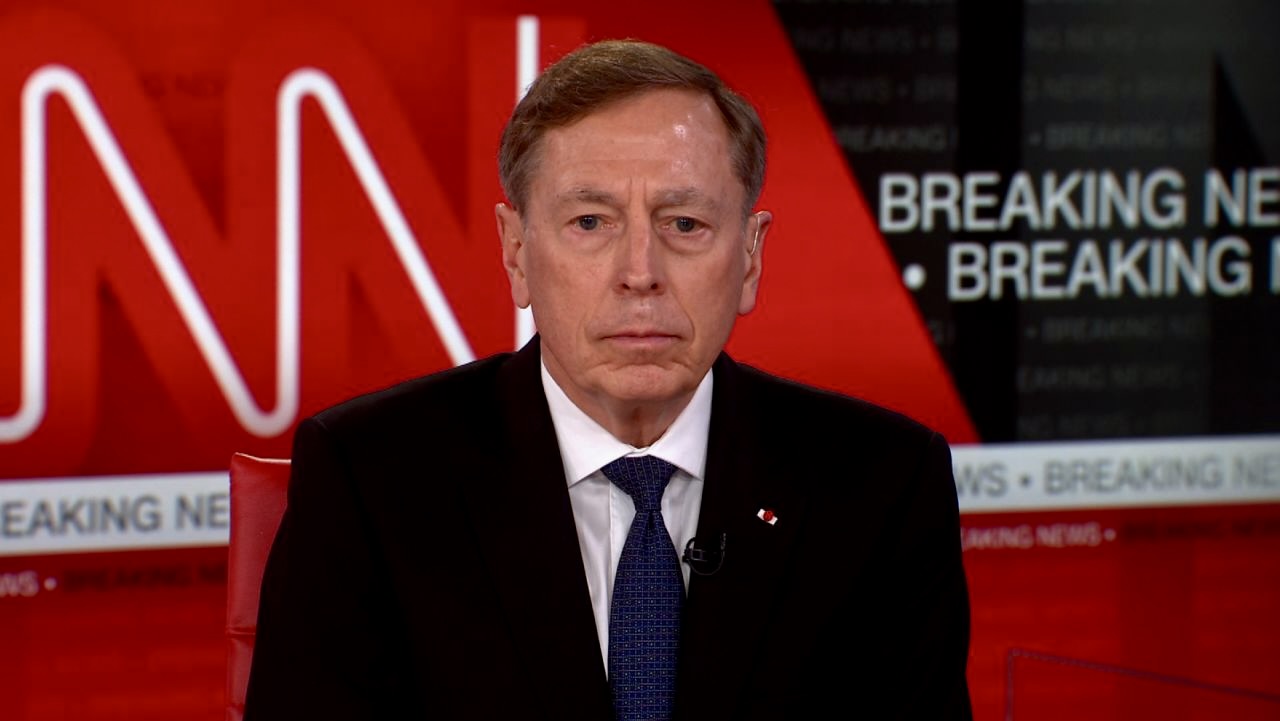
David Petraeus. Photo: CNN

NEW YORK (Realist English). In an interview with CNN published on April 9, former CIA director and commander of international forces in Afghanistan, General David Petraeus, spoke about the crisis in NATO during the war with Iran, the military results of the operation, and the main threat — control over the Strait of Hormuz.

NATO is the greatest alliance in history, but it has limits

Answering the host’s question about whether the alliance has been irreparably damaged, Petraeus expressed hope that it has not.

“I believe NATO is the most important alliance in history. It has proven itself repeatedly, but it does have limits, particularly when it comes to so-called out-of-area operations, which this one was,” the general stated.

He emphasized that he understands President Trump’s perspective and noted that NATO Secretary General Mark Rutte (whom Petraeus knows as a “very skilled and diplomatic leader”) also agrees with the White House chief’s concerns.

At the same time, according to Petraeus, Rutte recognizes the need to preserve the alliance.

“It is hugely important. It is performing magnificently in supporting our Ukrainian partners who are fighting a common enemy — Russia,” the general added.

“I wish individual NATO countries had been more forthcoming.” 

The host asked whether Petraeus thinks Trump was right to expect direct NATO military participation in the war with Iran. The general answered no, but clarified: “I am saying that individual NATO countries — I wish they had been more forthcoming. Many of them tried to thread a needle, saying they could provide their bases only for defensive purposes and so forth. In the end, they did make their bases available, with the exception of Spain. And that is an issue that will have to be dealt with down the road.”

Petraeus stressed that the US is fighting an enemy that threatens not only Gulf countries but also European states, citing Turkey and the United Kingdom (regarding Cyprus).

“I wish they had been more supportive without necessarily committing to the operations we were directly conducting against Iran. By the way, some of them have very important mine-sweeping capabilities, particularly the UK. And if we get into that down the road, it would be really helpful if they would commit to being part of whatever maritime coalition is necessary to ensure the Strait of Hormuz is safe for transiting vessels,” the general said.

“Our military performed magnificently, but Iran may emerge from the war strategically strengthened.” 

Commenting on the statement by Joint Chiefs Chairman General Dan Caine that three military objectives had been achieved (destroying Iran’s missile and drone capabilities, destroying the Iranian navy, and destroying its defense industrial base), Petraeus praised the performance of American forces.

“I think our military men and women performed magnificently. I do believe strongly that General Caine has been a sober and forthright voice in addressing the country, explaining what we sought to do and what we have achieved. I think we have largely achieved the three objectives he set out. ‘Destruction’ implies perhaps a bit more than what we have achieved regarding launchers, stockpiles and manufacturing facilities, but I think we are very close to that,” Petraeus said.

However, he pointed to a paradox: “The question is whether Iran will emerge from this militarily very weakened. There is no question that all of their capabilities have been degraded. Their navy is basically on the bottom of the Gulf at this point. Their other assets are dramatically degraded or destroyed. But could they somehow, paradoxically, emerge from this militarily weakened, but perhaps actually strategically strengthened?”.

In Petraeus’s view, the answer depends on the final resolution regarding control of the Strait of Hormuz.

“If Iran gains control of the strait, it will become its Panama Canal.” 

The general explained: “You can argue they don’t control it. But actually, just by disrupting traffic, they do, because the measure of merit for ship owners and cargo owners is not about risk insurance — it’s about the lives of their crew members. They need absolute confidence that their ships will not be struck in order to begin clearing out the roughly 700 vessels inside the Gulf and even more outside.”

That is why, he said, the current fragile ceasefire and upcoming talks (set to begin on April 11) must include a “real deal” on the Strait of Hormuz.

“Control of the strait — if it becomes Iran’s Panama Canal and they can issue tolls… I mean, if it’s $2 million per vessel (and reportedly some companies have been paying that much to transit), and you multiply that by 100 or more ships a day, that is a very substantial amount of hard currency that would enable Iran to repair the extraordinary damage inflicted on its infrastructure,” Petraeus warned.
David PetraeusIran’s Foreign PolicyNATOPentagonUS Foreign PolicyUS-EU RelationsUS-Iran Relations
Previous Post

China’s Game of Go without rules: How the Celestial Empire “strangles in its embrace” the countries of Latin America and expands its influence in Russia

Next Post

“Iran deceived its own citizens”: Pakistani officials claim Tehran published a false version of the agreement

Related Posts

Poland demands guarantees for keeping US troops in Europe
Security & Defense

Poland demands guarantees for keeping US troops in Europe

19 May, 2026
Sudan becomes battlefield of regional powers: Iranian drones, Islamist brigades and stalled talks
Security & Defense

Sudan becomes battlefield of regional powers: Iranian drones, Islamist brigades and stalled talks

18 May, 2026
Israel prepares for new war with Iran – from bombing to commando landings
Security & Defense

Israel prepares for new war with Iran – from bombing to commando landings

17 May, 2026
Pentagon cancels deployment of 4,000 troops to Europe
Security & Defense

Pentagon cancels deployment of 4,000 troops to Europe

16 May, 2026
Iran’s military power significantly degraded but threat not eliminated, US Central Command says
Security & Defense

Iran’s military power significantly degraded but threat not eliminated, US Central Command says

15 May, 2026
Israel to Increase Range of F-35I “Adir” Amid War with Iran
Security & Defense

Israel to Increase Range of F-35I “Adir” Amid War with Iran

14 May, 2026
Most Popular
Most Popular
“Restrictions Alone Are Not Enough — Children Need to Be Engaged”: Paata Amonashvili on Meaningful Alternatives to Gadgets

“Restrictions Alone Are Not Enough — Children Need to Be Engaged”: Paata Amonashvili on Meaningful Alternatives to Gadgets

18 May, 2026

TBILISI (Realist English). Restrictions alone are not enough to overcome children’s dependence on gadgets — children must be offered meaningful...

US and Iran fail to reach Hormuz deal as Trump threatens new strikes

US and Iran fail to reach Hormuz deal as Trump threatens new strikes

18 May, 2026

WASHINGTON (Realist English). The United States and Iran remain far from reaching an agreement to end the war and reopen...

Israel prepares for new war with Iran – from bombing to commando landings

Israel prepares for new war with Iran – from bombing to commando landings

17 May, 2026

TEL AVIV (Realist English). With US‑Iran talks deadlocked, the Israeli leadership has stepped up preparations for a resumption of full‑scale hostilities....

Raúl Castro remains Cuba’s “shadow king”

Raúl Castro remains Cuba’s “shadow king”

17 May, 2026

HAVANA (Realist English). From the very moment in April 2021 when legendary General Raúl Castro, brother of the great Fidel, handed...

Opinion

Replacing Baathists with Islamists: why Kurds and other minorities in Syria have not seen equality

Replacing Baathists with Islamists: why Kurds and other minorities in Syria have not seen equality

19 May, 2026

HASAKAH (Realist English). The overthrow of Bashar al‑Assad and the rise to power in Damascus of radical Islamist groups has not...

Russia seeks its place in China’s new transport corridor

Russia seeks its place in China’s new transport corridor

17 May, 2026

MOSCOW (Realist English). Ahead of Russian President Vladimir Putin’s official visit to Beijing, experts are increasingly discussing the hidden contradictions...

From Hormuz to Solar Panels: How Iran Accelerated the Global Shift to Renewables

From Hormuz to Solar Panels: How Iran Accelerated the Global Shift to Renewables

16 May, 2026

WASHINGTON (Realist English). An analytical article by Benjamin Bradlow, professor of sociology and international affairs at Princeton University, published in...

China No Longer Seeks U.S. Approval

China No Longer Seeks U.S. Approval

15 May, 2026

BEIJING (Realist English). U.S. President Donald Trump’s visit to China on May 14–15 passed with surprising calm and almost none...

All rights reserved.

© 2017-2026

  • About Us
  • Mission and Values
  • Contact Us
  • Privacy Policy

Follow Realist English

No Result
View All Result
  • News
  • Russia
  • Caucasus
  • Opinion
  • Interviews
  • Experts

Русский / English / العربية