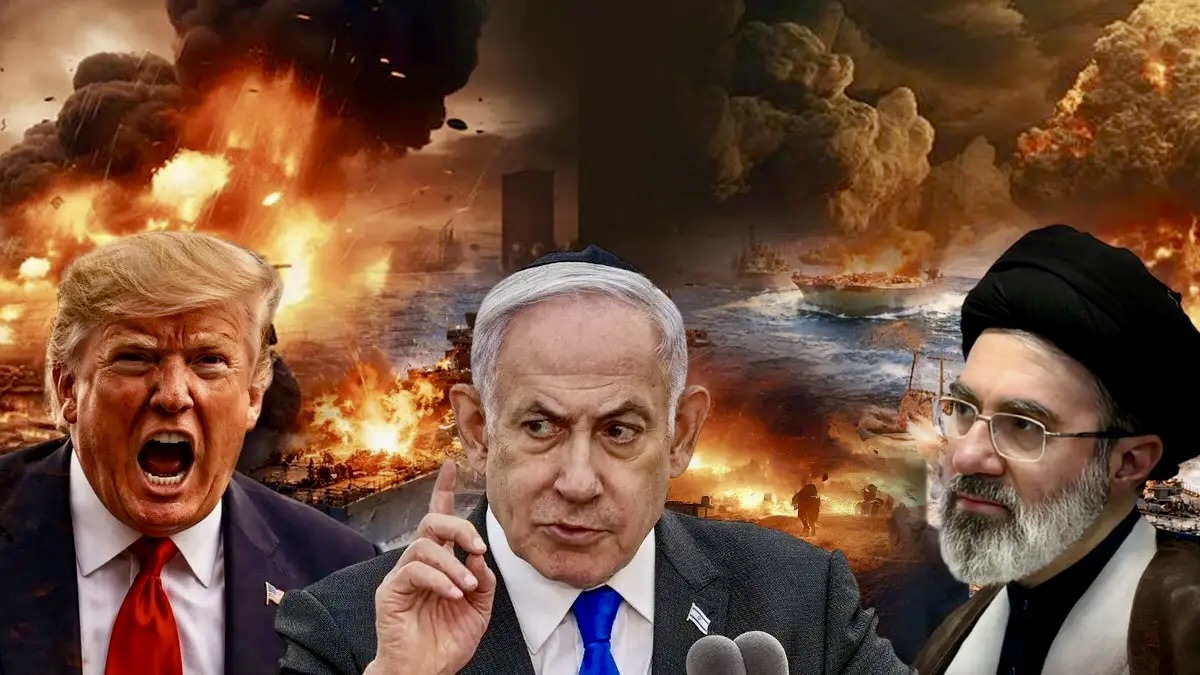
DUBAI (Realist English). The ceasefire between the US and Iran, concluded in mid-April, has been on the verge of total collapse in the past 24 hours.
US forces destroyed six Iranian fast boats and escorted the first commercial convoy through the Strait of Hormuz in two months, but civilian vessels came under attack, leaving five dead.
Iran, for its part, attacked an oil terminal in the UAE, while oil prices hovered around $114 per barrel, awaiting a new wave of escalation.
Destruction of six boats and the breakthrough of the convoy
On May 5, US Central Command (CENTCOM) officially confirmed that AH-64 Apache and MH-60 Seahawk helicopters had destroyed six Iranian fast boats that were threatening commercial shipping in the Strait of Hormuz. The attack was conducted as part of Operation “Project Freedom” to break the blockade of foreign vessels trapped in the Persian Gulf by Iran.
Simultaneously, two US Navy destroyers, the USS Truxtun and the USS Mason, forced their way through the strait, repelling attacks by Iranian boats, missiles and drones. They were covered by more than 100 aircraft and drones.
The result: two US commercial vessels, including the container ship Maersk Alliance Fairfax, which had been blockaded since February, successfully left the conflict zone.
Iranian version: civilian boats shot up
Iranian sources presented a fundamentally different picture. According to them, two small civilian boats carrying civilians from the Omani coast of Khasab to Iran came under US attack. Five people were killed. Iranian officials insist that the boats had no connection to the Islamic Revolutionary Guard Corps (IRGC).
“This hasty and clumsy behaviour of the enemy stems from the excessive fear of the American military of the IRGC’s fast boats,” an Iranian military official said.
The Pentagon has so far refrained from comment.
Iran’s retaliatory strike on the UAE
Over the weekend, Iran attacked the oil infrastructure of the United Arab Emirates at the port of Fujairah – a key export hub on the coast of the Gulf of Oman, independent of the Strait of Hormuz.
UAE air defence forces intercepted 12 ballistic missiles, three cruise missiles and four drones. However, one Iranian drone broke through the defences and hit an oil terminal, causing a major fire. Three Indian citizens were wounded.
Tehran denies involvement, blaming “US military adventurism.” UAE President Sheikh Mohammed bin Zayed held a telephone conversation with Israeli Prime Minister Benjamin Netanyahu, who condemned the “unprovoked Iranian attack.” Indonesia also expressed condemnation.
Talks amid bombing
Despite the hostilities, US officials insist the ceasefire is still in place. Secretary of State Marco Rubio and his Qatari counterpart Mohammed bin Abdulrahman Al Thani held consultations with the Iranian side.
Iranian Foreign Ministry spokesman Esmaeil Baghaei confirmed that Tehran had received a US proposal to end the war (part of a peace plan promoted by Donald Trump through Pakistan) and was analysing it. Qatar has offered to hold full-fledged negotiations in Doha, but progress is blocked by “urgent and unreasonable demands” from the US.
Trump’s rhetoric: On May 6, President Donald Trump said that China was not challenging the US blockade of the Iranian coast and described Iran’s capabilities as “childish firecrackers.” At the same time, he declined to comment on the fate of the ceasefire but confirmed that the talks were yielding “very positive” results.
Oil prices: correction without panic
On the morning of May 6, after yesterday’s reports of damage to US ships were not confirmed, the oil market began to correct itself:
| Grade of oil | Price | Change over 24 hours |
|---|---|---|
| Brent (July) | $113.76 | -0.6% |
| WTI (June) | $104.4 | -1.9% |
However, analysts warn that it will take at least a year to fully restore stability, given the scale of the damaged infrastructure and the high level of military risks.
Opinions of Western experts
Mark Pfeifle (Analyst, former official with the US National Security Council staff): “The reality for commercial shipping is that US escorts are now being used to transit the strait, while Iran continues to challenge them with boats, missiles and drones. Operation ‘Project Freedom’ is designed to test Iran’s resolve. It’s a battle over who can exert maximum pressure on the other side to move talks in a positive direction.”
Al Star (Gulf News columnist): “The Fujairah incident shows that Iran still has the capacity for asymmetric responses through its proxy forces. The UAE is trying to stay out of the fray, but war finds them when they become a rear logistics base for the Pentagon.”
New York Times: “The explosion in Fujairah could have catastrophic consequences for the global economy, as it is the UAE’s largest export hub and a key supply hub for India and Asia.”
The seventh day of the new phase of the conflict confirms that the April ceasefire exists only on paper. Clashes in the strait are no longer a coincidence – they have become routine.
Commercial ships leave the blockade zone only under US military escort; Iran is demonstrating its ability to strike the infrastructure of US allies; and the number of civilian casualties is growing.
The diplomatic price Washington is paying to save face is rising. The question is how much longer this “war of attrition” will last before one blow proves fatal to the ceasefire.