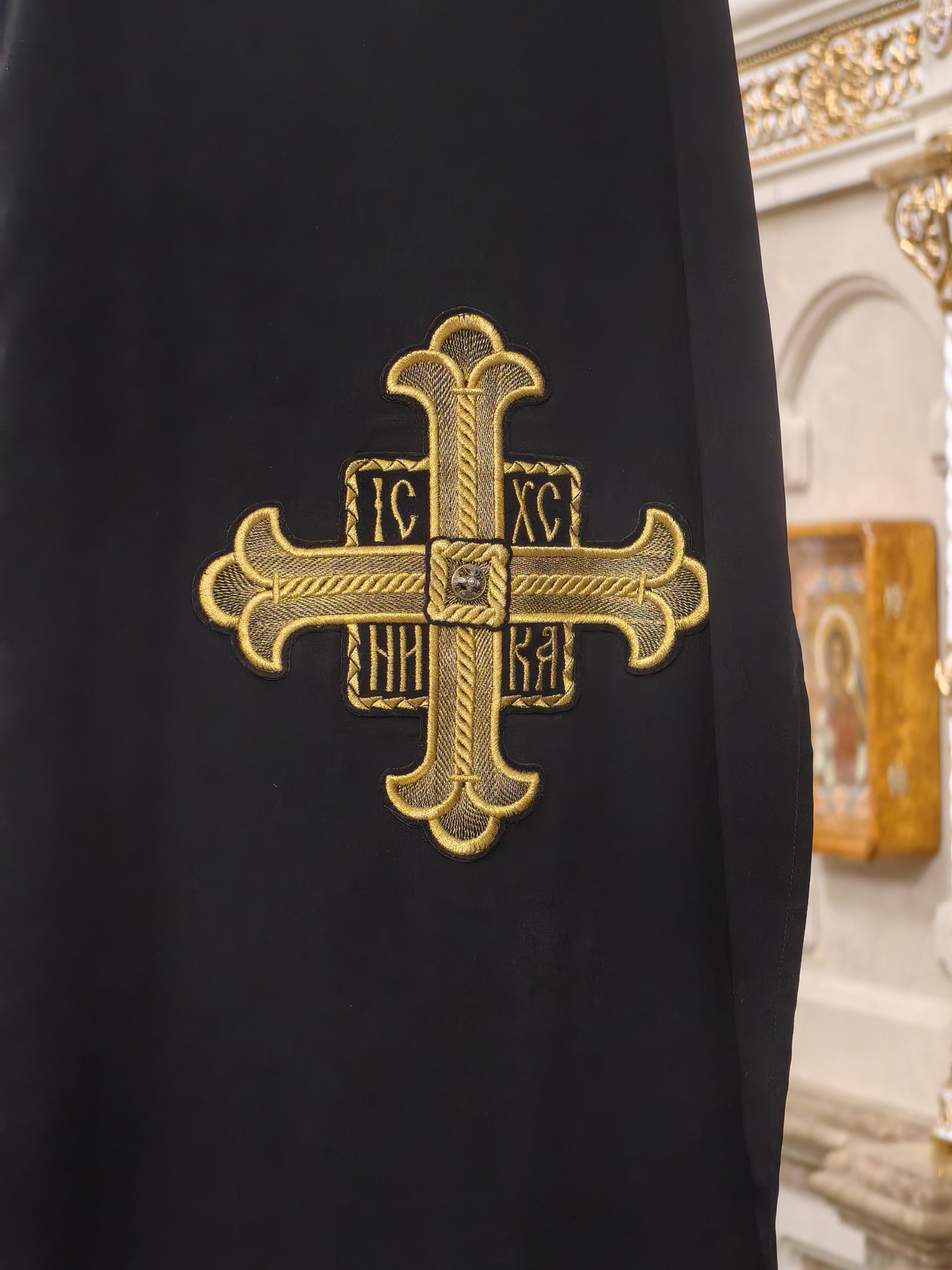
MOSCOW (Realist English). On the night of April 12, Orthodox Christians in Russia and around the world celebrated the main holiday of the church year — the Bright Resurrection of Christ, or Easter. This event is central to the entire Christian faith: according to Church teaching, through His death on the cross and subsequent resurrection, Christ freed humanity from the power of sin and death and opened the way to eternal life for people.
The word “Easter” comes from the Old Testament Pesach and means “exodus,” “deliverance”: just as the Jews were once saved from Egyptian slavery, so Christians receive salvation through Christ’s sacrifice.
Easter services and folk traditions
The main Easter service in Russia, as has been the tradition for many years, took place at the Cathedral of Christ the Savior. The solemn service was conducted by Patriarch Kirill of Moscow and All Russia. The Holy Fire from Jerusalem was brought to the cathedral before the service. The night service begins with a procession, which symbolizes the Church’s march toward the risen Savior.
Regardless of the depth of their faith, millions of Russians participate in Easter traditions: dyeing eggs, baking kulich (Easter bread) and preparing paskha (a cottage cheese dessert). Kulich is traditionally a symbol of Christ’s victory over death. An egg dyed red symbolizes the Lord’s tomb, which conceals the source of new life.
In church tradition, Easter services last for 40 days — until the Feast of the Ascension. Throughout this time, believers greet each other with the words “Christ is Risen!” and respond “Truly He is Risen!” At the same time, as clergy explain, one should not visit cemeteries on Easter Sunday itself: this day is a celebration of life, not a day of remembrance of the dead. A special day, Radonitsa, is set aside for that purpose; in 2026 it falls on April 21.
The morning of the first day: what the Gospels say
Easter morning changed the course of world history. Unlike all other religious leaders, whose founders lie in their graves, Jesus Christ left His tomb empty, giving believers hope for eternal life. The Gospel readings of the Easter service recount these momentous events — the appearance of angels to the myrrh-bearing women and the meeting of the risen Savior with His disciples.
The central event of the feast is the empty tomb of Christ. As the Apostle Luke writes, early on Sunday morning the women came to the tomb carrying prepared spices, but they found the stone rolled away and the body of the Lord Jesus missing. This news came as a shock to the first Christians: angels announced to them that Christ had risen.
The news of the Resurrection brought not only joy but also doubt. The Gospel of Luke says that the women’s words about the empty tomb seemed to the apostles “like nonsense, and they did not believe them.”
However, Peter, without hesitating, ran to the tomb and saw only the burial linens lying there, “wondering to himself at what had happened.” This moment illustrates how an encounter with a miracle demanded personal courage and a reassessment of habitual views.
The appearance of the risen Christ
The empty tomb was followed by appearances of the Savior himself. The Apostle John writes that Mary Magdalene, standing at the tomb and weeping, saw Jesus but did not recognize Him. When the Lord called her by name, she exclaimed “Rabboni!” (Teacher!).
The most dramatic account is the encounter of the risen Christ with two disciples on the road to Emmaus. Luke relates that Cleopas and his companion were walking to a village, discussing the events of the past days, when Jesus himself joined them, but “their eyes were kept from recognizing him.” Only when He broke bread with them did they recognize Him, but He became invisible. This story emphasizes that spiritual sight is sometimes more important than physical sight, and an encounter with God can happen in the most ordinary moment.
The symbolism of the Resurrection
Contemporary theologians stress that the Resurrection of Christ is not merely a return to life but the beginning of a new era. The risen Christ “sits at the right hand of the Father,” sharing His glory and dominion over all creation. As explained in theological literature, the image of the stone rolled away from the entrance to the tomb serves as the highest expression of the image of Jesus’ resurrection.
It is noteworthy that on the first day of Easter, the liturgy does not read a historical account of the Resurrection but the prologue of the Gospel of John: “In the beginning was the Word…” This is done to emphasize that Christ rose not as an ordinary man but as the incarnate Divine Word that was in the beginning with God.
The Gospel readings of the Easter service do not merely retell historical events. They show how, through doubt and fear, the disciples came to faith, and how the empty tomb became for them not evidence of defeat but proof of the victory of life over death.
Easter is not just a celebration of the resurrection; it is an invitation for every person to encounter the living God, who breaks down barriers and grants eternal life.
Why do Catholics, Protestants and Armenians celebrate Easter on the same day, while Orthodox celebrate on another?
In 2026, Catholics and Protestants, as well as followers of the Armenian Apostolic Church, celebrated the Resurrection of Christ on April 5. The Orthodox celebrate Easter on April 12. This difference in dates, which sometimes ranges from one to five weeks, is due not to dogmatic disagreements but to calendar and astronomical calculations.
- Different calendars (Julian and Gregorian). Both Orthodox and Catholics follow the same rule: Easter is celebrated on the first Sunday after the first spring full moon. However, Orthodox churches (except the Finnish Church) use the Julian calendar for calculations, while Catholics and Protestants use the Gregorian calendar. The difference between these calendars today is 13 days.
- The rule of non-coincidence with the Jewish Passover. In the Orthodox tradition, there is an additional rule: Easter must necessarily be celebrated after the Jewish Passover. This is because, according to the Gospel, the crucifixion and resurrection of Christ occurred after the Old Testament Passover. In Catholicism and Protestantism, there is no such requirement, and their Easter may either coincide with Passover or precede it.
- The Armenian Apostolic Church. In 2026, the Armenian Apostolic Church, which belongs to the group of Oriental Orthodox churches, celebrated Easter on April 5. Although Armenians do not accept the decisions of the Council of Chalcedon and have their own distinctive doctrines, in the matter of determining the date of Easter in 2026 they followed the same rules as Catholics and celebrated it on the same day. Armenians call their holiday “Zatik” — “liberation, deliverance from sins and return to God.”