MOSCOW (Realist English). Political scientist Maxim Vaskov is an expert who for many years has personally participated in establishing and strengthening economic and political ties between the Russian Federation, the Republic of Abkhazia and the Republic of South Ossetia. His analytical work and practical recommendations contribute to building long-term cooperation strategies and searching for new formats of interaction between business and government.
In an author’s column for Realist English, Vaskov summarizes the results of two landmark events — the International Economic Forum “South Ossetia. Horizons of Investment” (September 2025, Tskhinval) and the forum “Abkhazia – Investment in the Future” (April 2026, Sukhum).
The political scientist analyzes the unique experience of “forum” economic diplomacy, which allows the republics of the South Caucasus, despite objective geographical and geopolitical limitations, to attract Russian investment, develop tourism and agricultural potential, and bring their products to the markets of major Russian retail chains. According to the author, the policy of annual forums has already proven its effectiveness and will bring positive results in the medium and long term.
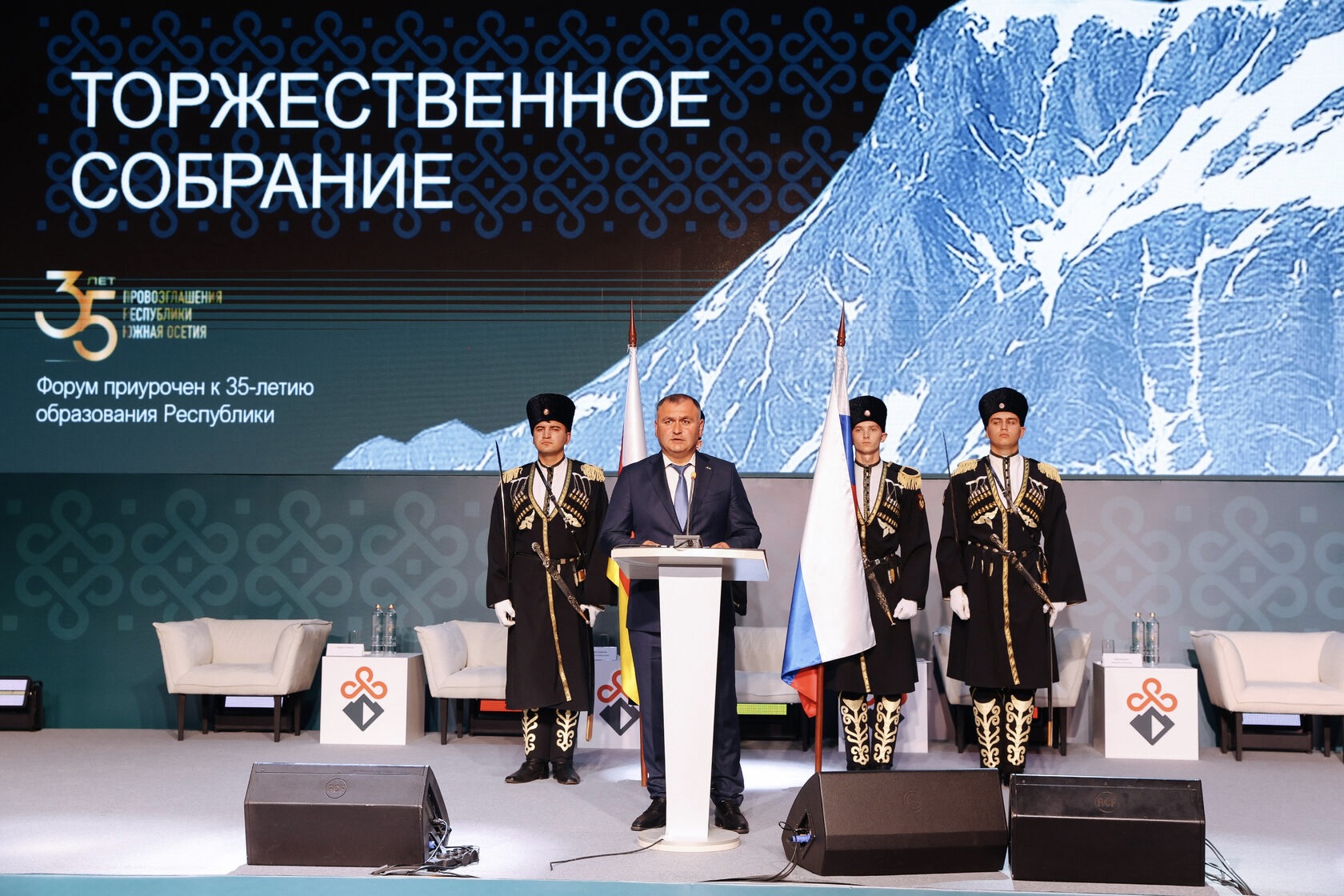
In 2025 and 2026, a new format for finding business partners – economic forums – was tested in the Russian-allied states of the South Caucasus. The first such forum was entrusted to the South Ossetian side. In September 2025, in Tskhinvali, under the leadership of South Ossetian President Alan Gagloev, the first International Economic Forum “South Ossetia. Horizons of Investment” took place, unprecedented for the region, with about three thousand participants representing countries with which South Ossetia had established diplomatic relations, and therefore there is political will and legal opportunities for developing cooperation. In April 2026, this experience was repeated in the Republic of Abkhazia.
A feature of the South Ossetian and Abkhazian forums was the implementation of an interaction format in which, on a single platform and in relation to specific local conditions, potential investors, representatives of top political leadership and economic managers from Russia interact with representatives of the political leadership of South Ossetia and Abkhazia and republican businesses. This allows many strategic issues to be coordinated in real time, which otherwise would be resolved over a longer period through bureaucratic correspondence with no guaranteed result. Forums like those held in South Ossetia and Abkhazia improve the efficiency of preparing and implementing investment programs.
The forum “Abkhazia – Investment in the Future” also drew attention for its scale and economic effectiveness. The event also became a platform for summing up the results of Abkhazian President Badra Gunba’s first year in office. Within the framework of the forum, more than 30 agreements and memorandums were signed, including with Russian federal ministries and agencies, as well as regions that were represented in Abkhazia by unprecedentedly large delegations.
Among the strategic projects: a long-term cooperation plan was signed between the energy ministries of the Russian Federation and Abkhazia, aimed at eliminating the energy deficit in the republic; the launch of Sukhum international airport in 2026 was confirmed, plans were announced to expand flight geography to Russian cities, and a decision was made to allocate 150 million rubles to subsidize glamping sites for the 2026 season. Within the forum, an event calendar and a tourism brand book were presented, revealing the republic’s potential for tourists. The forum was officially recognized as a permanent annual platform, turning Abkhazia into an active participant in cross-border economic processes.
Comparing Abkhazia and South Ossetia, Abkhazia is certainly better known in Russia. Abkhazia has significant potential in the development of the tourism sector, whose fame dates back to Soviet times, and agriculture: Abkhazian wines, mimosa and tangerines are certainly brands. The decisive factor here is Abkhazia’s coastal location, subtropical climate, convenient logistics with Russia, since there is a permanently operating railway in addition to the highway, as well as the potential to develop maritime communications. In addition, thanks to Russian efforts and attention to infrastructure development, Sukhum airport has resumed operations.
Abkhazian President Badra Gunba’s course towards stabilizing the political situation and seeking opportunities for development fully corresponds to the principles of Russian policy defined by Russian President Vladimir Putin and directly implemented under the leadership of First Deputy Head of the Presidential Administration Sergei Kiriyenko. The same applies to South Ossetian President Alan Gagloev. The objective conditions in the leadership of Abkhazia and South Ossetia differ, but the course of both Badra Gunba and Alan Gagloev towards developing allied relations with Russia is united.
South Ossetia does not have Abkhazia’s opportunities due to its geographical location. South Ossetia’s starting opportunities were smaller than those of Abkhazia, but it can be confidently said that there are significant successes. Russia has learned about South Ossetia not just as a geographical space, but has been able to appreciate the goods produced in the republic. Especially in recent years, when South Ossetia has been actively participating in specialized economic events.
The realization of tourism potential, which does exist in South Ossetia, is linked to the need to adopt and implement a strategic infrastructure project – to launch a railway that will connect to the main railway network in North Ossetia. The Transkam highway is heavily dependent on specific natural conditions, and for the full development of the tourism sector, communications that are not dependent on this are needed. But substantive discussion with the Russian side on this matter will be possible after the completion of the special military operation and in the context of the political and economic transformations that will inevitably occur afterwards.
Undoubtedly, President Alan Gagloev’s success is that through the implementation of Investment Forum projects and participation in “Prodexpo-2026”, he largely opened South Ossetia to Russian business circles and potential consumers of what the republic can offer. Goods from South Ossetia have appeared on the shelves of major Russian retail chains and even in specialized stores. In particular, alcoholic products are well represented, and there is potential for developing the supply of mineral water and various types of agricultural products.
There are objective limitations for both Abkhazia and South Ossetia, on the basis of which attempts are made to form a negative political agenda against the current authorities, but which in fact do not depend on the will and management decisions. It is unlikely that complex technological industries will be located in mountainous areas with their seismic activity. There is also a geopolitical factor: it is risky to place high-tech strategic industries, given the threat from Georgia, which does not recognize Abkhazia and South Ossetia, and the highly turbulent nature of the region as a whole.
But those economic areas that are objectively possible are beginning to develop even in today’s extremely difficult conditions. The “forum” policy has already shown its success for Abkhazia and South Ossetia. One cannot expect a dramatic economic breakthrough from them, but in the medium and long term they will bring positive results.
Maxim Vaskov — political scientist, professor, exclusively for Realist English