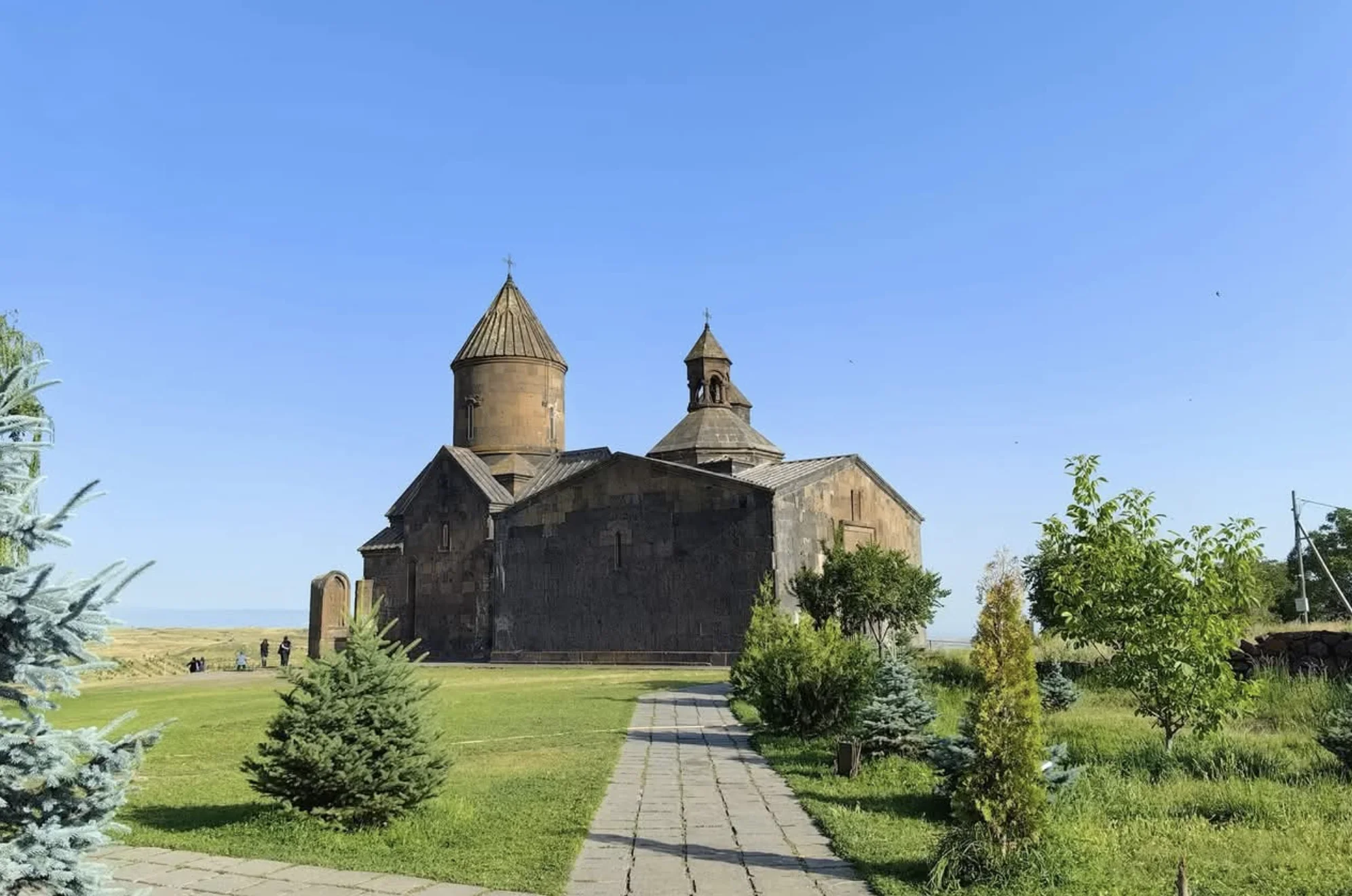
ETCHMIADZIN (Realist English). Millions of Christians around the world are celebrating Easter — the central feast of the Christian calendar — marking the resurrection of Jesus Christ. This year, the holiday falls on the same day for the Armenian Apostolic Church, Catholics and most Protestant denominations.
In the Armenian Apostolic Church, Easter is known as “Zatik”, meaning liberation and redemption from sin. Celebrations began on April 4 with the evening liturgy of Holy Saturday. On Easter morning, a special service known as the Paschal Matins is held, preceded by the “Andastan” ritual — a blessing of the four corners of the world.
At the Mother See of Holy Etchmiadzin, the Patriarchal Divine Liturgy is led by Catholicos of All Armenians Garegin II. Worshippers greet each other with the traditional phrase: “Christ is risen from the dead,” responding: “Blessed is the Resurrection of Christ.”
Traditional Easter meals in Armenian households include boiled fish, greens, rice pilaf with raisins and red-dyed eggs. The eggs, often colored using onion skins, symbolize new life, while the rice represents purity. A popular custom involves tapping eggs together, with the unbroken egg considered the winner.
Catholics also celebrate Easter on April 5, following the Gregorian calendar. The main service, the Easter Vigil, takes place on Holy Saturday evening. It begins with the lighting of a fire outside churches, from which the Paschal candle is lit — symbolising the resurrection of Christ. This flame is then shared throughout the congregation.
The liturgy includes multiple biblical readings from both the Old and New Testaments, followed by a procession. On Easter morning, food is blessed, including bread, eggs and traditional pastries. The Easter bunny — a symbol of new life — is also widely associated with the holiday, particularly in Western cultures.
Protestant communities, numbering around 800 million worldwide, observe Easter with diverse traditions. Lutheran and Anglican churches often hold night services with the blessing of new fire, scripture readings and baptismal rites. Evangelical and Pentecostal churches typically gather during the day for prayer, hymns and sermons.
“There are special hymns and prayers during Easter services, but we often pray in our own words,” said Bishop Dmitry Shatrov of the Russian Union of Evangelical Christians. While practices vary, core elements — including scripture, the Lord’s Prayer and sermons on the Resurrection — remain central.
Differences in Easter dates arise from the use of different calendars. Catholics and Protestants follow the Gregorian calendar, while Orthodox Christians use the Julian calendar. The Armenian Apostolic Church also follows the Gregorian system, which explains the совпадение of dates this year.
The method for calculating Easter was established at the First Council of Nicaea in 325 AD: the holiday is observed on the first Sunday after the first full moon following the spring equinox.
Despite differences in rituals and calendars, the shared celebration underscores a common theological foundation — the belief in the Resurrection — which continues to unite Christian communities worldwide.