


BRUSSELS (Realist English). European Union leaders have failed to agree on an unprecedented reparations-backed loan for Ukraine and instead decided to raise €90 billion in joint EU debt to finance Kyiv’s needs over the next two years, after deep divisions emerged over the use of frozen Russian assets.
The decision, reached after all-night talks at a summit in Brussels, will see the EU borrow collectively against the bloc’s common budget to fund Ukraine through 2026 and 2027. Hungary, the Czech Republic and Slovakia will not participate in the scheme under an “enhanced cooperation” mechanism, according to summit conclusions.
EU leaders had initially pushed for a reparations-style loan backed by immobilised Russian central bank assets, many of which are held in Belgium through financial services firm Euroclear. But the plan collapsed after Belgium demanded unlimited guarantees to shield itself from potential Russian retaliation — a condition several member states rejected as unacceptable.
German Chancellor Friedrich Merz, who had led efforts to advance the reparations loan alongside European Commission President Ursula von der Leyen, acknowledged the setback after the summit. The proposal had been billed as the most effective way to make Russia pay for the damage caused by its invasion of Ukraine.
Instead, EU member states will now borrow on financial markets and cover interest payments themselves. The Commission said Ukraine would receive the funds interest-free and repay them in the future using potential reparations from Russia — an outcome many officials privately concede may never materialise, effectively turning the loan into a grant.
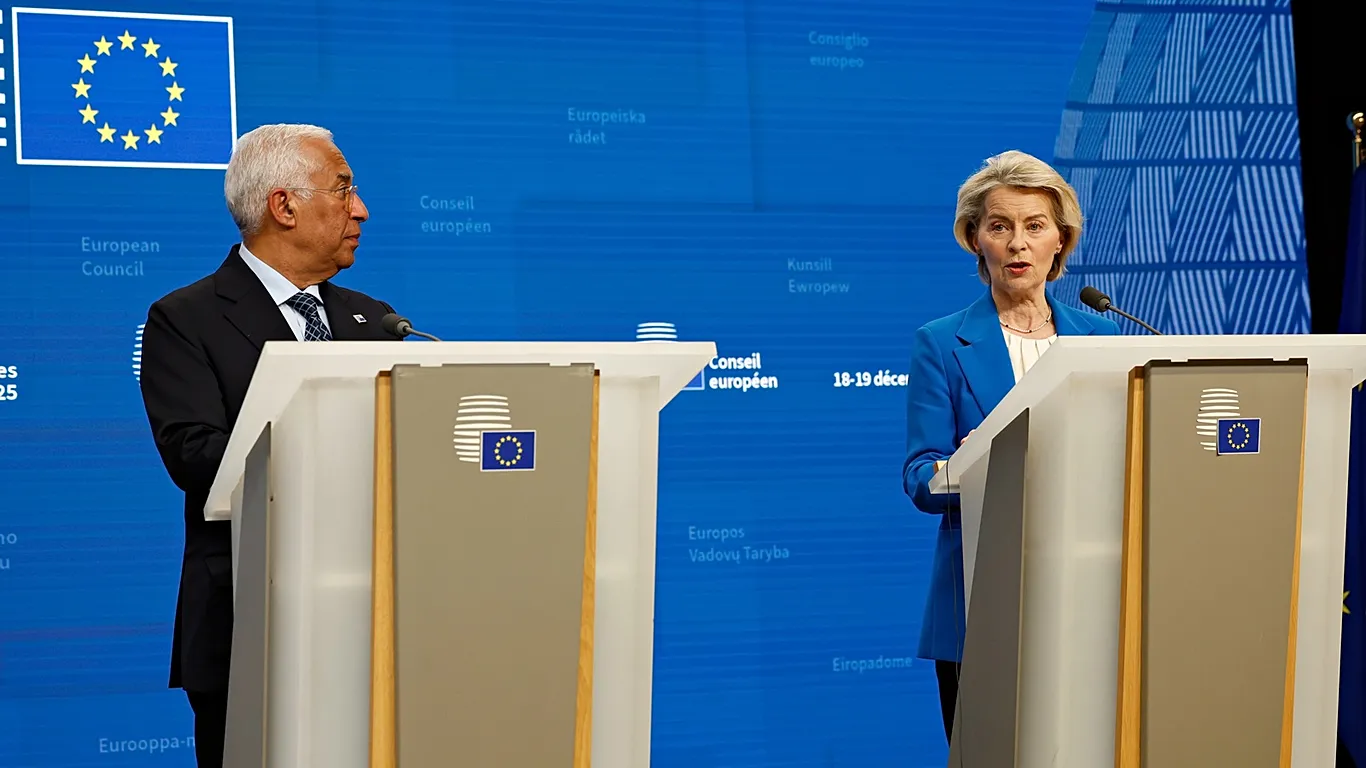
Danish Prime Minister Mette Frederiksen, speaking alongside von der Leyen, said the bloc’s primary objective had been secured. “The bottom line, after today, is that our support for Ukraine is guaranteed,” she said.
The opt-out arrangement for Hungary, Slovakia and the Czech Republic was first reported by Euronews. Under the agreement, the three countries will bear no financial liability related to the loan. Hungarian Prime Minister Viktor Orbán, a long-time critic of EU military and financial support for Ukraine, said the plan amounted to “losing money”.
“It looks like a loan, but the Ukrainians will never be able to pay it back,” Orbán told reporters. “Those who are behind that loan will take the responsibility and the financial consequences.”
Orbán had coordinated his position with Slovak Prime Minister Robert Fico and Czech Prime Minister Andrej Babiš after it became clear that no consensus could be reached on the reparations mechanism, according to EU officials familiar with the talks.
Belgian Prime Minister Bart De Wever defended his country’s stance, arguing that uncapped guarantees would have exposed Belgium and Euroclear to serious legal and financial risks. “We avoided stepping into a precedent that risks undermining legal certainty worldwide,” he said, adding that Russian assets should only be used for Ukraine’s reconstruction after the war ends.
Despite the compromise, EU leaders said the Commission would continue technical and legal work on the reparations concept, though officials privately acknowledge that political divisions make a breakthrough unlikely.
Merz said the agreement on joint borrowing showed Europe’s resolve. “Europe has demonstrated its sovereignty,” he said, adding that discussions on Russian assets had been postponed rather than abandoned. Whether Moscow will ever pay reparations for its war in Ukraine remains highly uncertain.