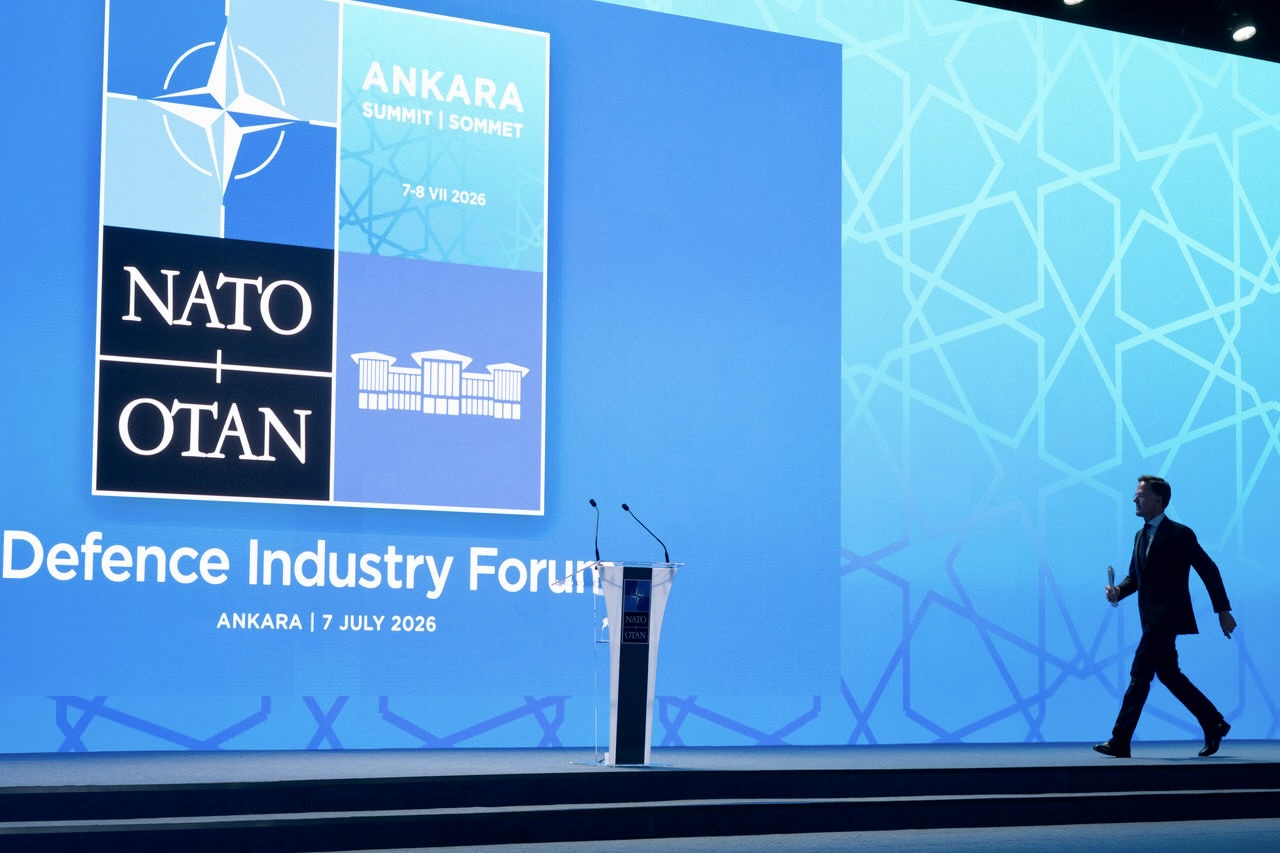
ANKARA (Realist English). On July 7–8, the NATO summit is being held in the Turkish capital. It was meant to showcase the alliance’s unity but has instead become a platform for settling scores and demonstrating Europe’s growing independence.
US President Donald Trump, who arrived in Ankara at the invitation of his “friend” Recep Tayyip Erdoğan, immediately lashed out at European allies, accusing them of insufficient support for the war against Iran.
At the same time, European NATO members responded with unprecedented plans to develop their own long-range weapons and expand military infrastructure to the east.
Trump vs Europe: Scandal and Ultimatums
Trump’s arrival in Ankara was staged with great pomp: Erdoğan personally met him at the airport, an honour not granted to any other leader. However, already at the first bilateral meetings, the US president made it clear that he did not intend to soften his rhetoric.
He said he was “very disappointed” with NATO and that the US was “not being treated well enough” in the alliance. Trump’s main grievance is the lack of support from Europeans during the US-Israeli war against Iran.
His criticism was particularly sharp towards Italian Prime Minister Giorgia Meloni, who had previously been considered one of Trump’s closest allies in Europe. The US president said his relationship with Meloni had “spoiled” because she “refused to help” in the Iranian campaign.
He also raised again the issue of Greenland joining the US, drawing a sharp response from Danish Prime Minister Mette Frederiksen, who said Greenland was “not for sale.” At the same time, Trump did not rule out further troop withdrawals from Europe.
Europe Pays: Record $72 Billion for Defence
Against the backdrop of Trump’s aggressive rhetoric, European allies tried to demonstrate that they had heeded the US president’s demands to increase military spending and reduce dependence on US military aid. Defence contracts worth at least $50 billion, and by some estimates up to $72 billion, were announced at the summit.
Among the largest deals are the procurement of reconnaissance drones from US-based Northrop Grumman and Swedish GlobalEye aircraft to replace ageing AWACS early warning planes.
NATO Secretary-General Mark Rutte called this a “revolution” in the defence industry and called for further production increases.
Trump also made concessions: he agreed to lift sanctions against Turkey imposed in 2020 over its purchase of Russian S‑400 systems and expressed willingness to discuss Ankara’s return to the F‑35 fighter programme.
Missile Sovereignty: $50 Billion for Weapons Without the US
The most significant decision of the summit was the launch of a new programme to develop long-range precision strike weapons. The initiative, dubbed Deep Precision Strike, was presented by British Prime Minister Keir Starmer.
Twelve European countries, including the UK, France and Germany, agreed to invest $50 billion (£37 billion) over ten years in developing missile systems capable of striking targets with high accuracy at a range of up to 2,000 km.
The programme aims to address a critical shortfall in European arsenals. Until now, Europe had only two types of such weapons — German Taurus and Franco-British Storm Shadow/SCALP with a range of up to 500 km, whose stocks were severely depleted after transfers to Ukraine.
The need for indigenous weapons became particularly acute after Trump cancelled plans to station US Tomahawk missiles in Germany.
“This UK-led initiative will allow us to step up our cooperation, bringing together European allies to ensure NATO’s security for years to come,” Starmer said. The new systems are expected to enter service in the 2030s.
Cold War Pipelines: Expansion Eastward
Alongside the missile programme, NATO is closing in on a deal to expand the network of military pipelines built during the Cold War.
The initiative, actively promoted by Poland and other Eastern European countries, envisages extending the pipeline system — which currently ends in Germany — hundreds of kilometres to the east.
The move is aimed at ensuring uninterrupted fuel supplies for NATO troops in the event of a major conflict with Russia, as Eastern European countries are currently too dependent on ground and rail transport.
The project is estimated to cost €21–30 billion, with implementation potentially taking up to 25 years. A final decision is expected at the summit.
The NATO summit in Ankara has vividly demonstrated the tectonic shifts within the transatlantic alliance. Trump continues to demand greater self‑reliance from Europe, but does so in an aggressive and confrontational manner.
European allies, for their part, are showing a willingness to pay, but at the same time are striving for strategic autonomy, launching large‑scale programmes to develop their own weapons and infrastructure. The alliance is entering a new era, where the European pillar is becoming increasingly significant, and relations with the US — increasingly complex and tense.