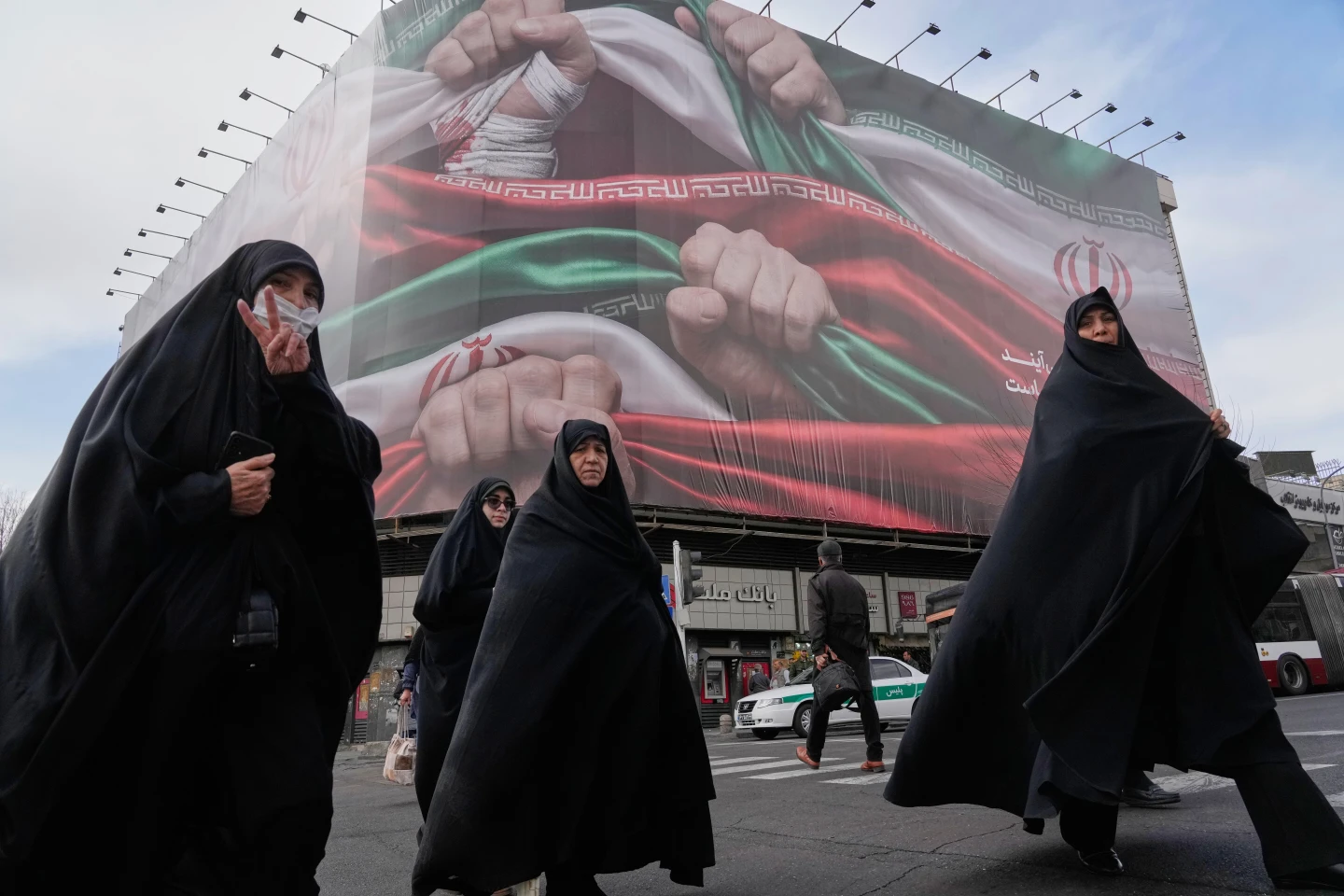
TEHRAN (Realist English). Nationwide protests challenging Iran’s theocratic system have, within days, spiralled into a violent crackdown whose reported death toll already exceeds that of many past waves of unrest, reviving memories of the chaos that preceded the 1979 Islamic Revolution.
The scale of bloodshed and the government’s response point to what may be the most serious threat to Iran’s ruling system since its founding more than four decades ago. The authorities now face a population increasingly willing to defy a state long prepared to use force to suppress dissent — a dynamic that echoes the final months of the monarchy under Shah Mohammad Reza Pahlavi.
In 1978, Iran was gripped by rolling street battles between protesters and security forces loyal to the US-backed shah. Attacks targeted cinemas, nightclubs, US interests, Iranian officials and minority communities, while funerals for slain demonstrators repeatedly morphed into larger protests. The unrest culminated in millions taking to the streets, forcing the cancer-stricken monarch into exile.
From that turmoil emerged Ruhollah Khomeini, who returned from exile in France and consolidated power under the doctrine of Velayat-e Faqih — the “Guardianship of the Jurist”. What followed included mass executions of former officials and dissidents, the imposition of mandatory hijab laws, an eight-year war with Iraq and decades of hostility with the United States, cemented by the 1979 seizure of the US Embassy and the 444-day hostage crisis.
Iran’s current leadership appears acutely aware of that history. In recent days, state television has aired archival footage from the early 1980s, when militants linked to the Mujahedeen-e-Khalq (MEK) carried out bombings and assassinations after breaking with Khomeini. Officials have also revived the term “mohareb” — “enemies of God” — to describe detainees from the current protests, a charge that carries the death penalty and was used during the 1988 mass executions that reportedly killed at least 5,000 people.
Pro-government demonstrators have echoed slogans from that era, including “Death to the Hypocrites”, another phrase historically directed at the MEK. Analysts see these rhetorical choices as a signal of deep concern within the ruling establishment — and an attempt to recast the protests as an existential security threat rather than a socio-economic uprising.
The demonstrations, which began on December 28, were initially driven by economic anger as the rial slid to around 1.4 million to the dollar — compared with roughly 70 to the dollar at the time of the 1979 revolution. Reformist President Masoud Pezeshkian initially appeared open to dialogue, scrapping a corruption-tainted subsidised exchange rate system and offering households modest cash support to offset soaring food prices.
That approach shifted abruptly as protests spread. Authorities cut internet access, severed international phone lines and deployed security forces in what activists describe as a lethal crackdown involving live ammunition, based on online videos and testimonies that are difficult to independently verify due to restrictions on journalists and communications.
Why the violence has escalated so sharply compared with previous unrest — such as the 2009 Green Movement or the 2022 protests sparked by the death of Mahsa Amini — remains unclear. Analysts point to the breadth of the economic grievances, which cut across Iran’s political, ethnic and religious divides, as well as lingering tensions after a recent 12-day conflict in which nuclear facilities, missile sites and senior military figures were targeted.
Unlike in late 1978, when the shah allowed massive Ashoura processions — even as crowds chanted “Death to the shah” — Iran’s current leadership has not acknowledged the scale of the protests. Instead, it organised its own pro-government rally on Monday that reportedly drew tens of thousands.
Officials have also accused protesters of terrorism and alleged foreign orchestration by Israel and the United States, without presenting evidence — rhetoric reminiscent of the shah’s own claims that his opponents were tools of foreign powers.
There are key differences from 1979. US President Donald Trump has openly signalled a willingness to consider force, while Iran remains under heavy Western sanctions linked to its nuclear programme. Yet many analysts warn that the historical parallels are unsettling.
If the lessons of 1979 hold, the current crackdown may not mark the end of Iran’s unrest — even if the authorities believe they have once again pushed the country back from the brink.