

PARIS (Realist English). President Emmanuel Macron is accelerating a series of high-level appointments across France’s state institutions, a move officials say is designed to safeguard policy continuity should the far-right National Rally win the 2027 presidential election.
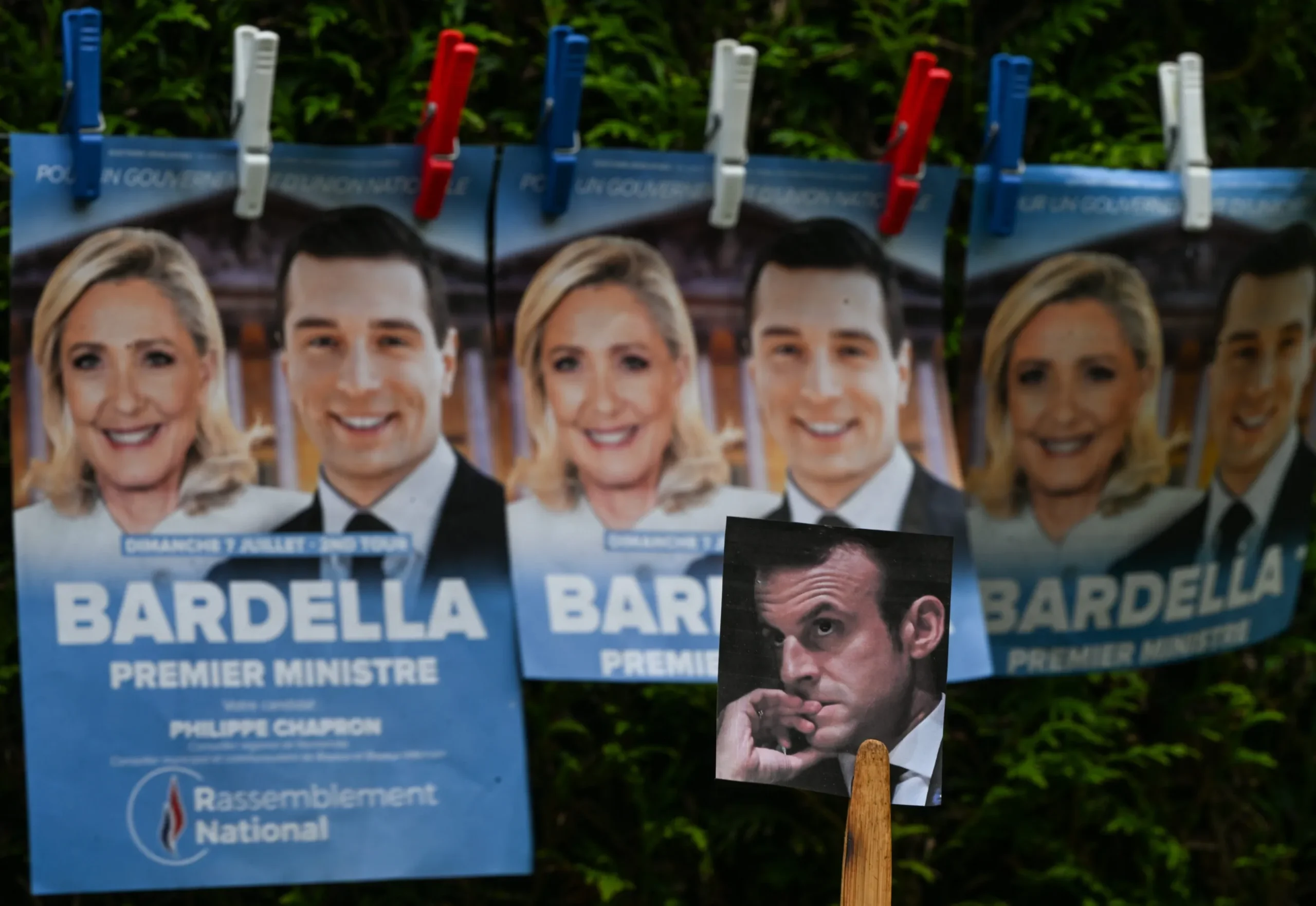
According to current and former French officials cited by Politico, Macron is fast-tracking nominations to senior posts in the civil service, diplomacy, finance and defense in an effort to consolidate his influence before the end of his term. Opinion polls currently place the National Rally — led by Marine Le Pen and Jordan Bardella — as a leading contender in next year’s race.
Both Le Pen and Bardella have signaled that a National Rally presidency would revisit Macron’s economic reforms and reassess France’s commitments to the European Union and NATO, including potential withdrawal from NATO’s integrated command structure.
A former diplomat said Macron is seeking to “shore up his legacy” amid growing geopolitical instability linked to Russia’s war in Ukraine and uncertainty in U.S. foreign policy.
Recent moves include the appointment of a close ally as France’s top auditor, despite criticism over potential conflicts of interest. The Foreign Ministry is undergoing an unusually extensive reshuffle, with more than 60 ambassadorial posts expected to change hands in the coming months, including assignments in Washington, London, Berlin and Kyiv.
The early resignation of Bank of France Governor François Villeroy de Galhau has also created an opportunity for Macron to nominate a successor with a six-year term before the presidential vote.
In the defense sector, Macron replaced France’s top general earlier this year, reportedly aiming to ensure experienced leadership capable of navigating potential policy shifts under a new administration.
National Rally officials have accused Macron of attempting to entrench loyalists within key institutions. Bardella described the strategy as an effort to “lock down” state structures and extend the president’s influence beyond his mandate.
France’s presidency carries significant executive authority, but constitutional experts note that institutional safeguards could complicate efforts by any future leader to rapidly reverse appointments or alter long-standing structures. “The system is built with a number of safeguards,” said constitutional scholar Benjamin Morel, arguing that while such measures may not preserve Macron’s policy agenda, they could limit sweeping institutional change.
Additional appointments are pending, including the leadership of the Council of State, which oversees administrative law and adjudicates disputes between citizens and the government. The position is seen as critical in areas such as immigration and public order — issues central to National Rally’s platform.
Within the EU, diplomats are also watching whether France’s domestic political trajectory could affect negotiations over the bloc’s next seven-year budget and key leadership posts, including the presidency of the European Council.
Macron, constitutionally barred from seeking a third consecutive term, has not ruled out a political return in 2032. For now, his focus appears to be ensuring that France’s institutions remain stable — and aligned with his strategic vision — regardless of the outcome in 2027.