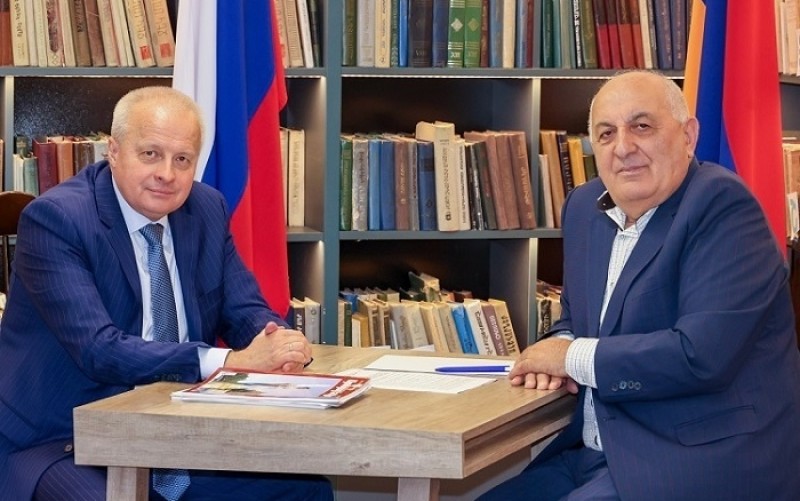
YEREVAN (Realist English). Russia’s ambassador to Armenia, Sergey Kopyrkin, said Moscow remains committed to regional stability and close cooperation with Yerevan, in an interview with the newspaper Syunyats Yerkir published on Monday. His remarks touched on sensitive issues, from the newly proposed “Trump Road” in southern Armenia to the future of Russian economic and military presence in the country.
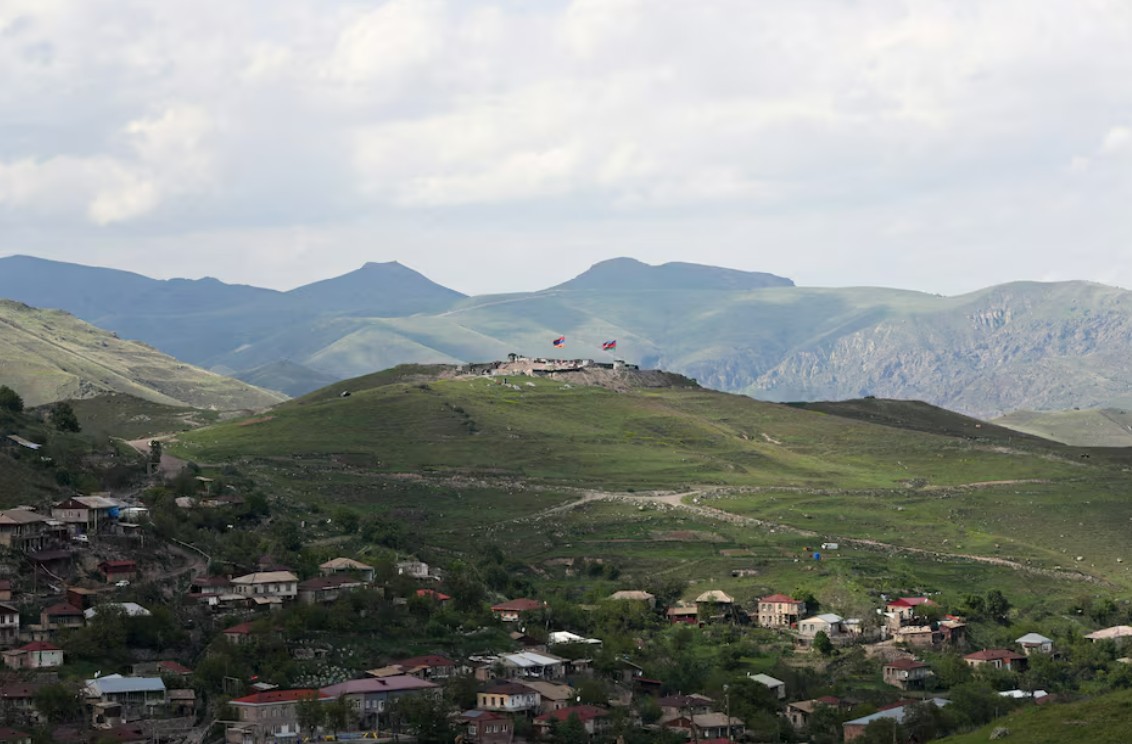
Asked about the so-called Trump Road project announced in Washington on August 8, Kopyrkin said Russia’s position would be determined once its implementation scheme was clarified. “Details concerning cargo and passenger transit regimes and traffic security are still to be agreed,” he noted, adding that Armenia’s membership in the Eurasian Economic Union and the presence of Russian border guards on the Armenian-Iranian frontier must be considered. Moscow, he stressed, is open to consultations with Yerevan, Tehran and other stakeholders.
On the coexistence of the 2020–2022 trilateral agreements between Russia, Armenia and Azerbaijan with the August 2025 Washington Declaration, Kopyrkin underlined that the earlier accords remain valid. “The provisions of these agreements have not lost their relevance,” he said, pointing to their role in halting violence and laying foundations for a peace treaty, transport reopening and border delimitation. The ambassador urged dialogue to reconcile the different frameworks, highlighting the “3+3” regional cooperation platform as a venue for discussion.
Kopyrkin dismissed speculation about risks to Russian businesses in Armenia after recent tensions around Electric Networks of Armenia, saying Russian companies remain key investors and major taxpayers. They operate in sectors from IT and mining to nuclear energy and banking. “We proceed from the fact that Armenian partners are interested in preserving and increasing the decisive contribution of trade and economic cooperation with Russia,” he said.
On military issues, the ambassador rejected talk of withdrawing Russia’s 102nd military base from Gyumri. “The question is not on the bilateral agenda,” he said, stressing that Russian presence remains a central element of Armenia’s security and a factor of regional stability. The original 1995 agreement was extended in 2010, securing Russia’s presence until at least 2044, with five-year renewals thereafter.
Responding to claims that Russia is being pushed out of the South Caucasus, Kopyrkin called such notions “absurd.” He argued that geography, history and deep ties make Russia inseparable from the region. “Our vital interest lies in lasting peace and stability, prosperity and the development of the South Caucasus’ transport potential,” he said.