

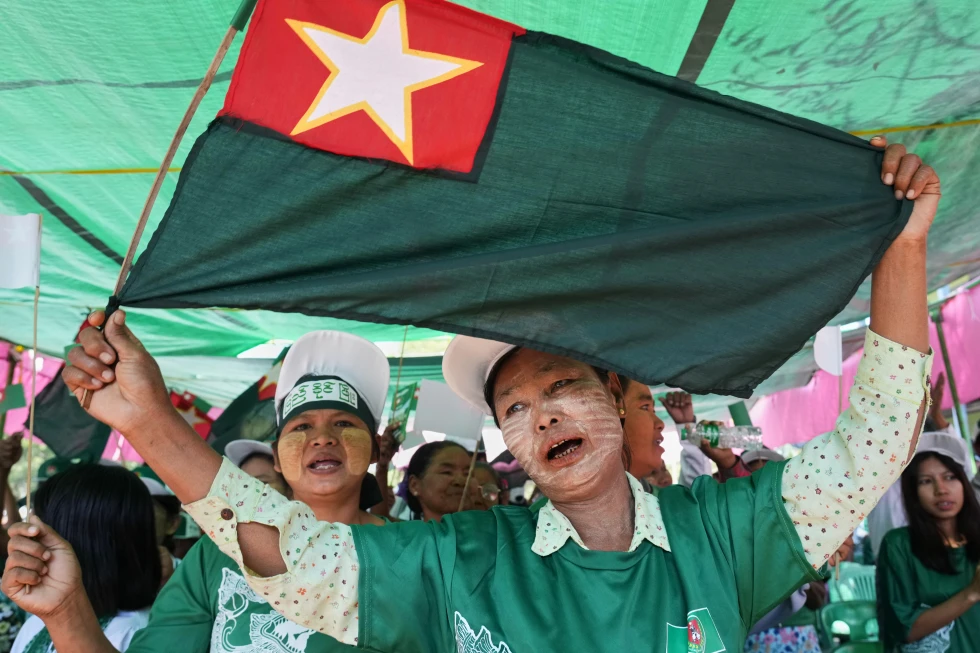
NAYPYIDAW (Realist English). Myanmar’s military-backed Union Solidarity and Development Party (USDP) has extended its lead after the second round of voting, according to official figures, as the country moves toward the final stage of its three-phase general election held against the backdrop of widespread armed conflict.
Data released on Friday by the Union Election Commission, and reported by state broadcaster MRTV, show the USDP on course to win 182 seats from the combined first and second rounds — more than half of the 330 seats in the lower house. In the second phase alone, held on Sunday, the party secured 86 of the 100 contested seats. The final round of voting is scheduled for January 25.
The election has drawn strong criticism from opposition figures and human rights groups, who argue the process is neither free nor fair and is designed to legitimise military rule following the February 2021 coup that ousted the elected government of Aung San Suu Kyi. That takeover sparked mass protests which later escalated into a nationwide civil war.
Voting has been staggered across three phases due to ongoing fighting. The first two rounds took place on December 28 and January 11 in 202 of Myanmar’s 330 townships. The final phase will cover additional areas, though voting will not be held in 65 townships because of active hostilities.
Final results for national and regional legislatures are expected by late January. Military spokesman Zaw Min Tun said last weekend that the two houses of parliament would convene in March, with a new government assuming office in April.
The military authorities say armed groups opposing army rule carried out attacks on polling stations and government buildings during the first two voting rounds. The election is also taking place as the International Court of Justice hears a case brought by The Gambia, accusing Myanmar of genocide against the Rohingya minority.
More than 4,800 candidates from 57 political parties are contesting seats nationwide and at regional level, but only six parties are fielding candidates across the entire country. One of them, the People’s Pioneer Party, faces a possible ban after its chairwoman Thet Thet Khine and another senior member were investigated for meeting representatives of a foreign embassy in Yangon without prior approval.
Authorities have also tightened controls on dissent around the vote. A new Election Protection Law imposes severe penalties for most public criticism of the polls, and more than 330 people have been charged in recent weeks for distributing leaflets or posting online commentary related to the election.