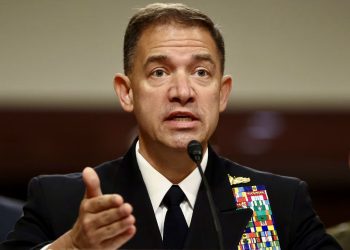


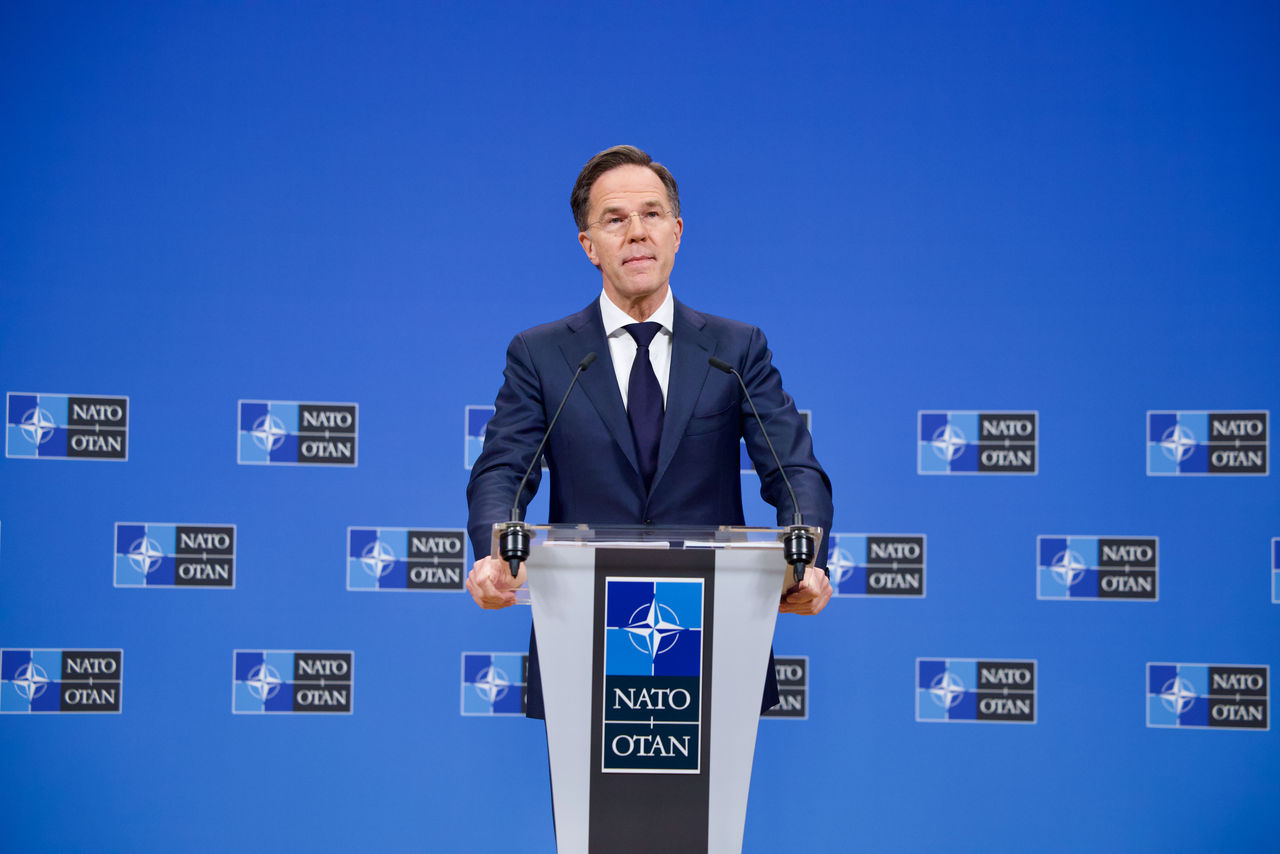
BRUSSELS (Realist English). NATO Secretary General Mark Rutte said U.S. President Donald Trump has strengthened the alliance by pushing member states to increase defence spending, arguing that Washington’s pressure has made NATO more resilient and better prepared for emerging threats.
Speaking at NATO headquarters in Brussels during the presentation of the alliance’s 2025 annual report, Rutte said all member states have now reached the long-standing target of spending at least 2% of GDP on defence — a milestone he credited to the current U.S. administration.
“I don’t believe the whole of NATO would reach 2% by 2025 without the present U.S. administration,” Rutte said, adding that the alliance has now committed to a new benchmark of 5% of GDP. The revised target includes 3.5% allocated to core military capabilities, reflecting a significant escalation in defence ambitions.
The NATO report identifies Russia as the most “significant and direct threat” to Euro-Atlantic security, citing its ongoing war in Ukraine and support from countries including China, North Korea, Iran, and Belarus.
Rutte also defended the broader strategic approach of the United States, including its current military operations alongside Israel against Iran. He said efforts to degrade Iran’s military capabilities were justified, describing alternative approaches as unrealistic. NATO itself is not directly involved in the conflict.
The comments come amid ongoing debates within the alliance over the reliability of the United States as a security partner. Rutte was questioned about Washington’s recent foreign policy moves, including tensions over Greenland and the escalation in the Middle East.
He acknowledged that some European allies have been slow to respond to U.S. calls for support in securing the Strait of Hormuz, a critical maritime route through which roughly 20% of global oil supply passes. Disruptions in the strait have contributed to volatility in global energy markets.
According to Rutte, several NATO members — including France, Germany, the United Kingdom, and the Netherlands — along with partners such as Japan, are developing plans to assist in reopening the route. A spokesperson for the UK Ministry of Defence said Britain and France will lead talks with more than 30 countries to coordinate potential action.
European officials have indicated that any intervention would likely depend on the security situation, with reluctance to engage while active hostilities continue in the region.
Analytically, Rutte’s remarks underscore a shift within NATO toward higher defence spending and greater alignment with U.S. strategic priorities, even as internal debates over autonomy and risk-sharing persist.
The key question is whether increased military investment and coordination will translate into long-term cohesion, or deepen divisions between allies over the scope and direction of collective security policy.