Realist: news and analytics

Русский / English / العربية

  • News
  • Russia
  • Caucasus
  • Opinion
  • Interviews
  • Experts
No Result
View All Result
Realist: news and analytics
  • News
  • Russia
  • Caucasus
  • Opinion
  • Interviews
  • Experts
No Result
View All Result
Realist: news and analytics

Iran’s military power significantly degraded but threat not eliminated, US Central Command says

38 days of bombing: US destroyed 90% of Iran's defense industrial base, but Tehran retained 70% of its missiles.

     
May 15, 2026, 19:44
Security & Defense
Iran’s military power significantly degraded but threat not eliminated, US Central Command says

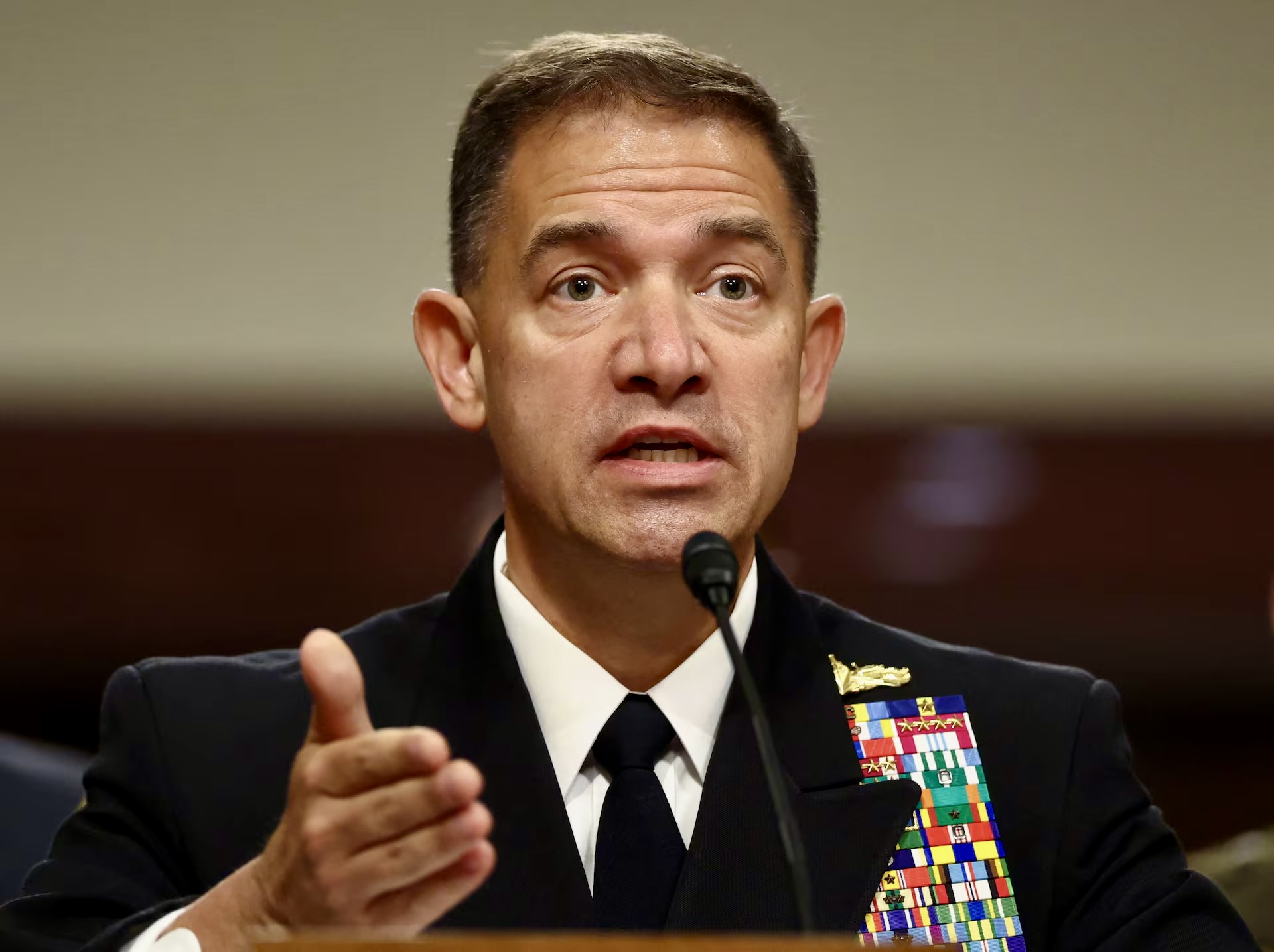
Admiral Brad Cooper. Photo: Reuters

WASHINGTON (Realist English). The 38‑day US bombing campaign against Iran has diminished the Islamic Republic’s ability to threaten global security, but has not yet eliminated the threat altogether, Admiral Brad Cooper, commander of US Central Command (CENTCOM), told a Senate hearing on 14 May 2026.

“It’s a very large country,” Cooper noted as he testified before the Senate Armed Services Committee. He acknowledged that Iran still possesses “a very moderate, if not small, capability” to strike neighbouring regional states.

Washington and Tehran remain locked in a month‑long stalemate in the Strait of Hormuz, with no clear path forward as both sides have rejected proposed off‑ramps from the crisis.

State of Iran’s armed forces: CENTCOM’s assessment

Initially, Iran retaliated for the joint US‑Israeli attack on its territory by choking traffic through the waterway, through which roughly one‑fifth of the world’s oil normally flows. The Iranians achieved this in part by the mere threat of naval mine warfare, though some vessels were also attacked. The United States, in turn, imposed a blockade on all vessels entering or leaving Iranian ports.

“Iran’s capability to stop commerce through the strait has been dramatically degraded,” the CENTCOM commander said. However, “their voice remains very loud, and those threats are clearly heard by the merchant shipping and insurance industries.”

Cooper did not address how the impasse in the strait might be resolved, but asserted that US forces had severely degraded Iran’s war‑fighting capacity, including the elimination of roughly 90% of its arsenal of more than 8,000 naval mines.

He also declared that US forces had “met every military objective” under Operation Epic Fury, citing the destruction of 90% of Iran’s defence industrial base.

“Open sources are not accurate”

In recent days, however, media reports have cast doubt on the most expansive claims made by the Trump administration about military triumph over Iran. On 13 May, for example, The New York Times reported that US intelligence agencies believe Iran has retained about 70% of the missiles it had before the war, and roughly the same proportion of its mobile launchers.

Cooper declined to discuss specific intelligence assessments, but contended that the figures he has seen in “open sources are not accurate.”

“It’s more than just the numbers,” he added. “The command‑and‑control has been shattered. There has been significant degradation of capability. And they have no ability to produce missiles or drones on the back end.”

More broadly, Cooper insisted: “Iran’s threat has been significantly degraded. They no longer threaten regional partners or the United States in ways they were able to do before, across every domain.”

“Most notably, we have degraded Iran’s ability to project power beyond its borders and threaten the region and our interests,” Cooper continued. “Today, Hamas, Hezbollah and the Houthis are cut off from Iranian weapons and support.”

Those groups, commonly known as Iran’s “Axis of Resistance”, allowed the Islamic Republic to wield influence across the Middle East while maintaining plausible deniability for their armed actions. In the 30 months before Operation Epic Fury began, Cooper said, these affiliated militias carried out more than 350 attacks on US service members and diplomats stationed in the region.

Admiral Cooper’s testimony paints a picture of an ambiguous victory. On the one hand, the Trump administration reports the destruction of 90% of Iran’s defence industrial base and naval mines, as well as the severing of ties between Tehran and its proxy forces. 

On the other, intelligence acknowledges that Iran has retained 70% of its missiles and mobile launchers, and the CENTCOM commander himself is forced to admit that the threat has not been fully eliminated. 

Moreover, Iran’s “voice remains very loud” – merchant shipping and insurers still take its threats seriously. The Strait of Hormuz remains blockaded, and the talks have reached an impasse. 

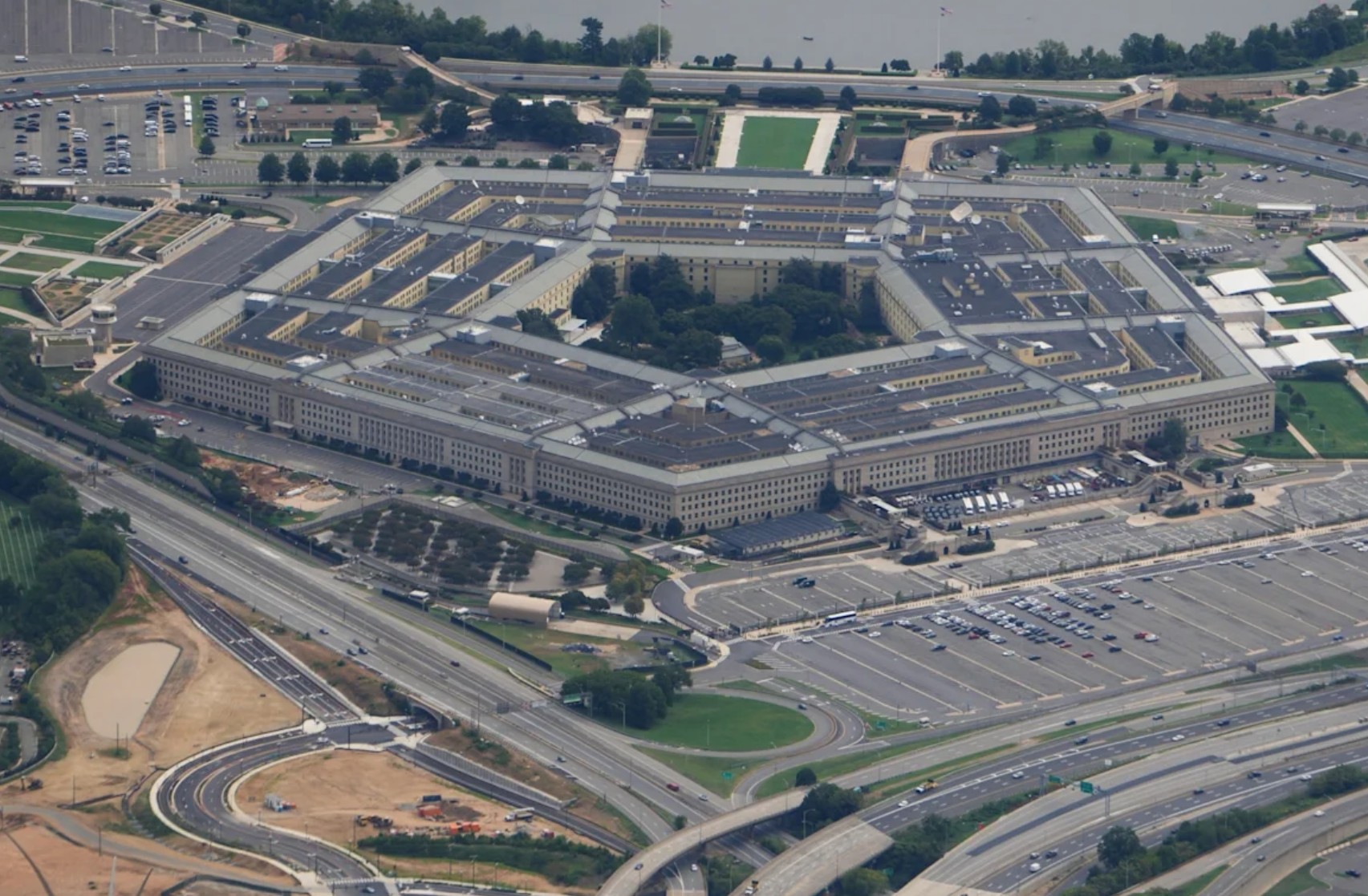
A war that has already cost the Pentagon more than $29 billion has led to a military stalemate, not a decisive victory.
CENTCOMIranIran WarIranian Armed ForcesIRGCMiddle EastUnited StatesUS Foreign Policy
Previous Post

Rosatom dictates prices, China builds 29 reactors, the West scrambles to catch up

Related Posts

Israel to Increase Range of F-35I “Adir” Amid War with Iran
Security & Defense

Israel to Increase Range of F-35I “Adir” Amid War with Iran

14 May, 2026
Baltic states prepare to spend $14 billion on weapons: Rheinmetall, Lockheed Martin and the “Baltic Drone Wall”
Security & Defense

Baltic states prepare to spend $14 billion on weapons: Rheinmetall, Lockheed Martin and the “Baltic Drone Wall”

13 May, 2026
Germany tries to buy Tomahawk cruise missiles from the US
Security & Defense

Germany tries to buy Tomahawk cruise missiles from the US

12 May, 2026
Turkey unveils intercontinental missile with range of 6,000 kilometres
Security & Defense

Turkey unveils intercontinental missile with range of 6,000 kilometres

11 May, 2026
Israel pounds Hezbollah in Lebanon as it warns Trump: Iran deal is a ‘disaster’
Security & Defense

Israel pounds Hezbollah in Lebanon as it warns Trump: Iran deal is a ‘disaster’

10 May, 2026
US and Iran exchange strikes, Hezbollah mobilises
Security & Defense

US and Iran exchange strikes, Hezbollah mobilises

8 May, 2026
Most Popular
Most Popular
US and China Seek Transition to “Managed Rivalry”

US and China Seek Transition to “Managed Rivalry”

15 May, 2026

BEIJING (Realist English). On May 15, US President Donald Trump and Chinese President Xi Jinping began the final round of...

Metropolitan Shio Moudjiri elected Patriarch of the Georgian Orthodox Church

Metropolitan Shio Moudjiri elected Patriarch of the Georgian Orthodox Church

12 May, 2026

TBILISI (Realist English). On 11 May, Georgia saw the succession of the head of its Orthodox Church for the first time...

Armenian battalion named after Marshal Bagramyan established in Donetsk: veterans of Abkhazia hand over their banner to Donbas volunteers

Armenian battalion named after Marshal Bagramyan established in Donetsk: veterans of Abkhazia hand over their banner to Donbas volunteers

7 May, 2026

MOSCOW (Realist English). On 6 May, a historic ceremony of handing over a battle banner took place at the Cathedral of...

Sheaito Moussallam: Iran is the main obstacle to Greater Israel

Sheaito Moussallam: Iran is the main obstacle to Greater Israel

5 May, 2026

BEIRUT (Realist English). The Middle East today is an echo of exploding bombs, diplomatic dead ends, and dozens of contradictory interpretations...

Opinion

From War to Cooperation: How Iraq Became Iran’s Main Partner but Maintained Neutrality

From War to Cooperation: How Iraq Became Iran’s Main Partner but Maintained Neutrality

14 May, 2026

ERBIL (Realist English). Amid the escalating Middle East crisis, with Iran and the United States standing on the brink of...

Lula and Trump Find “Chemistry” as China Is Pushed Out of Latin America

Lula and Trump Find “Chemistry” as China Is Pushed Out of Latin America

13 May, 2026

BRASILIA (Realist English). Luiz Inácio Lula da Silva, Brazil’s popular left‑wing president, recently visited the United States. Contrary to sceptical forecasts,...

Can Trump Get a New Nuclear Deal With Iran?

Can Trump Get a New Nuclear Deal With Iran?

12 May, 2026

WASHINGTON (Realist English). Since the US and Israeli war against Iran began in late February 2026, President Donald Trump has struggled...

Oil Shock Worsens the Plight of the Poor in Asia and Africa

Oil Shock Worsens the Plight of the Poor in Asia and Africa

11 May, 2026

MOSCOW (Realist English). The conflict in the Middle East, triggered by a joint US-Israeli military operation against Iran, has led to...

All rights reserved.

© 2017-2026

  • About Us
  • Mission and Values
  • Contact Us
  • Privacy Policy

Follow Realist English

No Result
View All Result
  • News
  • Russia
  • Caucasus
  • Opinion
  • Interviews
  • Experts

Русский / English / العربية