

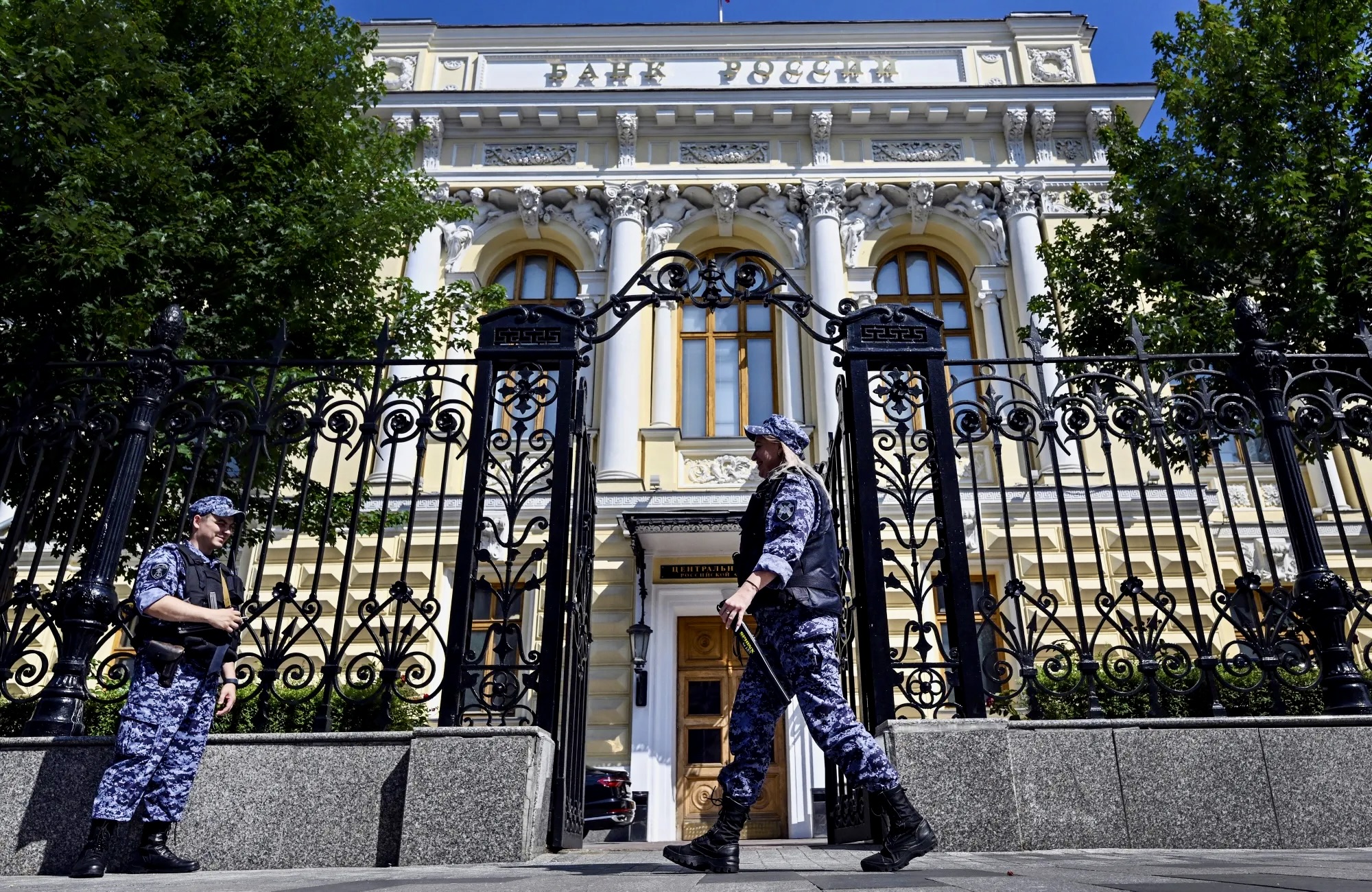
MOSCOW (Realist English). Over the past ten days, Russia’s financial market has shown paradoxical resilience.
Despite the resumption of foreign currency purchases by the Finance Ministry and geopolitical tensions, the ruble has held near 73 per dollar, while inflation continued to slow, surprising analysts with April’s data.
The Central Bank of Russia kept its key rate unchanged (14.5%), but in a summary of the April meeting published on 7 May, it signalled readiness for further cuts.
Ruble exchange rate: oil cushion vs. budget interventions
Contrary to forecasts of a drop to 80‑82, the ruble strengthened over the reporting period and settled at multi‑year highs. The official dollar exchange rate set by the Central Bank for 16 May was 73.1275 rubles, while market quotes on 17 May saw banks buying the US currency at 72.84 rubles.
Key factors:
- Oil windfall revenues – the average price of Urals in April was $94.87 per barrel, providing a strong inflow of foreign currency earnings.
- Finance Ministry’s currency purchases – since 8 May, the ministry has resumed planned interventions (about 420‑500 billion rubles per month), but these only smooth out excess supply rather than crash the ruble.
“The ruble continues to update multi‑year records. It is strengthening thanks to increased foreign currency sales by exporters,” commented Vladislav Silaev, senior trader at Alfa‑Capital Management Company.
Inflation: April surprises with slowdown
Rosstat’s latest data came as a surprise. Annual inflation slowed to 5.58% in April, while monthly price growth was just 0.14% – well below forecasts (0.26%). In the week of 5‑12 May, consumer prices rose by 0.07%, maintaining the trend of stabilisation. This gives the Central Bank room for manoeuvre.
Key rate: a pause with a signal to cut
The next meeting of the Central Bank’s Board of Directors, at which the key rate may be revised, is scheduled for 19 June. At the previous meeting on 24 April, the rate was cut by 0.5 percentage points to 14.5%.
In a summary of the discussions published on 7 May, the majority of Board members spoke in favour of keeping open the possibility of further rate cuts. In their view, keeping the rate at its current level could create risks of excessive cooling of the economy.
Expert forecasts: range of 73‑78 or a pullback to 82?
Analysts’ opinions are divided.
- Optimists (Alfa‑Capital, Sovcombank) expect the ruble to settle in the 73‑78 rubles/dollar range, driven by high energy prices.
- Pessimists (Tsifra Broker, SberCIB) warn that the Finance Ministry’s currency purchases and a decline in export revenues after the tax period could weaken the ruble to 79‑82 rubles/dollar in the second half of May.
Experts agree on one thing: the main risk for the ruble remains geopolitics. Any positive signal of a ceasefire in the Middle East could instantly send oil prices – and with them the Russian currency – tumbling.
The ruble has proved stronger than many expected. Oil windfall revenues are outweighing budget interventions, while slowing inflation gives the Central Bank reason for optimism. Yet the market is living in anticipation – of the rate decision on 19 June and of news from the Strait of Hormuz. Any escalation or, conversely, any peace deal could radically change the picture. For now, the ruble is holding its breath.