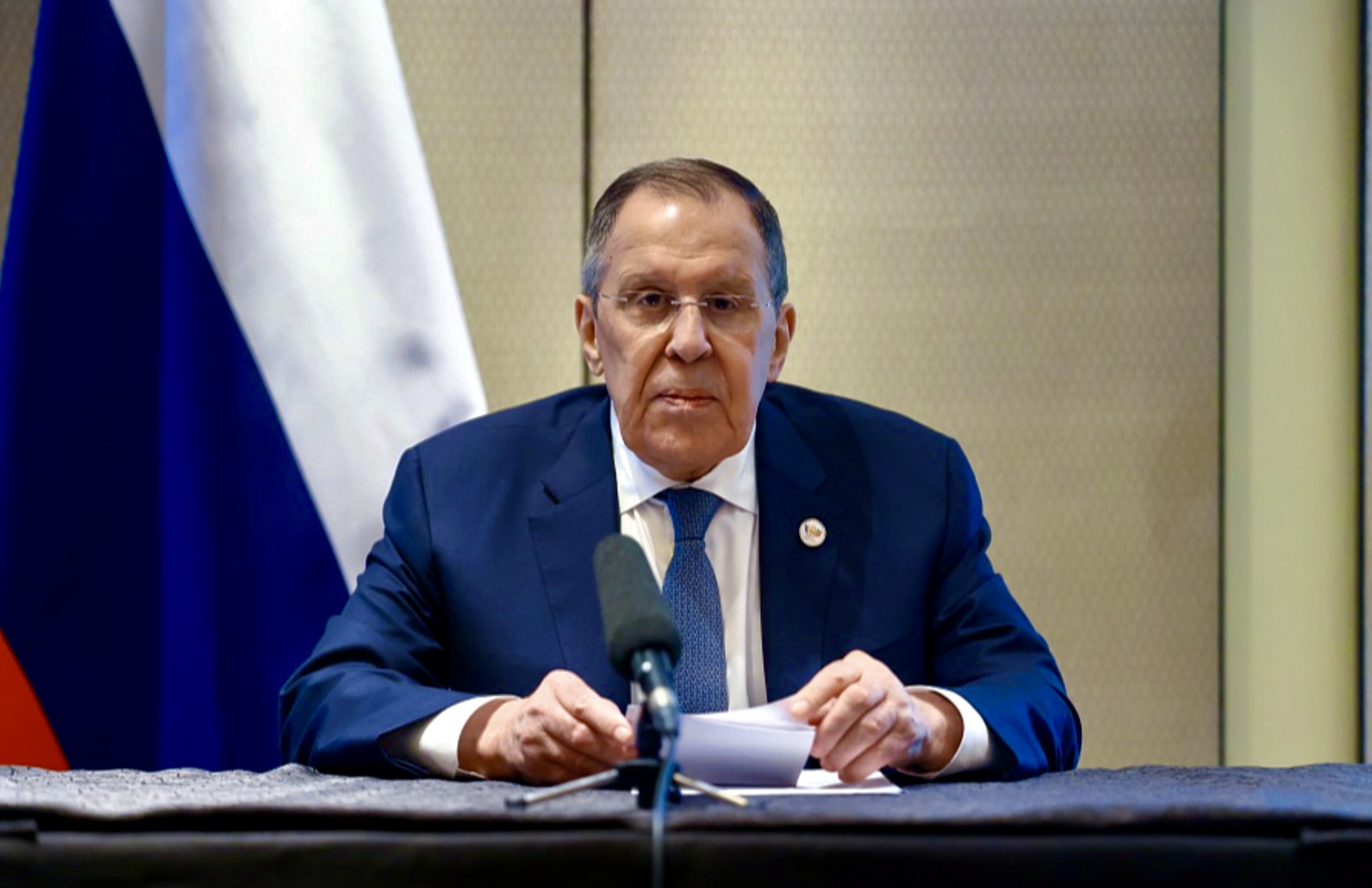
NEW DELHI (Realist English). From 14 to 15 May 2026, a meeting of the foreign ministers of BRICS countries chaired by India was held in New Delhi. The Russian delegation was led by Foreign Minister Sergey Lavrov.
Lavrov emphasised the need for joint efforts to find collective answers to contemporary challenges, especially in the context of a build‑up of a “critical mass of contradictions” in the international system. According to him, BRICS is rightfully the core element of the emerging polycentric world order. The upcoming September summit in India is expected to be the next step in the institutionalisation of this process.
BRICS is transforming from a discussion club into a real tool for collective global governance, an alternative to Western hegemony. Reform of the Bretton Woods institutions, the rejection of unilateral sanctions and the political settlement of conflicts are the three pillars on which the association intends to build a new world architecture.
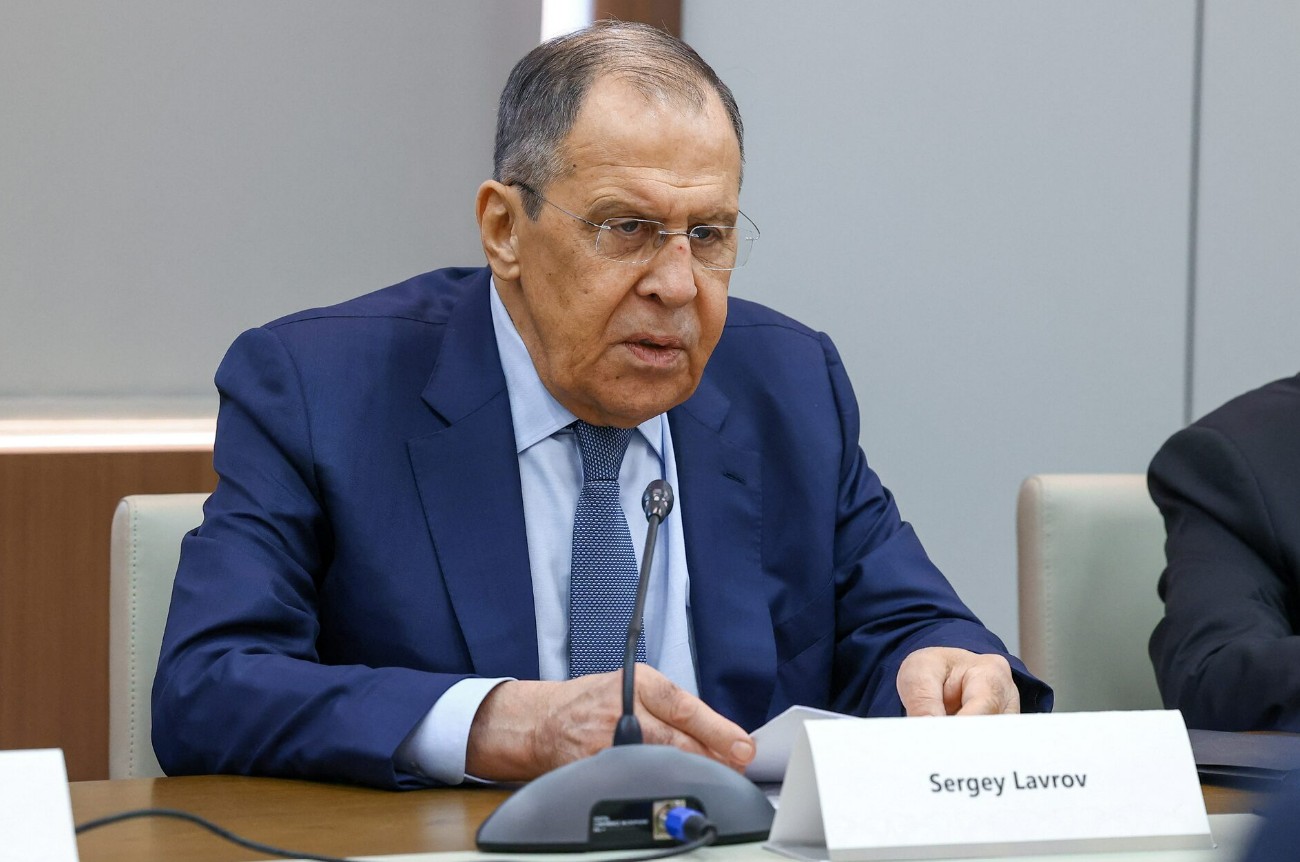
At his final press conference, Lavrov summed up the results of the BRICS foreign ministers’ meeting, as well as the bilateral talks with the Indian leadership. The main topics were: the strategic partnership between Russia and India, global governance reform, the crisis around Iran and the Strait of Hormuz, and Europe’s inability to honour its commitments.
Russia – India: $100 billion trade turnover and settlements in national currencies
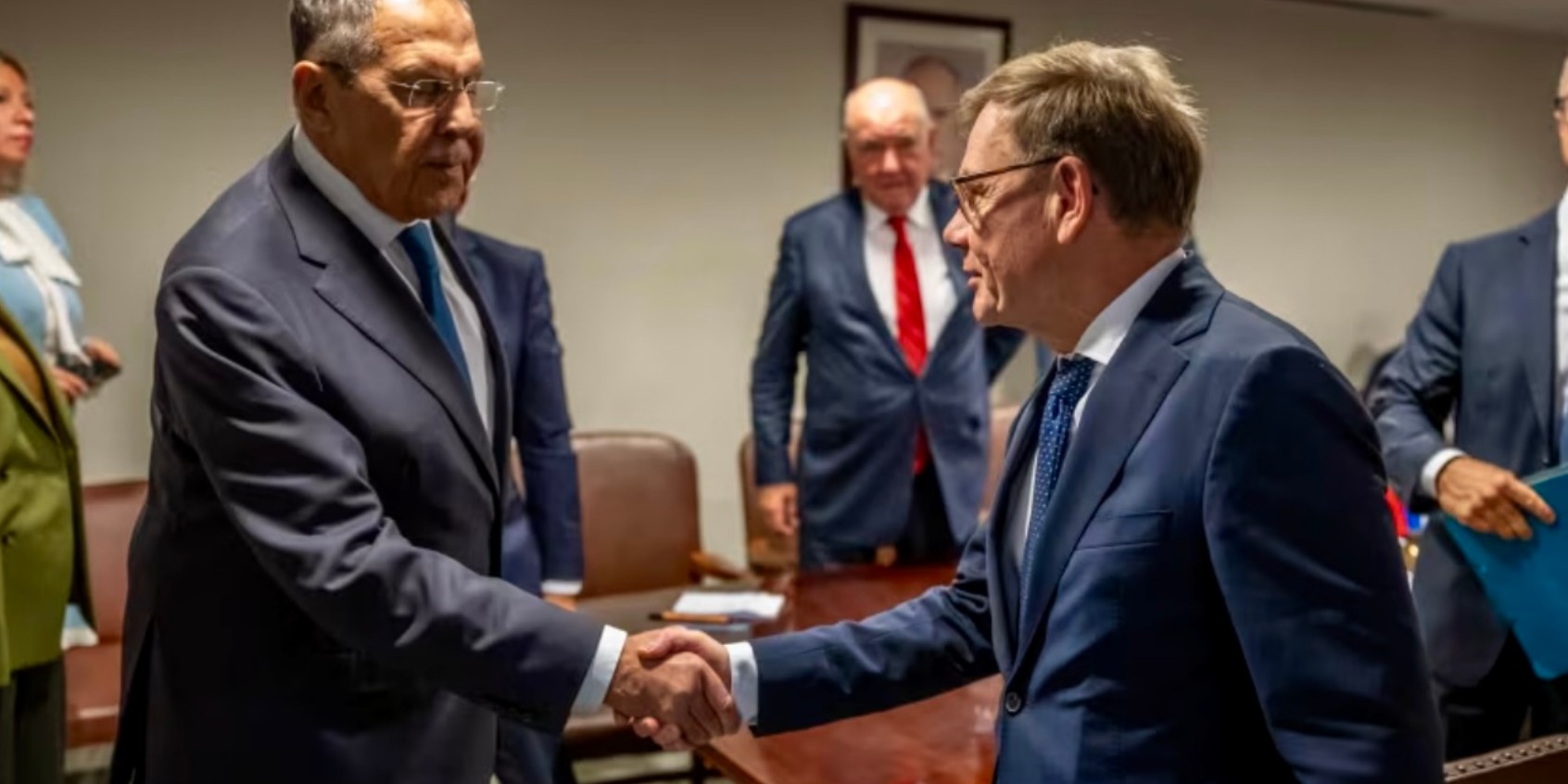
During his visit to New Delhi, Lavrov held talks with Indian Foreign Minister Subrahmanyam Jaishankar and was received by Prime Minister Narendra Modi. The sides confirmed all the agreements reached at the December 2025 summit, including the programme for the development of strategic areas of economic cooperation until 2030. The aim is to increase bilateral trade turnover to $100 billion.
Lavrov noted that Russia and India are working to improve the mechanisms of trade, economic and investment cooperation, striving to “avoid dependence on the negative influence of third countries”.
Special attention was paid to:
- Transport cooperation: joint development of the International North‑South Transport Corridor and the Northern Sea Route.
- Energy: increased supplies of Russian hydrocarbons and fertilisers, as well as the possibility of building new nuclear power units in India.
- Space and military‑technical cooperation: joint projects on satellite navigation, manned space flight and the production of modern weapons.
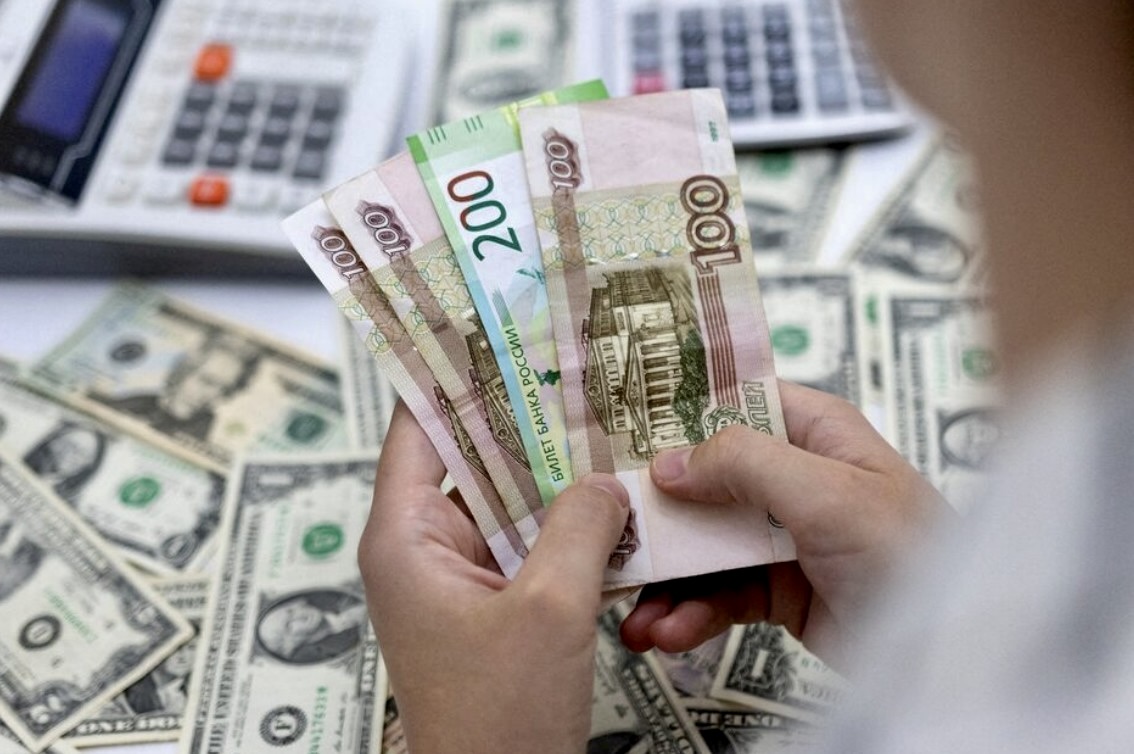
“Our trade with India has long been moving away from the use of the dollar towards the use of national currencies,” Lavrov said, stressing that there were no obstacles to settlements in rupees and roubles.
BRICS: 20 years, 40% of global GDP and refusal to “Ukrainianise” the G20
According to the Russian Foreign Minister, over 20 years BRICS has become a “leading element in the formation of a polycentric world order”. The association, together with its partner countries (including Cuba), accounts for more than 40% of global GDP, while the G7’s share is just over 30%.
Lavrov stressed that BRICS countries are categorically opposed to Western attempts to “Ukrainianise” the G20 agenda. Instead, the group insists on reforming the Bretton Woods institutions (IMF, World Bank, WTO) so that they reflect the real weight of states in the global economy.
“The West has destroyed the universal model of globalisation with its own hands,” the minister said. “The international financial institutions now need a reform that is long overdue.”
At the same time, the expansion of BRICS has been temporarily put on hold: “We need to get used to working in the new, significantly expanded format,” Lavrov explained, noting that applications for full membership will only be considered from states that have already acquired partner status.
Iran, UAE and the Strait of Hormuz: BRICS is not a moderator, but India could act as mediator
Answering a question about the contradictions between two BRICS members – Iran and the UAE – Lavrov recalled that the root cause of the current crisis was “the unprovoked aggression of the United States and Israel against the Islamic Republic of Iran”.
“Until 28 February 2026, when the aggression began, the Strait of Hormuz was working without any problems,” the minister said. “Now everyone is calling on Iran to open the strait, but it was not Iran that created this problem.”
Lavrov expressed confidence that, in the long term, a regional security structure needs to be created in the Gulf area – along the lines of the concept that Russia has been promoting for years.
He also suggested that India (as chair of BRICS and a country directly dependent on oil supplies from the region) could offer its “good offices” to normalise relations between Iran and the Arab monarchies. Pakistan, he noted, is already helping to establish a dialogue between Iran and the US – “to resolve the immediate problem”.
Ukraine: Kyiv violates the UN Charter, the West turns a blind eye
Lavrov said he had informed his BRICS partners about the situation in Ukraine, emphasising that the Kyiv regime grossly violates Article 1 of the UN Charter, which guarantees human rights regardless of language or religion.
“Ukraine is the only country in the world where an entire language – a language that is an official language of the UN – has been banned,” the minister said, adding that Western countries, when dealing with Kyiv, do not even mention the need to respect these rights.
Lavrov also drew attention to IMF lending statistics: in recent years, Ukraine has received about 600% of its quota, which is several times more than the volume of loans issued to all African countries over the same period. “This is a clear example of how the Bretton Woods institutions are being managed and in whose interests,” he concluded.
Europe is not a mediator: a history of deceptions from Minsk to the Maidan
The Russian Foreign Minister strongly criticised the European countries that have “awoken” and started talking about the need for dialogue with Russia.
“The Europeans’ track record in terms of their ability to honour agreements is entirely negative,” Lavrov recalled. “Suffice it to recall how Germany and France guaranteed a peace agreement in February 2014, and by morning it had been torn up. Or how they signed the Minsk agreements and then admitted they had no intention of implementing them.”
Lavrov commented on Vladimir Putin’s suggestion to consider former German Chancellor Gerhard Schröder as a possible European representative in the talks: “Look at the fuss that caused. The head of European diplomacy, Kaja Kallas, said that she alone was the representative. This shows the political immaturity of Europe.”
Armenia: allied but difficult relations
Lavrov confirmed that Russia and Armenia have “close, allied, but at the same time difficult relations”. He recalled Vladimir Putin’s warning: membership in the Eurasian Economic Union (EAEU) and European integration are mutually exclusive.
“Brussels makes full alignment with the organisation’s foreign policy a condition for EU accession, and the essence of that foreign policy today is aggressive Russophobia,” the minister said.
He expressed regret that Armenian Prime Minister Nikol Pashinyan, citing his election campaign, would not be able to attend the EAEU summit in late May in Kazakhstan. “It’s a good opportunity to discuss issues that are in the air,” Lavrov said.
Africa and “colonialism”: Macron gets an answer
Commenting on French President Emmanuel Macron’s claim that Russia is a “coloniser” in Africa, Lavrov replied: “If anyone knows what real colonialism is, it’s the French.”
The minister recalled a recent incident when European diplomats told him that the Sahel and Africa in general were a “zone of the European Union”. “I have never read that former colonies have been forever assigned to you,” he added, emphasising that Russia responds to the requests of African governments rather than imposing its will.
Lavrov’s press conference in New Delhi showed that Russia continues to rely on BRICS and relations with the “global majority”, contrasting them with the “imperialist habits” of the West. India remains a key partner, despite all US attempts to pull it to its side. Europe has definitively lost the Kremlin’s trust – it will only be spoken to “from a position of strength”, once it comes to its senses.