

WASHINGTON (Realist English). A new pro-artificial intelligence political group backed by allies of U.S. President Donald Trump plans to spend at least $100 million in the upcoming midterm elections, as the technology sector intensifies efforts to shape regulatory policy.
The group, Innovation Council Action, will be led by former Trump aide Taylor Budowich and is expected to support candidates who favor limited federal oversight of AI. The initiative has backing from figures aligned with Trump adviser David Sacks, though he will not hold a formal role.
The planned spending adds to a broader surge in political funding around AI policy. Other industry-aligned groups have already raised nearly $200 million, while the political action committee Leading the Future — supported by donors including Greg Brockman, venture capital firm Andreessen Horowitz, and investor Joe Lonsdale — raised $125 million last year to back pro-AI candidates.
Major technology companies are also involved. Meta has earmarked $65 million for state-level races, while Public First Action, funded by Anthropic, aims to raise up to $75 million to support candidates favoring stronger regulation.
At the same time, groups advocating tighter oversight are mobilizing. The Future of Life Institute has launched an $8 million advertising campaign promoting what it describes as “pro-human” AI policies in key electoral states.
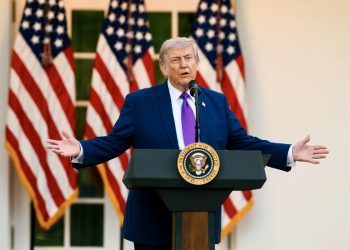
The political push comes shortly after the White House unveiled a federal framework for AI regulation, which emphasizes light-touch rules on safety and content while seeking to prevent individual U.S. states from adopting their own regulatory regimes.
Supporters of a unified federal approach, including Sacks, argue that fragmented state-level laws could hinder innovation and weaken the United States’ competitive position, particularly against China. However, calls for stricter regulation are gaining traction across the political spectrum.
Recent polling indicates that a majority of Americans support stronger oversight of AI technologies, including segments of Trump’s voter base. Divisions have also emerged within the Republican Party, with lawmakers such as Josh Hawley and Marsha Blackburn opposing efforts to limit state-level regulation.
Analytically, the scale of political spending highlights how AI policy is rapidly becoming a central issue in U.S. elections, with competing visions of regulation shaping alliances across industry and government.
The key question is whether federal lawmakers will adopt a unified regulatory framework or allow a fragmented system to emerge, as political pressure from both industry and public opinion continues to intensify.