
Realist: news and analytics

Русский / English / العربية

  • News
  • Russia
  • Caucasus
  • Opinion
  • Interviews
  • Experts
No Result
View All Result
Realist: news and analytics
  • News
  • Russia
  • Caucasus
  • Opinion
  • Interviews
  • Experts
No Result
View All Result
Realist: news and analytics

Russia’s elite: from Soviet nomenklatura to state corporations

Why the country’s ruling class remains inseparable from the state apparatus — and why attempts to change it keep failing.

Dmitry Zhuravlev Dmitry Zhuravlev
August 25, 2025, 00:06
Opinion
Russia’s elite: from Soviet nomenklatura to state corporations

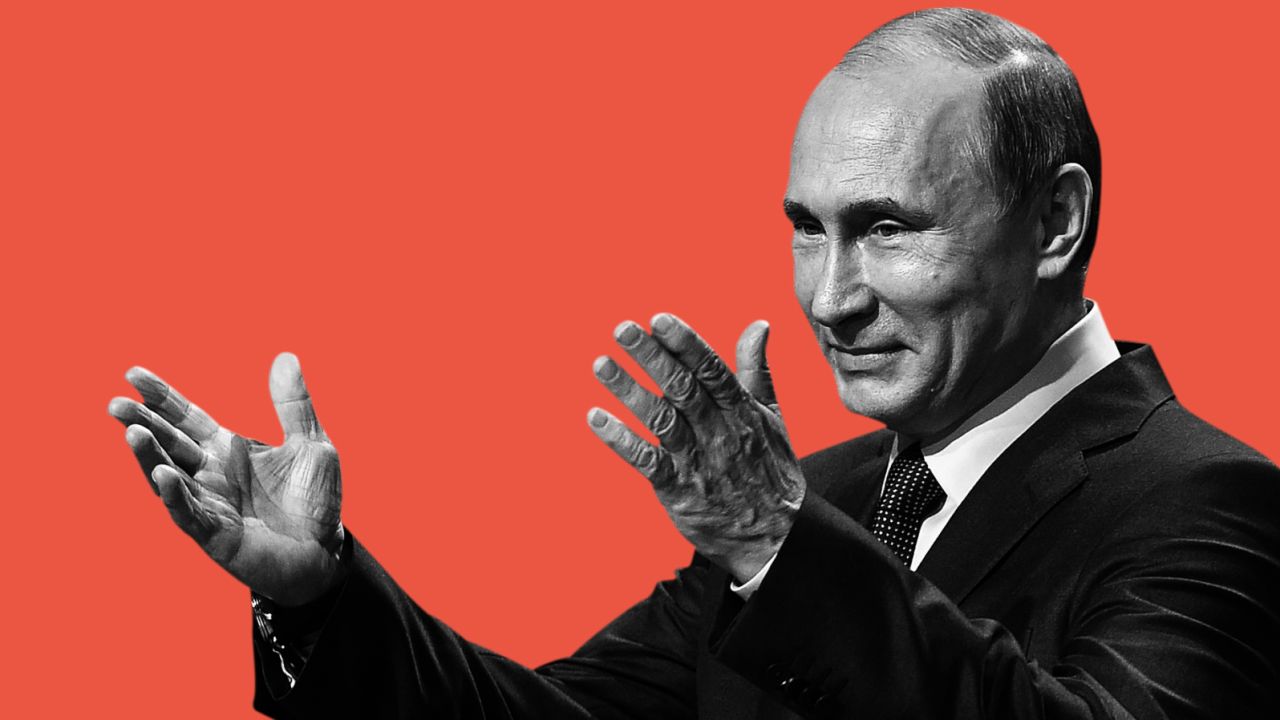
MOSCOW (Realist English). The specificity of the Russian elite is defined by the nature of its origins: it grew out of the Soviet system. The Soviet elite was essentially a collection of state officials, and it could not have been anything else. In a country where everything belonged to the state, no other form of elite could exist. Yet, the Soviet elite was dissatisfied with its position: it controlled the country but lacked the ability to pass it on to its children as inheritance. Concern for their children’s future led members of this elite to initiate the introduction of a market economy in order to privatize power through its mechanisms. In essence, this became the true content of perestroika.

However, in Russia this mechanism did not work. Here, it is impossible to “share” power — it can only be transferred in its entirety. Power is sacred, and therefore indivisible. The very existence of a market economy undermined the foundations of Soviet authority, and in the end the Soviet Union collapsed. President Boris Yeltsin did not trust the state apparatus, believing that it sought to restore the USSR. For that reason, he launched a rapid privatization of the country’s most attractive state assets, creating a support base in big business. Since businessmen at the time were effectively “appointed,” their activities could easily have fallen under the control of the bureaucracy. But Yeltsin did not allow that to happen.

The result was a specific configuration of the elite: at the center — the president; surrounding him — big business (the so-called “seven bankers”); and on the periphery — the state apparatus. In this system, nothing restrained business, and therefore nothing limited its selfishness. Big capital went to extremes, and the country rapidly plunged into chaos. This order satisfied no one. Hence, the new president had little difficulty in sidelining the oligarchs, making them equally distant from power. He did not fear the apparatus, understanding that it did not wish to return to the USSR. With “appointed” business under control, the bureaucracy regained its authority.

The elite’s configuration then changed: at the center — the president and his closest allies; next — the state apparatus; and on the periphery — business. This system proved effective and matched the structure of the Russian economy. Yet it did not solve the main problem — the succession of power. The bet was placed on state corporations. A new configuration emerged: at the center — the president and his inner circle; surrounding them — the heads of state corporations and top state institutions; and on the periphery — lower-level officials and business. This structure remains in place today.

However, a new factor has appeared in the elite system — veterans of the Special Military Operation. Accustomed to making unconventional decisions, they are likely to act the same way in government. But there they will encounter a different order: decisions are taken according to established procedures, and stepping outside this algorithm eliminates influence over the process. At the same time, within the procedure itself, it is almost impossible to bring about fundamental change. It is into this institutional trap that the veterans are likely to fall.

The principal specificity of the Russian elite is that it is a state elite — it functions and thinks within the logic of the state apparatus, and it cannot be anything else.

Dmitry Zhuravlev — Academic Director of the Institute of Regional Problems, exclusively for Realist English

Russia
Previous Post

Australians stage mass pro-Palestinian rallies as ties with Israel deteriorate

Next Post

Scientists confirm Africa is home to four distinct giraffe species

Related Posts

Armenian monastery Dadivank
Opinion

Dadivank: The Legacy of Christ’s Apostles in Artsakh

17 December, 2025
An unusual phenomenon at the Church of the Holy Savior in Shushi
Opinion

An unusual phenomenon at the Church of the Holy Savior in Shushi

3 November, 2025
War with Iran seen as inevitable, Armenia warned of looming regional storm
Opinion

War with Iran seen as inevitable, Armenia warned of looming regional storm

21 September, 2025
Putin, Trump and Zelensky: is a trilateral meeting necessary?
Opinion

Putin, Trump and Zelensky: is a trilateral meeting necessary?

27 August, 2025
A meeting of minds across time: Alaska’s role in U.S.–Russia history
Opinion

A meeting of minds across time: Alaska’s role in U.S.–Russia history

17 August, 2025
Peace with Baku–Turkish occupiers is an illusion
Opinion

Peace with Baku–Turkish occupiers is an illusion

9 August, 2025
Most Popular
Most Popular
Photo showing Trump’s face disappears from DOJ Epstein files release

Lula warns US action against Venezuela would trigger humanitarian disaster

21 December, 2025

FOZ DO IGUAÇU (Realist English). Brazilian President Luiz Inacio Lula da Silva has warned that any armed intervention in Venezuela...

Putin says Russia has no plans for new military operations, blames West for tensions

Putin says Russia has no plans for new military operations, blames West for tensions

20 December, 2025

MOSCOW (Realist English). Russian President Vladimir Putin said on Tuesday that Moscow is not planning any new special military operations,...

Maduro rejects Trump’s claims over Venezuelan oil and land, accuses US of colonial ambitions

Maduro rejects Trump’s claims over Venezuelan oil and land, accuses US of colonial ambitions

18 December, 2025

CARACAS (Realist English). Venezuelan President Nicolás Maduro has said recent remarks by U.S. President Donald Trump about “reclaiming” Venezuelan land...

Russia’s birth rate stands at 1.4, with rural areas outperforming cities — Volodin

Trump orders blockade of sanctioned oil tankers to and from Venezuela

17 December, 2025

WASHINGTON (Realist English). U.S. President Donald Trump on Tuesday ordered a “total and complete blockade” of all sanctioned oil tankers...

Opinion

Armenian monastery Dadivank

Dadivank: The Legacy of Christ’s Apostles in Artsakh

17 December, 2025

YEREVAN (Realist English). In Artsakh, before the ethnic cleansing and forced deportation – simply put, genocide – carried out by...

An unusual phenomenon at the Church of the Holy Savior in Shushi

An unusual phenomenon at the Church of the Holy Savior in Shushi

3 November, 2025

YEREVAN (Realist English). In the distant year 1979, as a third-year university student, I used to visit the Church of...

War with Iran seen as inevitable, Armenia warned of looming regional storm

War with Iran seen as inevitable, Armenia warned of looming regional storm

21 September, 2025

YEREVAN (Realist English). The war with Iran is drawing ever closer. And once again, this pulls Armenia into a zone...

Putin, Trump and Zelensky: is a trilateral meeting necessary?

Putin, Trump and Zelensky: is a trilateral meeting necessary?

27 August, 2025

MOSCOW (Realist English). Although more than a week has passed since the meeting between Russian President Vladimir Putin and U.S....

All rights reserved.

© 2017-2025

  • About Us
  • Mission and Values
  • Contact Us
  • Privacy Policy

Follow Realist English

No Result
View All Result
  • News
  • Russia
  • Caucasus
  • Opinion
  • Interviews
  • Experts

Русский / English / العربية