BRUSSELS (Realist English). NATO Secretary‑General Mark Rutte has stated that the rearmament programme of European NATO allies is sustaining 195,000 jobs in the United States defence industry.
According to the Financial Times, this has been made possible by weapons orders worth $300 billion that are already in the pipeline for US defence companies.
The statement comes amid preparations for the NATO summit in Ankara on July 7–8 and serves as a key argument for maintaining US commitment to the alliance.
‘Trump’s Trillion’: How Europeans Pay for Their Security
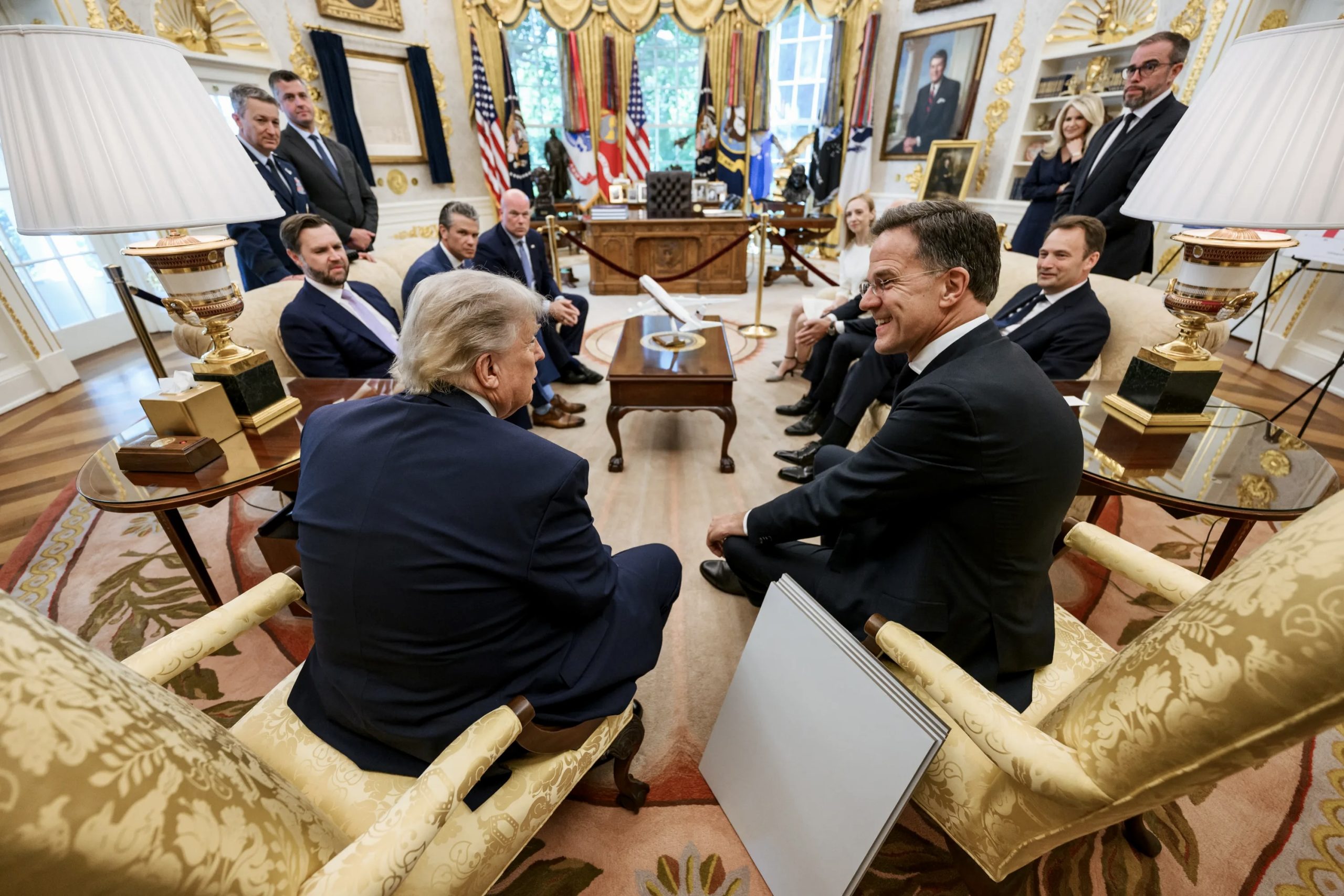
On June 24, Rutte visited the White House, where he presented President Donald Trump with a presentation titled “Trump’s Trillion.” During the meeting, the Secretary‑General demonstrated clear data on the growth of defence spending by European allies and Canada.
“I can assure you: this is happening because of Russia, because of the threat. But I am also absolutely convinced that it is you, as President of the United States, who have consistently achieved what has not been accomplished since Eisenhower’s time — aligning European defence spending with American levels — that is the proof of this,” Rutte said, addressing Trump.
According to the data presented, since 2017, when Trump first took office, European allies and Canada have increased their combined additional defence spending by $1.2 trillion. In 2025 and 2026 alone, additional spending will exceed $250 billion.
In 2025, Europeans and Canadians increased defence spending by nearly 20% compared to the previous year.
195,000 Jobs: How European Investment Feeds the US Defence Industry
Rutte detailed exactly how European investment supports the US economy:
- 83,000 jobs have been created through direct investment by European companies in the US.
- 112,000 jobs are supported by European purchases from US weapons manufacturers. Last year, Europe spent $54 billion on US defence products.
- In total, this amounts to 195,000 jobs — real people, real jobs.
At the same time, the total order book from European countries for US defence companies has already reached $300 billion and will be fulfilled over the coming years.
The Secretary‑General also noted that the US defence industrial base is “extremely important” to the alliance, as Europe can only procure certain key weapons systems from the US.
Production Problems and Call to Increase Capacity
Rutte acknowledged capacity issues in both Europe and the US but noted that additional production lines are already being built.
In an interview with the Financial Times, the Secretary‑General called on defence producers in NATO countries to use the increase in defence spending — which over the past two years has amounted to $250 billion — to scale up production rather than to raise prices.
“Our goal is not price increases, but production increases,” Rutte stressed.
An Argument for Trump Ahead of the Ankara Summit
As the Financial Times notes, Rutte’s statement provides Trump with an economic argument for maintaining NATO commitment ahead of next week’s summit in Ankara. The European rearmament programme serves as direct evidence that Washington’s pressure on allies is yielding results.
Trump, for his part, has repeatedly demanded that European allies increase defence spending. Rutte’s data confirms that these demands have been met.
On the eve of the summit, on June 29–30, EU High Representative for Foreign Affairs Kaja Kallas visited Turkey, indicating increased contacts between Brussels and Ankara ahead of the leaders’ meeting.
European rearmament has become not only a security issue but also a powerful economic stimulus for the US defence industry. $300 billion in orders, 195,000 jobs and $1.2 trillion in additional spending since 2017 — these are the figures Rutte presented as proof of the effectiveness of Trump’s policy toward NATO.
The question remains whether this will be enough to secure long‑term US participation in the alliance.