SAN FRANCISCO (Realist English). American AI company Anthropic, one of the leading developers of artificial intelligence, has announced two major events that occurred almost simultaneously. On June 30, the US Department of Commerce lifted export restrictions on Anthropic’s most powerful models — Claude Fable 5 and Claude Mythos 5.
On the same day, the company unveiled Claude Science — a new AI platform designed to automate scientific research in biology and chemistry.
From Ban to Return: How the Trump Administration Changed Course
Less than three weeks ago, on June 12, the US Department of Commerce forcibly blocked access to the Fable 5 and Mythos 5 models for all foreign nationals. The reason was concern that advanced AI tools could be used by hackers to breach computer systems and bypass cybersecurity measures.
At the time, the company stated that the US government had “identified a method of hacking or ‘jailbreaking’ Fable 5,” but Anthropic disagreed that “the discovery of a narrow potential jailbreak should be a reason to withdraw a commercial model deployed to hundreds of millions of people.”
On June 26, the government partially eased restrictions, allowing the release of Mythos 5 to certain “trusted” US organisations.
The final decision was made on June 30. In a letter from Commerce Secretary Howard Lutnick addressed to Anthropic, it stated that export controls were being lifted and that a licence was no longer required for exporting the Mythos and Fable models. “Anthropic has taken steps in close coordination with the US government to address the risks associated with Claude Mythos 5 and Claude Fable 5,” the letter said.
The company announced on X: “We have received notification that the Department of Commerce has lifted export restrictions on Claude Fable 5 and Mythos 5. We will begin restoring access tomorrow.” Restoration of access began on July 1.
Terms of the Deal and Criticism of the Administration
The lifting of restrictions came with commitments from Anthropic. According to Lutnick’s letter, the company agreed to “proactively identify and mitigate security risks associated with the models; work with the US government on protocols, standards and releases of Mythos, Fable and future models; and inform the US government of any malicious activity.”
The Department of Commerce reserves the right to reconsider the lifting of export restrictions if necessary.
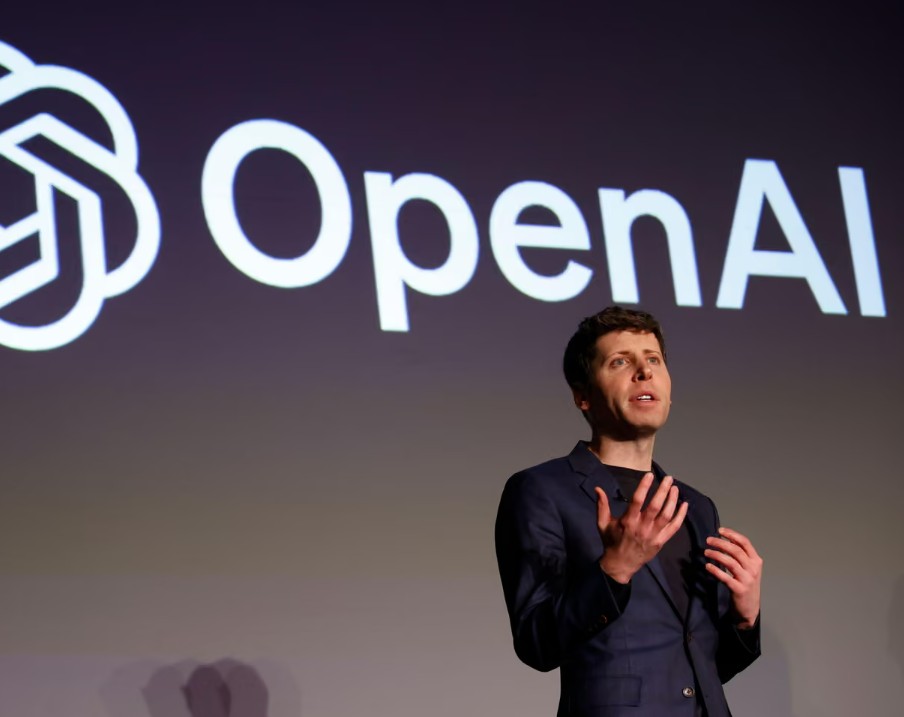
The government review process drew criticism from competitors. OpenAI CEO Sam Altman said that extensive safety testing “is not a bad idea,” but “I don’t like the idea of the government picking customers.” OpenAI, at the request of the US government, delayed the full public release of its GPT-5.6 model, limiting access to a small group of trusted partners.
The conflict between Anthropic and the authorities had been ongoing for several months. Back in March, the Pentagon classified Anthropic as an “unacceptable supply chain risk,” which could have restricted federal agencies from using its technologies. The company filed a lawsuit against this decision. In recent weeks, Anthropic shifted its tactics, focusing on bringing Fable back online.
CIA Director John Ratcliffe, speaking on the same day at the AWS Summit in Washington, drew a parallel between the capabilities of advanced AI models and nuclear weapons.
“In conversations with many of the president’s national security and economic advisers, we talk about the impact of these advanced AI models… It would not be a mistake to call their capabilities digital nuclear weapons,” Ratcliffe said.
Claude Science: An AI Workspace for Scientists
On the same day, June 30, Anthropic announced Claude Science — a new AI platform positioned as a “workspace for scientists.” Unlike a standard chatbot, Claude Science is a full-fledged workspace that integrates the disparate tools researchers deal with on a daily basis.
Scientists have to work with dozens of databases, convert files into different formats, and switch between PubMed, Jupyter, R, cluster terminals and other tools. Claude Science brings all these elements into a single environment, allowing researchers to conduct all stages of their work in one place.
The platform uses existing Claude models (including Claude Opus 4.8) without special access or restrictions. It is not a new model but an “operational layer” for scientific work.
One main AI assistant acts as a “project manager” for scientists, connecting to more than 60 scientific databases and having pre-configured tools for genomics, protein structure and chemistry. This assistant can create subordinate assistants to divide the work or hand tasks to an “expert” assistant created by the user.
A separate “fact-checker” verifies citations and calculations before publication. The platform generates artefacts such as 3D protein structures, genome browser tracks and chemical structures, as well as the code that created them. Each figure includes “the exact code and environment that created it, a plain‑language description of how it was created, and the full message history.”
Positioning and Plans
Anthropic positions Claude Science as a product on the same level as Claude Code (a tool for programmers) and Claude Cowork.
“This shows how important this is to our mission — this product is on the same level as Claude Code and Claude Cowork as the next truly significant solution we are releasing,” said Eric Kudrer-Abrams, head of life sciences at Anthropic. “Our mission is to develop AI that serves the long-term well-being of humanity, and we believe the greatest opportunity for that is in the life sciences.”
Anthropic also announced that it will use Claude Science for its own research into developing drugs for rare “forgotten” diseases. The company has already received significant recognition from the scientific community: earlier in June, John Jumper, a Nobel laureate in chemistry for his work on the AlphaFold model, announced he was leaving Google DeepMind to join Anthropic.
According to MIT Technology Review commentators, in recent months “the rapidly advancing frontier of AI progress seems to have left DeepMind behind.”
Anthropic, unlike OpenAI, which is led by businessman Sam Altman, is run by CEO Dario Amodei, who holds a PhD and has a background in science.