

WASHINGTON (Realist English). U.S. President Donald Trump on Tuesday ordered a “total and complete blockade” of all sanctioned oil tankers entering or leaving Venezuela, escalating Washington’s pressure campaign against the government of Nicolás Maduro and directly targeting the country’s oil exports.
How the blockade would be enforced remains unclear. U.S. officials have not specified whether the Coast Guard or the Navy would be tasked with interdicting vessels, though the administration has already deployed thousands of troops and nearly a dozen warships — including an aircraft carrier — to the region in recent weeks.
Announcing the decision on his Truth Social platform, Trump said Venezuela’s leadership had been designated a foreign terrorist organization for “the theft of our assets” and for alleged involvement in terrorism, drug smuggling and human trafficking. “Therefore, today, I am ordering a total and complete blockade of all sanctioned oil tankers going into, and out of, Venezuela,” he wrote.
The Venezuelan government rejected what it described as a “grotesque threat” from Washington.
Oil markets reacted quickly. U.S. crude futures rose more than 1% to $55.96 a barrel in Asian trading following Trump’s announcement, though prices later settled at $55.27 on Tuesday — their lowest close since February 2021. Traders said prices were moving on expectations of reduced Venezuelan exports, but noted uncertainty over how the blockade would be implemented and whether it would extend to non-sanctioned vessels.
The order has also raised legal and constitutional questions. Elena Chachko, an international law scholar at UC Berkeley Law School, said blockades have traditionally been considered instruments of war under international law and only permissible under strict conditions. “There are serious questions on both the domestic law front and the international law front,” she said.
Democratic Representative Joaquin Castro of Texas called the blockade “unquestionably an act of war,” adding that it was “a war that Congress never authorized and the American people do not want.”
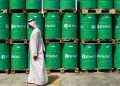
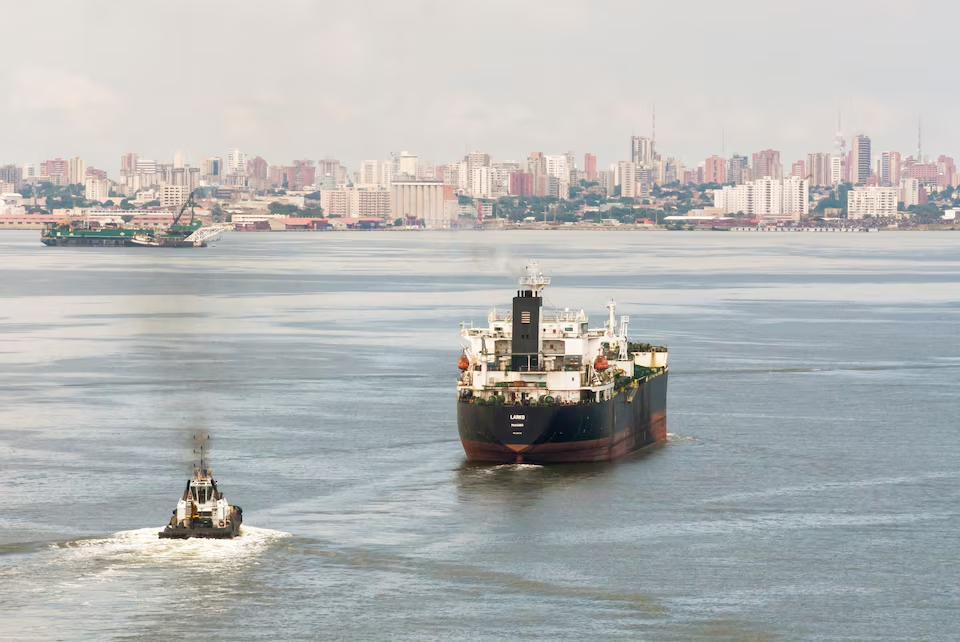
An effective embargo has already taken shape after U.S. authorities seized a sanctioned oil tanker off Venezuela’s coast last week. Since then, several loaded tankers carrying millions of barrels of crude have remained in Venezuelan waters to avoid the risk of seizure. Venezuelan crude exports have fallen sharply, a decline compounded by a cyberattack this week that disrupted administrative systems at state oil company PDVSA.
While many tankers lifting Venezuelan crude are already under U.S. sanctions, some vessels transporting oil from Iran and Russia are not. Certain companies — including U.S.-based Chevron — continue to ship Venezuelan oil using vessels operating under specific authorizations.
For now, analysts say the global oil market remains well supplied, with millions of barrels stored on tankers off the coast of China. But if the blockade persists, the loss of close to one million barrels per day of Venezuelan supply could push prices significantly higher.
Two U.S. officials said a fully enforced blockade could deal a major blow to Maduro’s government. David Goldwyn, a former U.S. State Department energy diplomat, estimated that oil prices could rise by $5–8 per barrel if Venezuelan exports are not offset by spare OPEC capacity. He warned the move could trigger “skyrocketing inflation” in Venezuela and a surge in migration to neighboring countries.
Since U.S. energy sanctions were imposed in 2019, traders and refiners have relied on a so-called “shadow fleet” of tankers that obscure their movements, often using vessels previously sanctioned for carrying Iranian or Russian oil. Data from TankerTrackers.com shows that more than 30 of roughly 80 ships currently in or approaching Venezuelan waters are under U.S. sanctions.
The blockade order comes amid sharply rising tensions. Trump’s pressure campaign has included an expanded U.S. military presence and more than two dozen strikes on vessels in the Pacific Ocean and Caribbean Sea near Venezuela, which U.S. officials say have killed at least 90 people. Trump has also said that U.S. land strikes against targets in Venezuela will begin soon.
Maduro has accused Washington of preparing an intervention aimed at overthrowing his government and seizing control of Venezuela’s vast oil reserves, the largest in the world. Speaking earlier on Tuesday, before Trump’s announcement, Maduro said the country would resist what he called an imperialist attempt to “colonize Venezuela and take over its oil, gas and gold.”