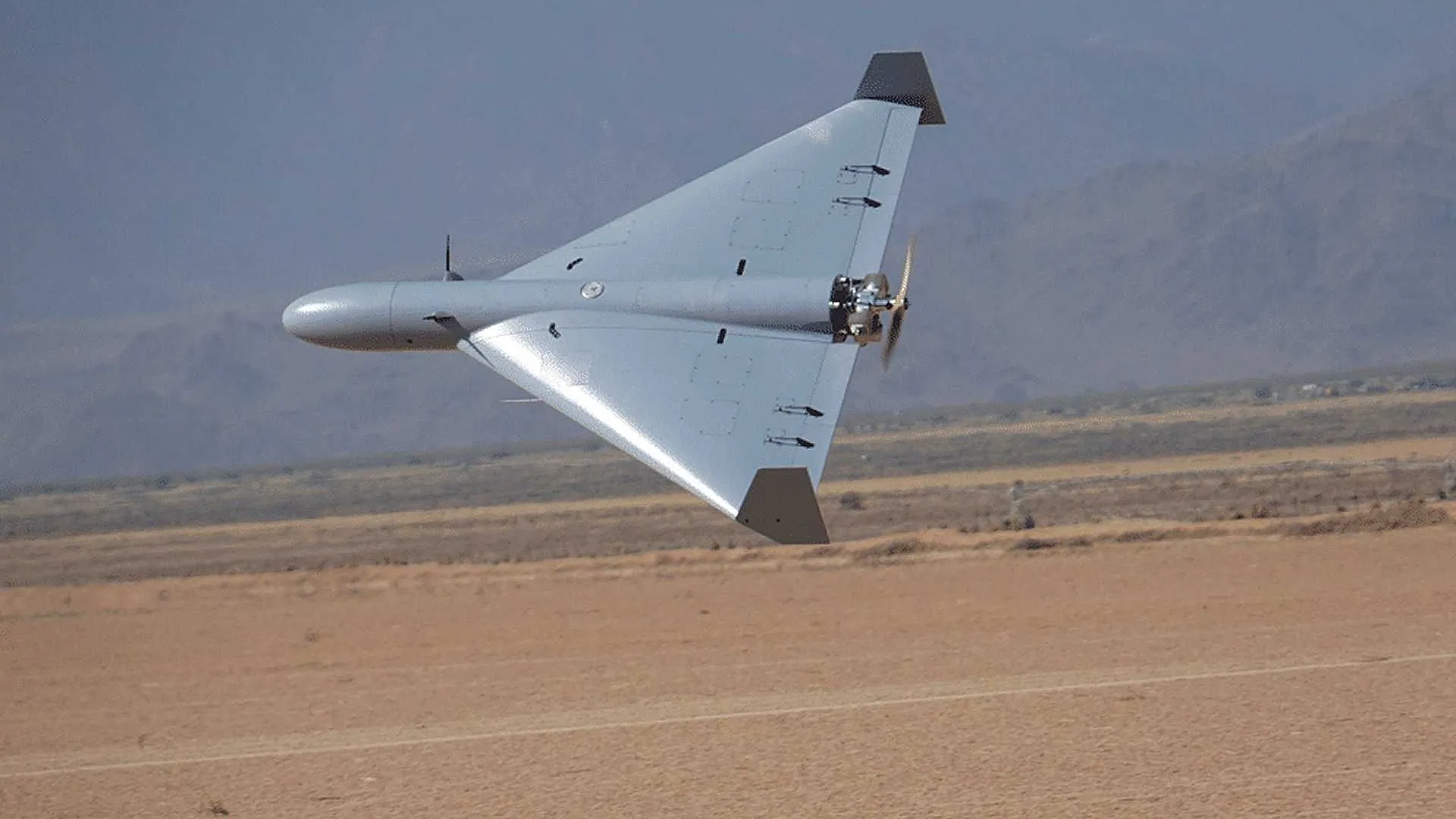
WASHINGTON (Realist English). The United States has begun deploying a new low-cost attack drone designed to counter Iran’s widely used Shahed-136 unmanned aerial vehicles, highlighting the growing role of inexpensive drones in modern warfare.
The system, known as the FLM 136 and marketed as the Low-Cost Uncrewed Combat Attack System (LUCAS), is being used by US forces in the Middle East to conduct one-way strike missions similar to those carried out by Iran’s Shahed-136 drones.
The war with Iran has underscored how drone technology — particularly inexpensive, expendable systems — is reshaping military strategy. Iran, whose defence budget is far smaller than that of the United States, has relied heavily on drones as part of an asymmetric approach to warfare.
Tehran’s Shahed-136 drone, developed by the IRGC-affiliated Shahed Aviation Industries in 2016, became a central element of that strategy. The loitering munition is designed for kamikaze attacks and is small enough to be transported in the back of a truck.
Each Shahed-136 costs roughly between $20,000 and $50,000 to produce. By contrast, interceptor missiles used by US air defence systems such as the Patriot can cost around $4 million each, creating a sharp cost imbalance between offensive drones and defensive systems.
This cost disparity has become a key factor in Iran’s defence planning, allowing it to deploy large numbers of drones in an effort to overwhelm more expensive Western air defence networks.
The US military has responded by encouraging domestic companies to develop similarly inexpensive drones capable of operating in large numbers.
One of the most prominent examples is the FLM 136 developed by Arizona-based defence technology company Spektreworks. First unveiled in 2025, the drone closely resembles the Shahed-136 in size and operational concept.
The FLM 136 measures about three metres in length with a wingspan of 2.5 metres but is significantly lighter than its Iranian counterpart, weighing roughly 81 kilograms compared with about 200 kilograms for the Shahed-136.
Because of the reduced weight, the American drone carries a smaller payload of approximately 18 kilograms, while the Shahed-136 can carry about 50 kilograms.
The drone is powered by a conventional internal combustion engine and can cruise at around 137 kilometres per hour, reaching a top speed of about 194 kilometres per hour. It can operate for up to six hours and has a range of roughly 444 nautical miles at altitudes up to 15,000 feet.
Like the Iranian system it mirrors, the FLM 136 is designed to be inexpensive. Each drone is estimated to cost about $35,000, placing it within the same cost range as the Shahed-136.
According to US officials, the drones are currently being launched by Task Force Scorpion Strike, a unit under US Central Command operating in the Middle East.
US Defence Secretary Pete Hegseth said earlier this week that Iran was “losing drone dominance” and claimed the United States now holds “total air dominance” in the conflict.
The push to expand American drone production follows a broader policy shift aimed at strengthening the US unmanned systems industry. In 2025, President Donald Trump signed an executive order titled “Unleashing American Drone Dominance,” intended to accelerate development of both commercial and military drones.
Later that year, the Pentagon requested that the US drone industry rapidly deliver up to 300,000 drones as part of a large-scale expansion of unmanned capabilities.
Several private companies have responded to the initiative, and investment in the sector has also increased. Eric Trump and Donald Trump Jr recently backed a merger involving drone manufacturer Powerus aimed at boosting domestic production capacity.