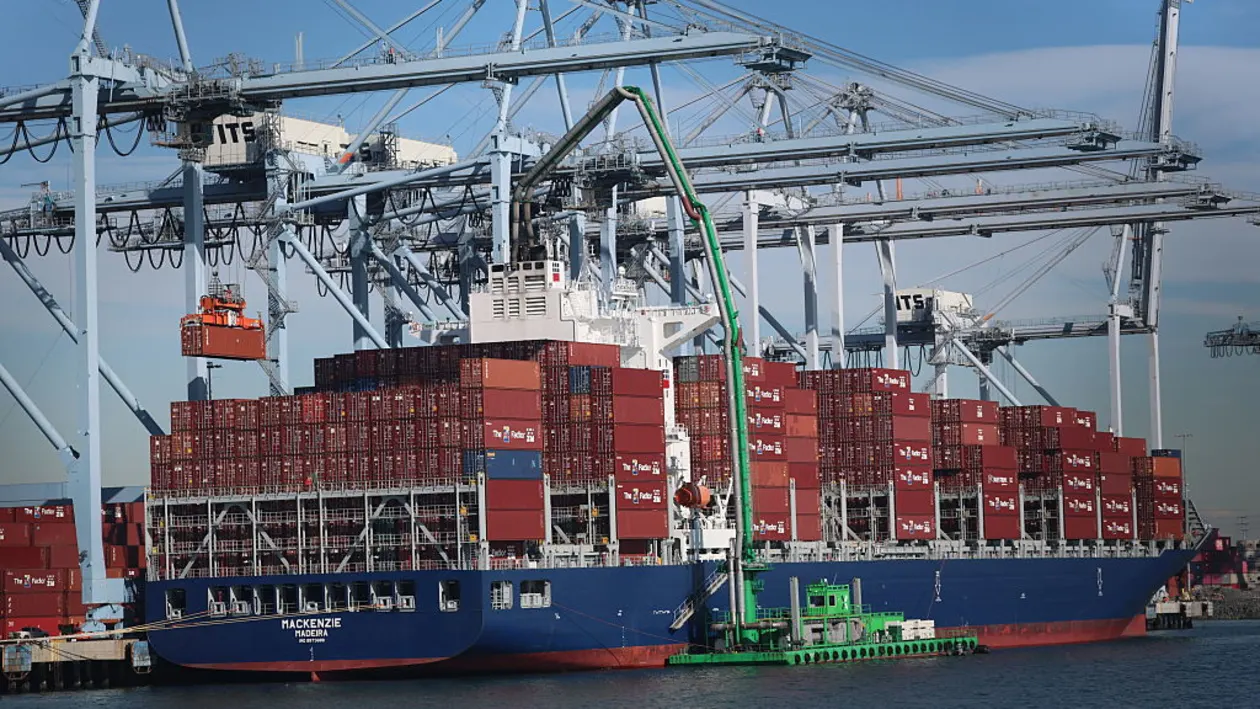
WASHINGTON (Realist English). A record number of companies importing goods into the United States are failing to meet federal requirements to guarantee payment of tariffs, according to U.S. Customs data, as elevated duties linked to President Donald Trump’s trade policies drive up financial obligations.
Data shared with CNBC show that customs bond “insufficiencies” reached 27,479 cases in fiscal year 2025, with a combined value approaching $3.6 billion — the highest number and dollar amount ever recorded. The figure is roughly double the level seen in 2019, when tariffs imposed under Section 301 of the Trade Act of 1974 similarly increased bond shortfalls.
U.S. Customs and Border Protection (CBP) uses customs bonds as a financial guarantee to ensure that importers can cover duties, taxes, and fees. A bond is deemed insufficient when an importer’s duty liability exceeds 100% of its existing bond capacity.
The spike in insufficiencies coincides with record tariff collections. Federal tariff revenue reached $30 billion in January alone and $124 billion year-to-date — a 304% increase compared with the same period last year.
“Bonds are the primary tool used by U.S. Customs and Border Protection to safeguard revenue and ensure compliance,” a CBP spokesperson said.
Trade lawyers say many companies underestimate the size of bond required. Jennifer Diaz, an attorney at Diaz Trade Law, told CNBC that some importers assume a standard $50,000 bond will suffice for a year, but higher tariff rates — in some cases rising from 10–25% or more — have significantly raised liability levels.
Customs bond requirements can now range from the regulatory minimum of $50,000 to as much as $450 million for large importers, according to trade specialists cited by CNBC.
Importers obtain bonds, also known as surety bonds, through insurance-backed surety companies. The bond typically covers 10% of duties and taxes paid over a rolling 12-month period, with importers paying a premium of about 1% of the bond limit. If tariffs rise, bond requirements increase proportionally.
Surety providers report sharp jumps in bond amounts. Vincent Moy, international surety leader at Marsh Risk, told CNBC that some clients have seen bond increases of more than 200%, with one large automotive manufacturer experiencing a 550% rise.
If a bond is insufficient, Customs can hold cargo at the port until additional coverage is secured — a process that may take at least 10 days. In addition to the bond itself, insurers often require collateral, which is held for 314 days while Customs reviews and finalizes duty payments.
The surge in bond obligations has strained relationships between importers, customs brokers, and insurers, industry participants say.
The issue may soon intersect with legal developments. The U.S. Supreme Court is expected to rule on the legality of tariffs imposed under the International Emergency Economic Powers Act (IEEPA), with a potential decision as early as February 20. If tariffs are overturned and refunded, importers could seek reductions in bond amounts and reclaim collateral tied to the duties.
However, surety companies caution that any refund process would likely involve administrative delays, as insurers must verify documentation before releasing collateral.
The record bond insufficiencies underscore the broader financial impact of elevated tariffs on U.S. trade flows — not only through higher duty payments but also via the capital tied up in compliance mechanisms designed to secure them.