WASHINGTON (Realist English). A debate in Washington over how to confront Venezuela’s Nicolas Maduro is reviving comparisons with the 1989 US invasion of Panama — a military operation that toppled Manuel Noriega, a onetime US intelligence asset later accused of drug trafficking and election fraud. Supporters of a harder line on Caracas see echoes of that era today, but analysts caution that the geopolitical, military and social landscapes are fundamentally different.
The parallels are politically tempting. As pressure mounts over alleged narcotrafficking by senior Venezuelan officials — accusations they strongly deny — some US lawmakers have invoked the precedent of President George H.W. Bush’s decision to remove Noriega by force. “Bush 41 took Panamanian leader Noriega down under similar circumstances,” Republican Senator Lindsey Graham wrote on X, calling Venezuela, Colombia and Cuba a “drug caliphate” and praising Donald Trump’s tough rhetoric.
Noriega’s downfall followed years of double-dealing. Though he first cooperated with the CIA and helped counter leftist movements in Central America, he also permitted large volumes of cocaine to transit Panama. His authoritarian rule and repression of civil society ultimately triggered a US ultimatum — go into exile or face military action. According to retired General Ruben Darío Paredes, Noriega initially considered stepping down but reversed course under pressure from loyalists, paving the way for “Operation Just Cause”.
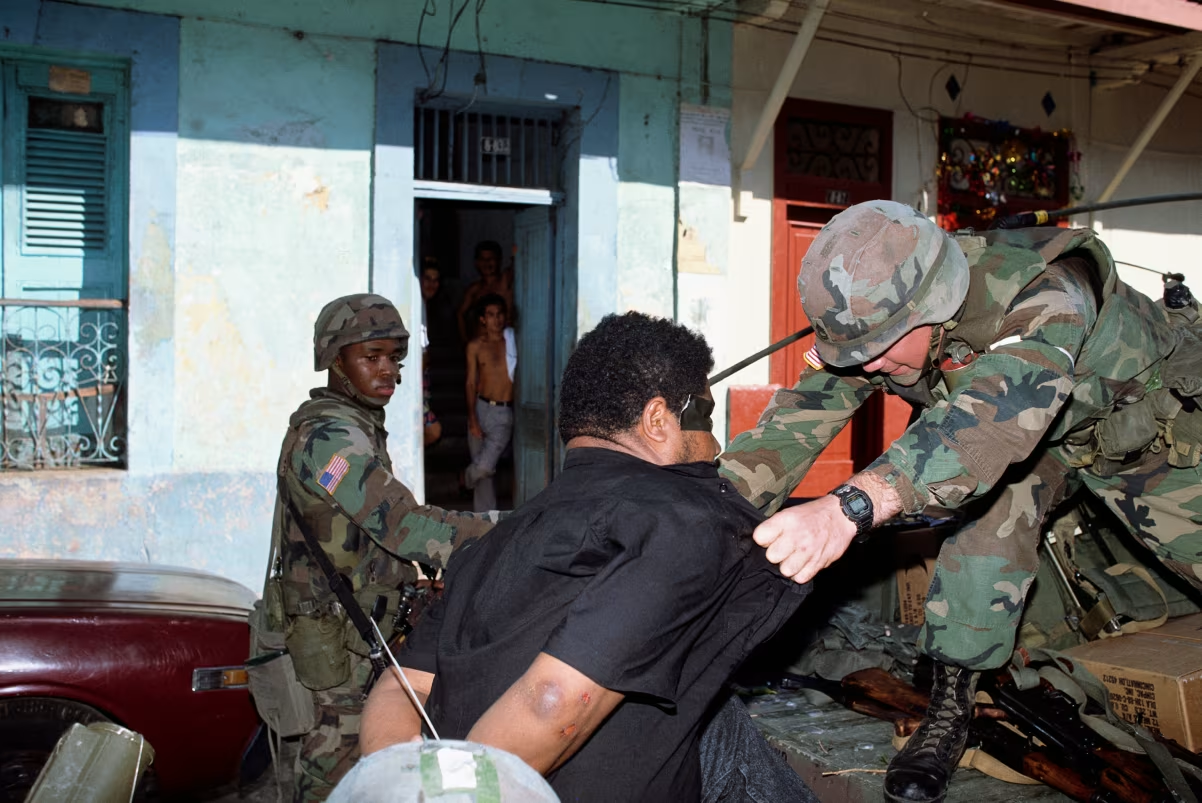
The December 1989 invasion deployed more than 20,000 US troops. Noriega fled to the Vatican embassy in Panama City, where American forces tried to force him out by blasting loud heavy-metal music. He surrendered after 10 days and was later convicted in a US court on drug-trafficking charges.
Despite surface similarities, the comparison has clear limits. Venezuela today is a nation of 28 million people — more than ten times Panama’s population in 1989 — and has no US military presence on its territory. Its geography poses formidable challenges: vast jungles, mountainous border regions and densely populated urban barrios dominated by heavily armed groups. Analysts also note that many figures in Maduro’s inner circle face US sanctions or indictments, making voluntary political transition unlikely.
“The question of Venezuelan military capability is not a serious one,” said Frank Mora, former US ambassador to the Organization of American States. “My concern has always been the day after — how do you maintain order in a country that has essentially collapsed?”
Regional support for any potential US military action also appears limited. Panama’s president José Raúl Mulino, once an opponent of Noriega’s regime, ruled out allowing US forces to use Panamanian territory in any operation targeting Venezuela. “Panama is not lending its territory for any hostile act against Venezuela or another country in the world,” he said.
As Washington weighs its options, the shadow of Panama looms large — but policymakers acknowledge that Venezuela presents a far more complex and volatile challenge than the swift, tightly contained intervention of 1989.