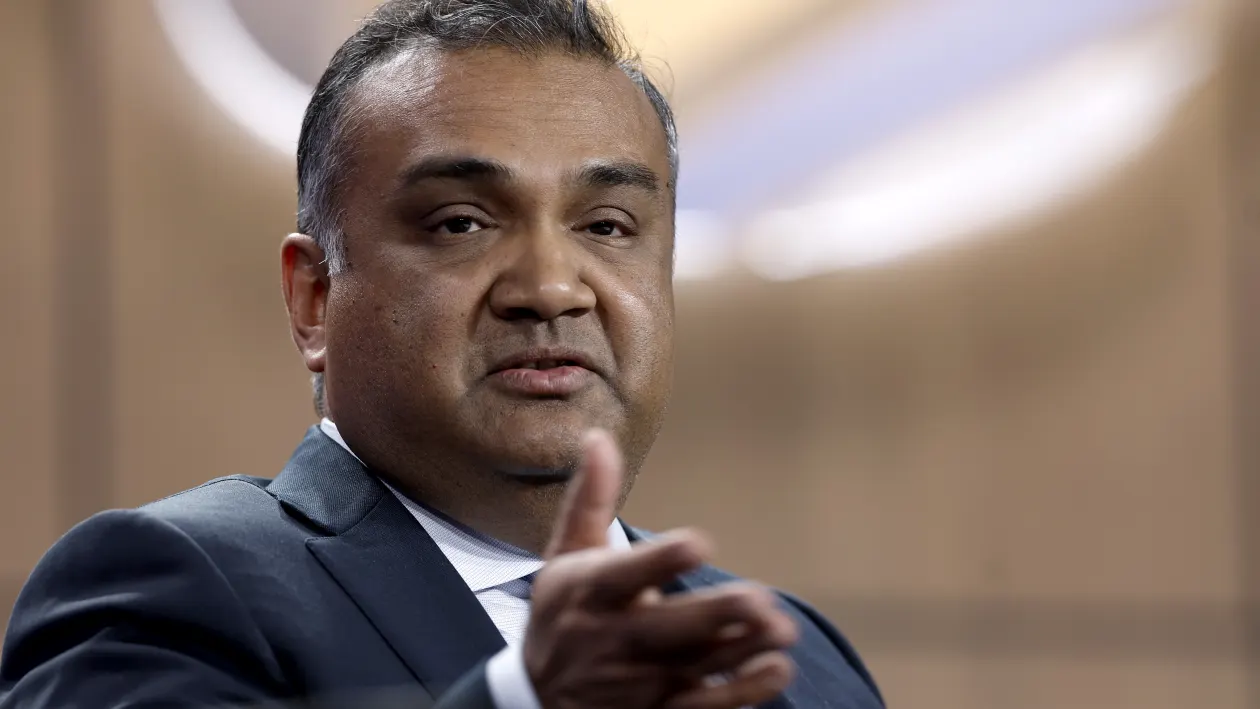
SAN FRANCISCO (Realist English). YouTube chief executive Neal Mohan has said he limits his children’s use of social media and online platforms, joining a growing list of technology executives who acknowledge restricting screen time at home as concerns mount over the impact of digital services on young people.
Mohan, who took over as CEO of YouTube in 2023 and was named Time magazine’s 2025 CEO of the Year, said in an interview with the publication that his family closely manages how much time his children spend online. He has three children — two sons and a daughter.
“We do limit their time on YouTube and other platforms and other forms of media,” Mohan said in a video published by Time on Thursday. “On weekdays we tend to be more strict, on weekends we tend to be less so. We’re not perfect by any stretch.”
He added that moderation is the guiding principle for his family, applying not only to YouTube but to digital media more broadly.
Rising scrutiny of children’s screen time
Mohan’s comments come as researchers and policymakers increasingly warn about the effects of excessive smartphone and social media use on children and teenagers. Jonathan Haidt, an NYU professor and author of The Anxious Generation, has argued that children should not have smartphones before age 14 and should avoid social media until at least 16.
“A smartphone isn’t really a phone,” Haidt said earlier this year, describing it as a device that allows “the world to get to your children.”
Governments are also beginning to act. This week, Australia became the first country to formally ban users under 16 from accessing major social media platforms. A YouGov survey conducted ahead of the law found that 77% of Australians supported the move, though its implementation has faced resistance from some companies and users.
YouTube’s responsibility to families
In a longer interview with Time, Mohan said he feels a “paramount responsibility” toward younger users and emphasized the need to give parents stronger tools to control how their children use YouTube. Google launched YouTube Kids in 2015 as a child-focused version of the platform, offering curated content and parental controls.
“Our goal is to make it easy for all parents to manage their children’s YouTube use in a way that’s right for their household,” Mohan said, noting that families take different approaches to media use.
A common stance among tech leaders
Mohan’s position echoes that of other prominent figures in the technology industry. Former YouTube CEO Susan Wojcicki previously said she restricted her children’s access to YouTube, allowing them to use only YouTube Kids and limiting the time spent on the app.
Microsoft co-founder Bill Gates has also spoken publicly about delaying phone access for his children until their teenage years and banning phones at the dinner table. Billionaire investor Mark Cuban has said he went further, using network management tools to monitor and restrict his children’s app usage.
As scrutiny of social media’s effects on young people intensifies, the personal choices of tech leaders are increasingly cited as evidence that even industry insiders see the need for stricter limits — both at home and, potentially, in public policy.