
Realist: news and analytics

Русский / English / العربية

  • News
  • Russia
  • Caucasus
  • Opinion
  • Interviews
  • Experts
No Result
View All Result
Realist: news and analytics
  • News
  • Russia
  • Caucasus
  • Opinion
  • Interviews
  • Experts
No Result
View All Result
Realist: news and analytics

Venezuela’s real power lies beyond the presidency after Maduro’s arrest

Security chiefs Padrino and Cabello emerge as decisive actors as interim leader Delcy Rodríguez takes office.

   
January 10, 2026, 09:01
World
Khamenei says Iran will not retreat in face of foreign-backed unrest

CARACAS (Realist English). A day after U.S. special forces swept into the Venezuelan capital and detained former president Nicolas Maduro, the country’s new interim leader, Delcy Rodríguez, convened her cabinet at Miraflores Palace beneath portraits of Hugo Chávez and the now-jailed Maduro and his wife, Cilia Flores.

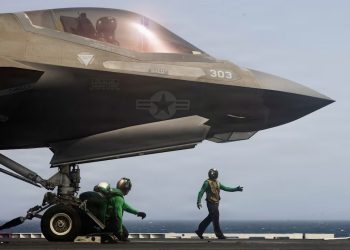
Seated beside Rodríguez were the figures many analysts say now hold the decisive levers of power in Venezuela: Defence Minister Vladimir Padrino López, dressed in military fatigues, and Interior Minister Diosdado Cabello, a hard-line Chavista whose influence extends deep into the security services and the ruling party’s informal power networks.

While international attention has focused on whether Rodríguez will comply with White House demands to open Venezuela’s vast oil and mineral resources to U.S. companies, scholars and current and former officials say the interim president controls only part of the state apparatus. The country’s coercive and economic power, they argue, remains firmly in the hands of Padrino and Cabello — long-standing loyalists of the Chávez–Maduro system who oversee the armed forces, police, intelligence services and key commercial sectors.

“There are three centers of power,” said a former senior U.S. State Department official, speaking on condition of anonymity. “And Delcy is going to find out very quickly that she cannot deliver everything Washington wants.”

Both Padrino and Cabello are wanted by U.S. authorities on drug-trafficking charges and face multimillion-dollar bounties. According to U.S. prosecutors, they used their official positions to facilitate narcotics flows and profit from illicit revenue streams — allegations they have denied in the past.

Analysts describe Venezuela’s political system as a fragmented, factional structure that hardened under Maduro’s rule. After succeeding Chávez in 2013, Maduro increasingly relied on repression and patronage rather than popular legitimacy, transferring control of mining, ports and food distribution to the military. This consolidation dramatically expanded Padrino’s power and embedded the armed forces deeply into the economy.

“The military became its own branch of power,” said Carolina Jiménez Sandoval, head of the Washington Office on Latin America. “Its influence is both formal and informal, and it is far more extensive than many outside observers realize.”

Cabello, meanwhile, is widely viewed as the regime’s most unpredictable figure. A veteran of Chávez’s 1992 coup attempt, he has built a reputation as an enforcer with direct influence over police units, intelligence agencies and pro-government militias known as colectivos. These groups have recently expanded their presence in Caracas, setting up checkpoints and detaining civilians amid fears of unrest and foreign interference.

“Cabello is a brutal but calculating actor,” said Geoff Ramsey of the Atlantic Council. “He understands that his leverage comes from the implicit threat of chaos if his interests are ignored.”

The overlapping family, military and economic networks surrounding Cabello further complicate any external negotiation. His brother heads Venezuela’s customs and tax authority, his wife sits in the National Assembly, and close relatives hold senior intelligence posts — a concentration of power that researchers say has only grown since Maduro’s fall.

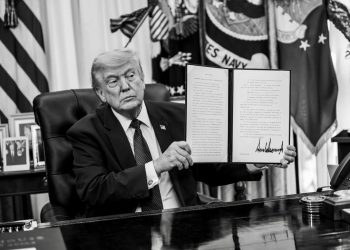
For Washington, this reality underscores the difficulty of shaping Venezuela’s future through pressure alone. President Donald Trump has said the United States is now “in charge” of Venezuela, while Secretary of State Marco Rubio has suggested a more indirect strategy built around sanctions and oil controls. But experts warn that U.S. policymakers may be underestimating the resilience — and ruthlessness — of Venezuela’s internal power brokers.

“It’s not just an authoritarian regime,” said Venezuelan investigative journalist Roberto Deniz. “It’s a kleptocratic system with multiple fiefdoms. The overriding objective is not governance or reform, but the preservation of power at any cost.”

Whether Delcy Rodríguez can navigate these rival centers, placate U.S. demands and prevent further instability remains uncertain. As one former U.S. diplomat put it, “It is the same regime, under different management — and it is a very rough start.”
Latin AmericaMost PopularVenezuelaVenezuela’s Domestic Policy
Previous Post

Khamenei says Iran will not retreat in face of foreign-backed unrest

Next Post

UK investment in Somaliland port draws scrutiny amid Sudan war and regional power rivalries

Related Posts

The United States and Iran Exchange Strikes over the Strait of Hormuz: Kuwait and Bahrain Under Fire Again
World

The United States and Iran Exchange Strikes over the Strait of Hormuz: Kuwait and Bahrain Under Fire Again

6 June, 2026
Withdrawal of Israeli troops from Lebanon is Iran’s main condition in negotiations with the US
World

Withdrawal of Israeli troops from Lebanon is Iran’s main condition in negotiations with the US

5 June, 2026
Israel and Lebanon Agree to Ceasefire, but Hezbollah Is Silent: Agreement in Question
World

Israel and Lebanon Agree to Ceasefire, but Hezbollah Is Silent: Agreement in Question

4 June, 2026
Trump Promises a Deal “By the Weekend,” Araghchi Says No Progress: The Double Game of US-Iran Negotiations
World

Trump Promises a Deal “By the Weekend,” Araghchi Says No Progress: The Double Game of US-Iran Negotiations

4 June, 2026
Mahmoud Ahmadinejad — Victim or Conspirator? NYT on Secret Negotiations with Israel
World

Mahmoud Ahmadinejad — Victim or Conspirator? NYT on Secret Negotiations with Israel

3 June, 2026
Israel-Lebanon Talks Stall Due to Iran’s Position
World

Israel-Lebanon Talks Stall Due to Iran’s Position

3 June, 2026
Most Popular
Most Popular
10,000 Christians Refuse to Leave Southern Lebanon Despite Siege and Bombardment

10,000 Christians Refuse to Leave Southern Lebanon Despite Siege and Bombardment

6 June, 2026

BEIRUT (Realist English). While global media attention is focused on negotiations between the US and Iran, a quiet humanitarian and existential...

CNN: Israel secretly deployed special forces in Azerbaijan for strikes against Iran

CNN: Israel secretly deployed special forces in Azerbaijan for strikes against Iran

6 June, 2026

BAKU (Realist English). Israel secretly deployed elite military and intelligence units to Azerbaijan during the war with Iran, CNN reported on...

62% for China, 36% for Russia: Afrobarometer Surveys Reveal the Balance of Sympathies in North Africa

62% for China, 36% for Russia: Afrobarometer Surveys Reveal the Balance of Sympathies in North Africa

5 June, 2026

RABAT (Realist English). The countries of North Africa are undergoing a fundamental shift in their foreign policy preferences. According to large-scale...

Allies or Already Competitors? Baku and Ankara Have Created a Gas Alliance Against Moscow

Allies or Already Competitors? Baku and Ankara Have Created a Gas Alliance Against Moscow

3 June, 2026

BAKU (Realist English). Turkey and Azerbaijan have announced the signing of a new 15-year contract for the supply of 33 billion...

Opinion

US and Israel balance on brink of new war with Iran

“Empire of Bases” Under Pressure: What U.S. Allies Pay for the Privilege of Being Strategic Outposts

6 June, 2026

WASHINGTON (Realist English). Professor of Political Science and International Affairs at George Washington University, Rachel Metz, argues in her article for Foreign...

Iran No Longer Seeks Peace: “Forever War” Becomes Reality

Iran No Longer Seeks Peace: “Forever War” Becomes Reality

5 June, 2026

TEHRAN (Realist English). Iran has concluded that a protracted conflict with the United States is preferable to a diplomatic settlement. As Mohammad...

Pakistan — Mediator in Iran, but Not at Home

Pakistan — Mediator in Iran, but Not at Home

4 June, 2026

WASHINGTON (Realist English). A relative calm has settled along the Afghanistan-Pakistan border after several months of intense violence. However, as Foreign...

European Security Council — Empty Vessel or New Reality?

European Security Council — Empty Vessel or New Reality?

3 June, 2026

BRUSSELS (Realist English). The strengthening of Russia in Eastern Europe and the reduced involvement of the United States in European security...

All rights reserved.

© 2017-2026

  • About Us
  • Mission and Values
  • Contact Us
  • Privacy Policy

Follow Realist English

No Result
View All Result
  • News
  • Russia
  • Caucasus
  • Opinion
  • Interviews
  • Experts

Русский / English / العربية