

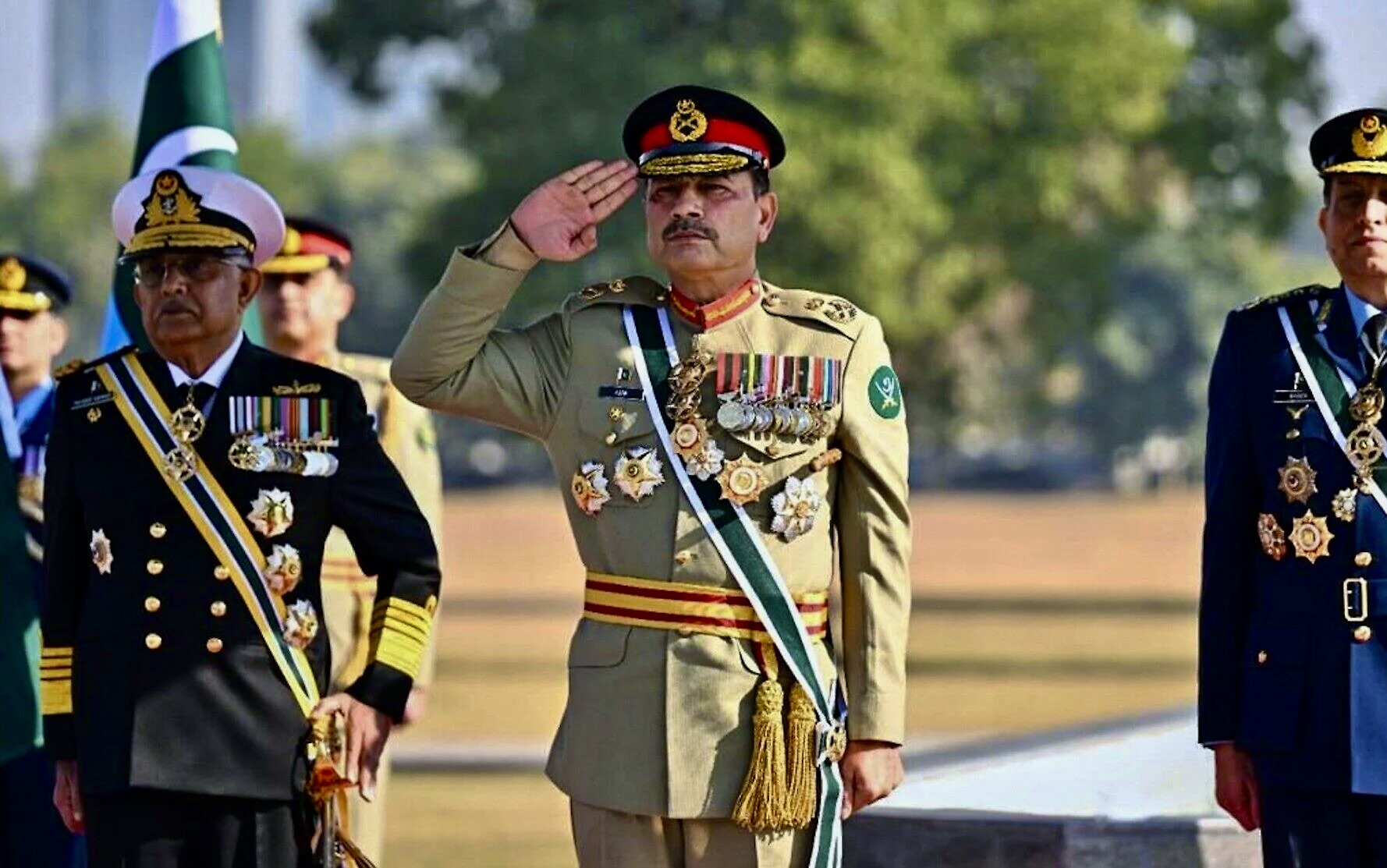
TEHRAN (Realist English). Pakistan’s military chief, General Asim Munir, has arrived in Tehran as part of a new round of mediation efforts to end the US-Israeli war against Iran.
The press wing of the Pakistan Armed Forces released footage of Munir’s meeting with Iranian Foreign Minister Abbas Araghchi, describing the visit as part of “ongoing mediation efforts.”
Iranian state television, citing Pakistani sources, reported that the trip was intended to deliver a “new” message from the United States to Iran. A Pakistani diplomat said the sides are working to establish a shared framework for the resumption of peace talks.
Iran: “difficult” talks continue through mediators
Iranian Foreign Ministry spokesman Esmaeil Baghaei said that discussions with the United States are continuing through Pakistani mediators and called on Washington to demonstrate its commitment to reaching an agreement. “The talks are taking place under very difficult conditions,” he said, noting that Tehran remains skeptical of Washington’s willingness to uphold its commitments. Baghaei added that no agreement has yet been reached regarding the extension of the current truce, which is set to expire next week.
Merz ready to discuss German participation in Hormuz mission
German Chancellor Friedrich Merz is ready to discuss his country’s participation in a maritime mission in the Strait of Hormuz under certain conditions, a government spokesperson said ahead of a meeting of European leaders in Paris on April 17.
Merz has assured in “various contexts” — including in a call with US President Donald Trump last week — that “following a peace agreement, Germany would help ensure freedom of navigation in the Strait of Hormuz provided there is a mandate and a viable concept for doing so,” the spokesperson said. Discussions are already underway, he added.
Repairing Middle East energy infrastructure set to cost up to $50bn
According to research by consultancy Rystad Energy, the repair bill for damaged oil and gas facilities in the Gulf will be between $30bn and $50bn. Iran’s costs will be the highest, after damage to its gas processing plants and petrochemical complexes, with Rystad estimating the bill could potentially reach $19bn.
Repairs will take longer in Iran because of the lack of access to Western equipment and contractors.
Qatar, whose Ras Laffan liquefied natural gas complex was damaged, will bear the second‑highest costs. Rystad analyst Karan Satwani said the repair work would drain resources from new energy investment in the region.
Israeli attack on paramedic team in Lebanon kills two
An Israeli strike on a team of paramedics in the southern Lebanese village of Mayfadoun killed two rescue workers, according to paramedic organizations and Lebanese state media. The rescuers were from the local Nabaiteh emergency medical service, the Islamic Risala Scout Association and the Islamic Health Commission, and were on a rescue mission when the strike hit.
On April 13, Israeli forces killed a Lebanese Red Cross paramedic in a drone strike. Separately, the Israeli military turned back a convoy of contractors working with the UNIFIL peacekeeping mission, preventing them from continuing to UNIFIL headquarters in Naqoura, despite prior clearance.
Two tankers under US sanctions pass through the strait, testing the blockade
Despite the US naval blockade, two tankers under US sanctions for transporting Iranian oil have passed through the Strait of Hormuz toward Iran, according to ship‑tracking data. The vessels, Alicia and Hong Lu, transited the strait on April 15.
Both are registered under false flags and sailed into the Gulf empty, suggesting they intend to pick up Iranian cargo. The US military has said that as part of its blockade, no ships will be allowed in or out of Iranian ports.
S&P 500 closes in on record high on hopes for a ceasefire
US stocks continued to recover amid hopes for a resolution to the Middle East conflict. The S&P 500 added 0.1% in early trading on April 15, approaching its all‑time high of 7,000 points reached in mid‑January. The tech‑heavy Nasdaq Composite rose 0.2%. Analysts attribute the gains to expectations of strong first‑quarter earnings and investors looking to buy the dip, particularly in the technology sector.