


MOSCOW (Realist English). May 2026 brought record oil and gas revenues to the Russian federal budget — around 650 billion rubles, which is 27% higher than in May 2025. The main driver of growth was the surge in global oil prices amid the war in Iran and a partial blockade of the Strait of Hormuz.
However, behind the positive headline figures lies a more complex reality: the discount of Urals crude to Brent has again exceeded $20, the strengthening ruble is reducing export revenues in local currency terms, and the federal budget deficit for January–April reached 5.9 trillion rubles — already 1.5 times higher than the annual target (3.8 trillion rubles).
Oil prices and discounts: high prices, limited revenue
The average price of Urals crude in April reached $94.87 per barrel — the highest since 2014. In May, growth continued: Urals briefly exceeded $100 per barrel, while Brent climbed above $120.
At the same time, the discount of Urals to Brent widened again. According to Argus Media (May 9), it exceeded $20 per barrel, and by May 11 reached $23.9. The Ministry of Economic Development assumes an average discount of around $22 in its 2026 forecast.
The paradox is that even with high global oil prices, actual ruble revenues are constrained by two key factors: the stronger ruble and the widening discount.
Exports: rising crude oil, falling refined products
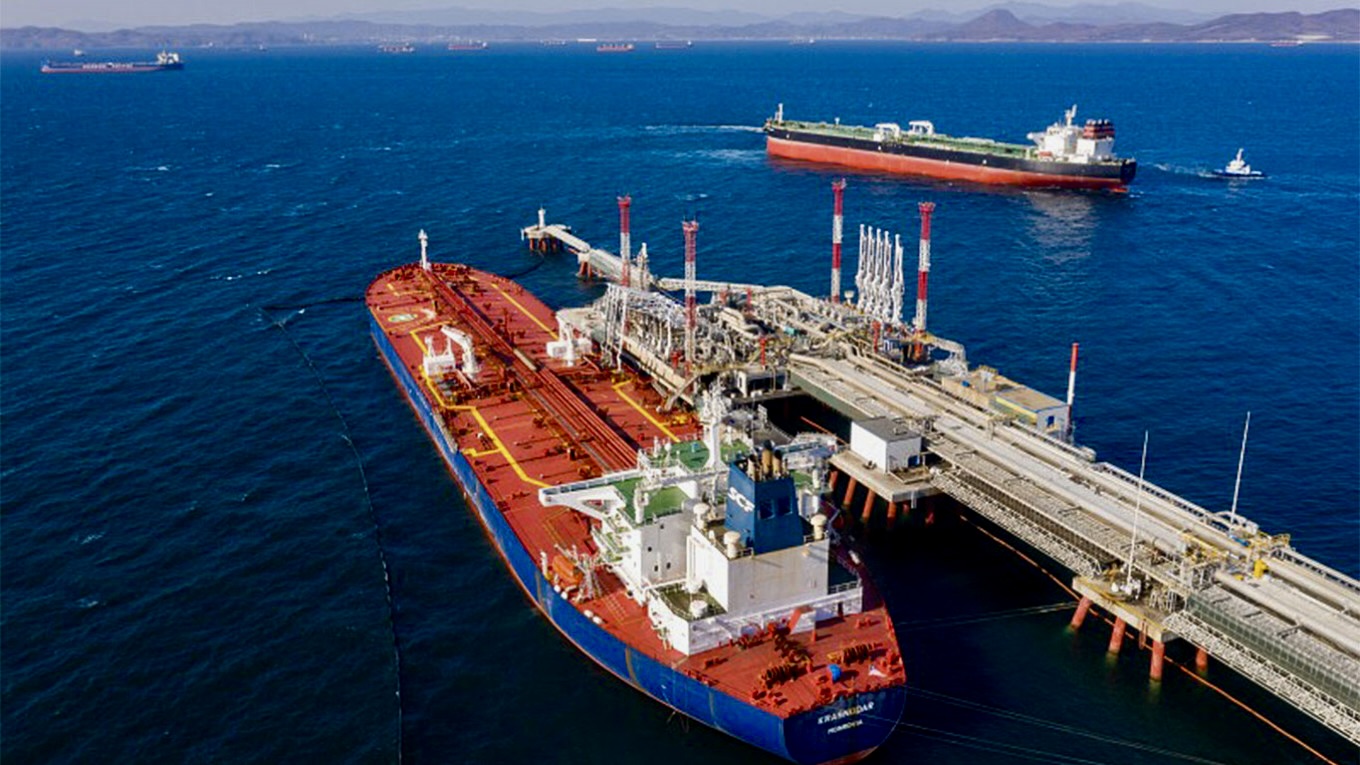
Exports of oil products in April fell to a historic low of 2.2 million barrels per day (down 340,000 from March). The decline was driven by drone attacks on the ports of Ust-Luga, Novorossiysk, Tuapse, and Primorsk, as well as infrastructure damage.
At the same time, crude oil exports increased by 250,000 barrels per day to 4.9 million barrels. This was linked to the resumption of flows through the Druzhba pipeline via Ukraine.
Overall oil production in Russia declined to 8.83 million barrels per day (down 460,000 year-on-year) due to OPEC+ cuts and damage to refining infrastructure.
Major exporters increased foreign currency sales to $7.3 billion (up from $2.4 billion in March), driven by dividend payments and budget rule requirements.
Budget: revenue growth fails to offset deficit
Despite higher oil and gas revenues in May, the overall fiscal situation remains under pressure:
- Oil and gas revenues in May (forecast): 650 billion rubles (+27% YoY)
- Oil and gas revenues January–May: 2.94 trillion rubles (–7% YoY)
- Budget deficit (4 months): 5.9 trillion rubles (vs annual plan of 3.8 trillion)
- Spending growth: +15.7%
- Revenue decline: –4.5%
Key reasons for weak revenue dynamics:
- strong ruble (~75 RUB/USD vs budget assumption of 92)
- fuel subsidy mechanism (about 377 billion rubles in April)
- high Urals–Brent discount
The Ministry of Economic Development expects oil and gas revenues in 2026 at around 8.9 trillion rubles — significantly below 2024 levels.
Gas: mixed performance
Pipeline gas exports to Europe via the TurkStream pipeline rose 7% in January–April but fell in April due to reduced transit flows.
LNG exports increased by 8.9% in Q1 to 8.6 million tons. Deliveries to Europe rose by 17% year-on-year.
However, long-term forecasts suggest a decline in average export gas prices from $336 in 2026 to $275 in 2027.
Expert assessments
Optimists argue that if oil prices remain above $80 per barrel, additional budget revenues could reach 1 trillion rubles.
Pessimists warn that the oil market may return to surplus conditions, with Brent potentially falling to $70 or lower. Additional pressure comes from the strengthening ruble, which reduces exporters’ ruble earnings.
Overall conclusion
The rise in oil prices due to the Middle East conflict has increased budget revenues, but has not resolved structural fiscal challenges. The high Urals discount, strong ruble, and large budget deficit continue to limit the benefits of favorable global price conditions.
As a result, Russia’s oil and gas revenues depend not only on global prices, but also on exchange rates, export logistics, and geopolitical risks.