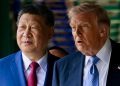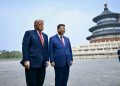


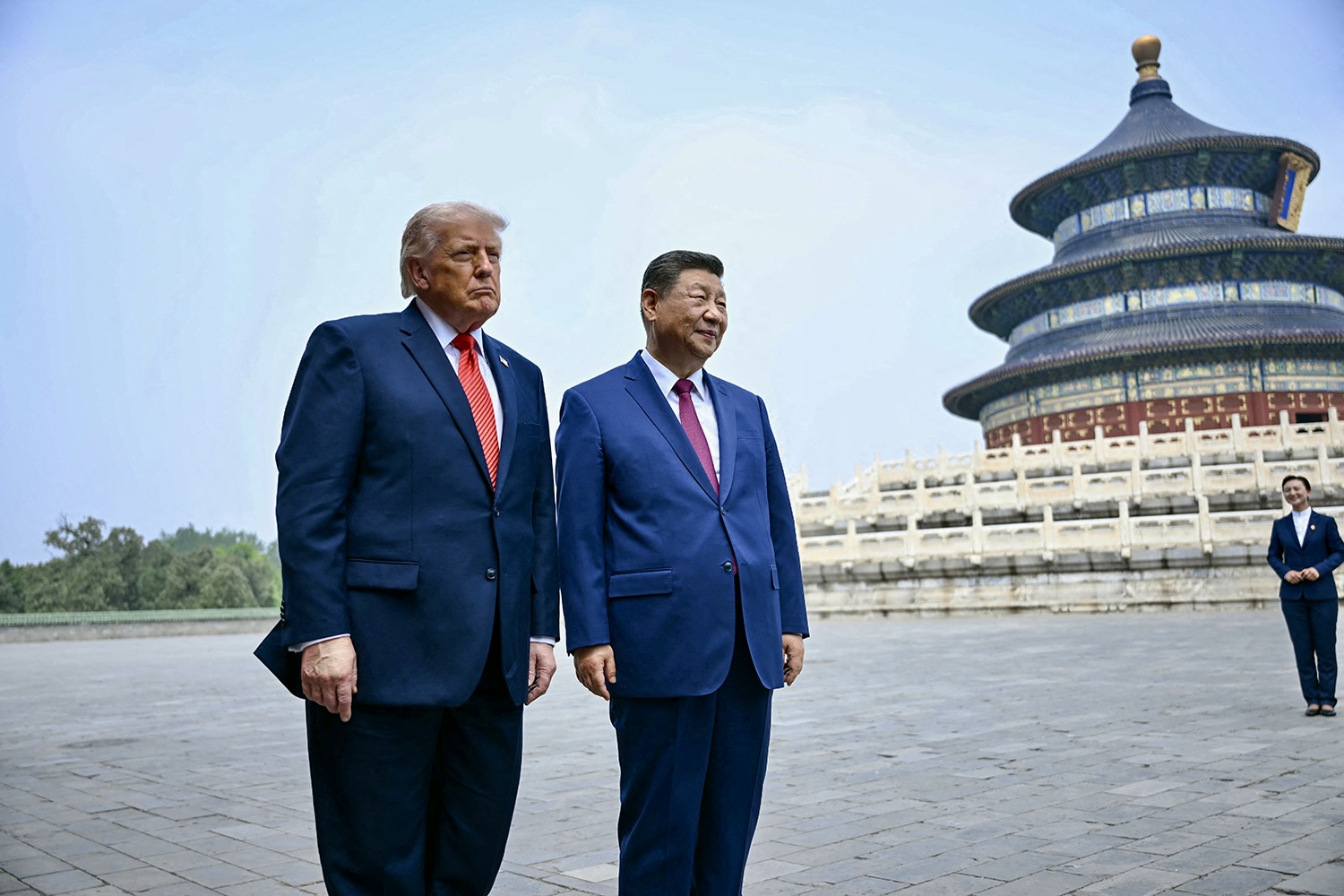
BEIJING (Realist English). U.S. President Donald Trump’s visit to China on May 14–15 passed with surprising calm and almost none of the political theatrics usually associated with such summits. Chinese state media gave minimal coverage to Trump’s talks with Chinese President Xi Jinping, which many observers interpreted as a sign of the changing balance of power between the two countries.
This was reported by Foreign Policy deputy editor James Palmer.
On May 14, the day Trump arrived in Beijing, China’s main state-controlled media effectively pushed the American president’s visit into the background. The English-language newspaper China Daily placed Xi’s meeting with the president of Tajikistan on its front page, while the Chinese Communist Party’s official newspaper, People’s Daily, carried reports about Trump’s trip only on Page 3.
China’s flagship nightly news program Xinwen Lianbo devoted just 12 seconds to announcing the visit. By comparison, a report on the development of the Yangtze River Delta received nearly six minutes of airtime. The Trump-Xi summit itself was given about two and a half minutes on May 14 and appeared only as the thirteenth item in the broadcast.
According to Palmer, the restrained Chinese response reflected the nature of the talks themselves, which produced no major political breakthroughs.
Xi Jinping once again focused on Beijing’s familiar themes: Taiwan, human rights, China’s political system, and the country’s right to economic development without pressure from the United States. The Chinese leader also repeated his standard rhetoric about the need for stable relations between the two powers and the importance of avoiding the so-called “Thucydides Trap” — a conflict between an established and a rising superpower.
The two sides reached only limited agreements in trade. Among them was the possible licensing of American meat-processing facilities for exports to China, although even those concessions quickly came into question because of lobbying from Chinese agricultural interests.
Expected major deals — including potential Chinese purchases of Boeing aircraft — failed to materialize on the scale markets had anticipated. The talks also largely avoided major geopolitical disputes involving Iran, Taiwan, Japan, and other flashpoints.
According to Trump, Xi had “strongly promised” not to supply weapons to Iran. However, as Palmer notes, such statements mean little because any military cooperation between Beijing and Tehran would in any case remain unofficial and behind the scenes.
The author points out that previous visits by U.S. presidents — including Bill Clinton, George W. Bush, Barack Obama, and even Trump himself in 2017 — received far broader coverage in Chinese media and generated substantial public interest.
Palmer argues that one reason for this year’s muted response was Trump’s unpredictability. Chinese officials and editors did not want to create a positive media atmosphere around the visit in advance, fearing that sudden statements by the U.S. president could later place them in an awkward political position.
In addition, China no longer needs symbolic validation from the United States as it once did. In previous decades, Beijing sought to show its citizens that Washington viewed China as an equal superpower. Today, however, Chinese leaders appear convinced that the country’s global status is already firmly established.
Palmer writes that China now sees itself not only as the world’s largest manufacturing power but also as a technological and scientific giant, while America’s global position under the Trump administration appears increasingly unstable because of isolationist policies, tensions with allies, and the ongoing conflict surrounding Iran.
Against this backdrop, it was Trump who appeared to be seeking approval from Beijing. The U.S. president repeatedly praised Xi Jinping in public, describing him as an outstanding leader.
In an interview with Fox News, Trump said that even Hollywood “couldn’t find somebody who looked more like the leader of China than Xi.”
Palmer notes that Xi has never been regarded as a charismatic figure within China’s political elite. On the contrary, his rise to power was partly due to the fact that party elders viewed him as a reliable and predictable official, lacking the dangerous personal charisma associated with another “princeling,” Bo Xilai.
The author also highlights Trump’s post on Truth Social, where the American president claimed Xi had “elegantly” referred to the United States as “perhaps being a declining nation.” No such phrase appeared in the official Chinese readouts of the talks.
According to Palmer, statements like these reflect Trump’s personal psychological insecurities amid falling approval ratings and criticism over the Iran war more than they reveal any genuine geopolitical transformation.
Nevertheless, the author concludes that U.S.-China relations are likely to remain relatively stable in the near future. Both powers face domestic economic difficulties and multiple foreign policy crises simultaneously, leaving neither Washington nor Beijing interested in direct confrontation at this stage.