

HAVANA (Realist English). Against the backdrop of protracted negotiations with Iran and the diversion of major military resources to the Middle East, the White House has stepped up planning of military scenarios against Cuba.
Sanctions and the energy blockade, by the administration’s own admission, have failed – the Cuban leadership has held firm, and the situation on the island is gradually stabilising.
The Trump administration is now increasingly considering the military option as a “last resort.” However, experts agree that the window of opportunity for a strike has passed, and any military adventure could turn into a “new Vietnam” for the United States.
From Sanctions to Bombs
Washington’s original plan was simple: a combination of the oil blockade imposed in January 2026 and a demonstration of military successes in Venezuela and Iran was supposed to force Havana to capitulate. But the Cuban leadership proved “tougher than expected,” and the situation around Iran “went sideways.”
“The question of military action is now on the agenda as never before,” one Politico source admitted.
Disillusionment with the effectiveness of sanctions has led the White House to seriously develop a “Plan B.” According to Politico and Axios, the Pentagon has been building up its military presence in the Caribbean basin for several months, creating conditions for a potential operation.
Military Options: From “Kidnapping” to “Full‑Scale War”
US military planners are considering three main scenarios, each with its own risks and objectives.
1. The “Venezuela scenario”: kidnapping the leadership
The first and perhaps most provocative option is the capture of one or two key figures of the Cuban government. This scenario, actively discussed after the kidnapping of Venezuelan President Nicolás Maduro, envisages a forceful operation to remove the top leadership. Targets could include Raúl Castro (against whom criminal charges have already been filed) and current President Miguel Díaz‑Canel.
“The US already has the capability to capture Cuba’s leadership, as happened earlier in Venezuela,” Politico writes.
However, such a step would be an unprecedented violation of international law and would almost certainly provoke chaos on the island.
2. “Show‑of‑force airstrike”: demonstrating power
The second option is a limited airstrike intended as a warning and a show of force. Likely targets would be military installations, air defence systems or key command centres.
“Airstrikes are possible to knock out their air defence systems, to enable larger air operations, or perhaps to kill their leadership,” said former Pentagon official Mark Cancian.
The carrier strike group led by the USS Nimitz, which has already entered the Caribbean Sea, could play a special role in this scenario.
“The Nimitz is probably there primarily as a deterrent, although it could be used in a military operation if necessary,” Cancian believes.
3. Full‑scale invasion: a “new Vietnam”
The most radical scenario is a full‑scale ground invasion aimed at regime change. The Pentagon has already positioned amphibious ships carrying 2,500 Marines off the coast of Virginia, ready for deployment. However, this option carries colossal risks and casualties.
“It would be a new Vietnam for them, or at least a Bay of Pigs 2.0 with serious losses,” warns Americanist political analyst Malek Dudakov.
Balance of Forces: Pros and Cons
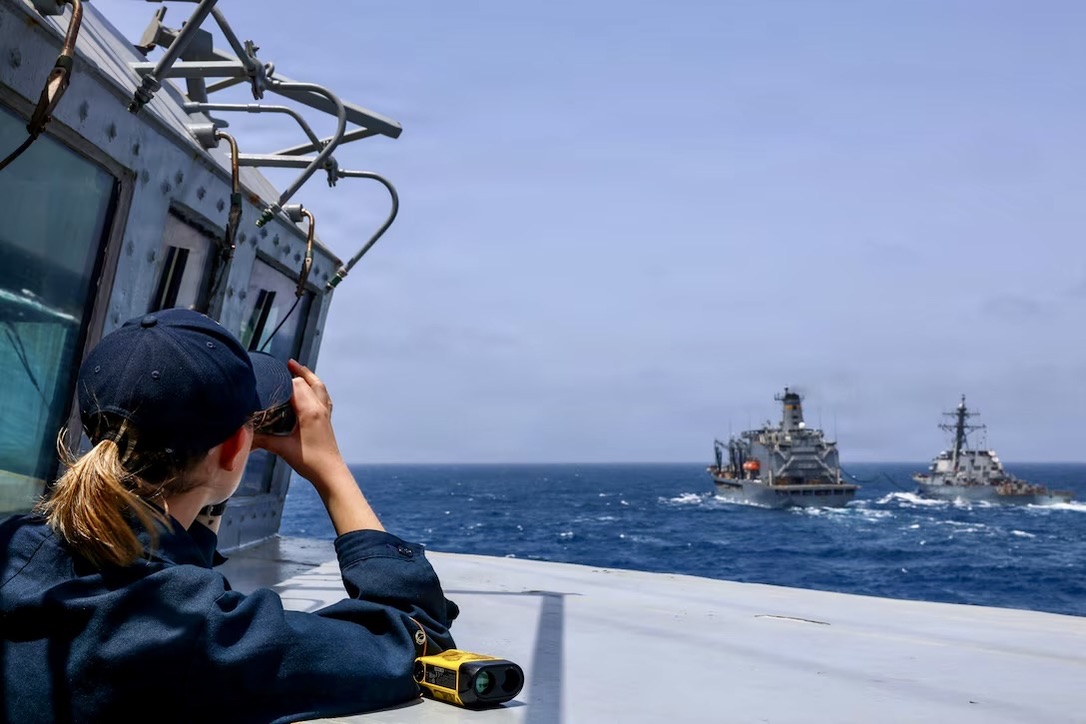
The Pentagon and the White House are actively preparing. The USS Nimitz carrier strike group, including the destroyer Gridley and the tanker Patuxent, has entered the Caribbean Sea. US reconnaissance aircraft and modern drones have been circling over Cuba for several months.
“The US naval presence in the region has become the largest outside the Middle East,” the publication notes.
However, several serious obstacles stand in the way of a military solution:
- Resources are stretched thin: The main US military forces are engaged in the Middle East. Redeploying a large force to the Caribbean basin would take many months.
- Cuba has held firm: The economic situation on the island, contrary to expectations, is gradually stabilising. The acute phase of the crisis, which occurred in February–March, has passed.
- Fleet fatigue: Many ships in the region have already exceeded their deployment times, creating maintenance problems.
- The Iranian front: Trump is currently fully absorbed in peace negotiations with Iran.
Havana Warns, Moscow Supports
Cuba is not standing idly by. The Cuban Foreign Ministry has already stated that in the event of an attack, the country would exercise its right to self‑defence.
“Any unjustified military attack on Cuba could turn into a bloodbath,” Cuban Foreign Minister Bruno Rodríguez Parrilla told the UN Security Council.
Cuba has also purchased more than 300 combat drones from Russia and Iran, which could be used to attack the Guantánamo base and US naval vessels. US officials are considering scenarios that include strikes on Key West, Florida.
Russia, for its part, has ratified a military cooperation agreement with Cuba, and Russian Foreign Ministry spokeswoman Maria Zakharova has declared “full solidarity” with Havana.
“This cooperation does not imply the deployment of military contingents to Cuba,” Russian President Vladimir Putin clarified.
What Next?
Trump has painted himself into a corner. Sanctions are not working, the “Venezuela scenario” is more difficult to implement in Cuba, and a full‑scale invasion is an adventure fraught with heavy losses and domestic political consequences.
“The military scenario is an extremely dangerous step that the US will not take now,” sums up Pavel Koshkin, Senior Researcher at the Institute for Latin American Studies of the Russian Academy of Sciences.
As experts note, Trump is trying to “diversify the agenda” by shifting attention from domestic problems to the foreign policy arena.