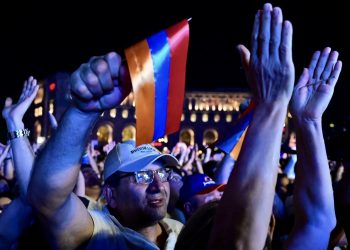


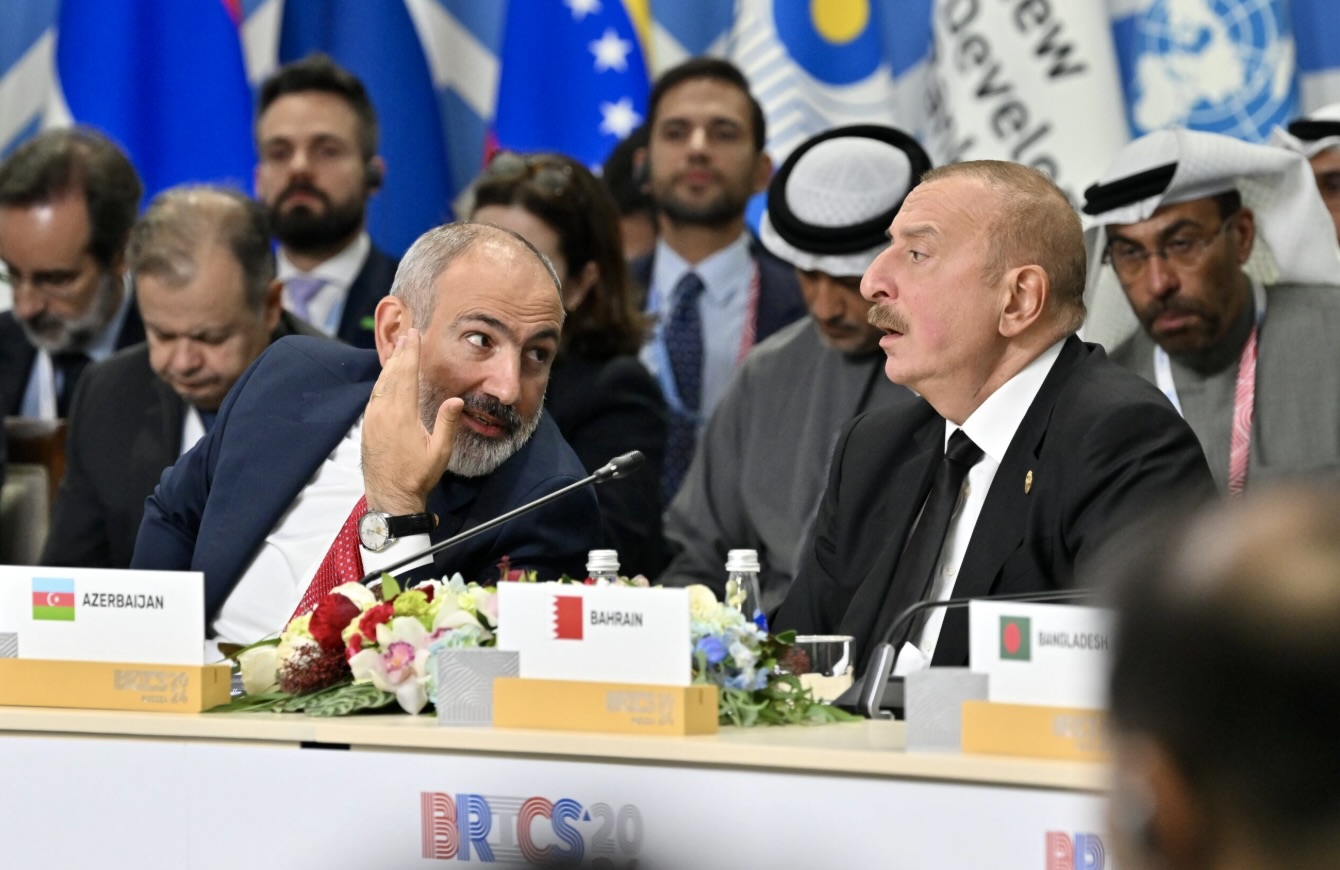
YEREVAN (Realist English). The foreign policy and economic situation around Armenia remains tense and contradictory.
On the one hand, Baku, following the victory of Nikol Pashinyan’s ruling party in the parliamentary elections, has stepped up its rhetoric, demanding that Yerevan remove territorial claims against Azerbaijan from its constitution.
On the other hand, the cooling of relations between Armenia and Russia is gaining momentum on the post‑Soviet space: Moscow is initiating sanctions against Yerevan over its debts to the CSTO.
At the same time, the International Monetary Fund (IMF) approved the allocation of $25 million to Armenia immediately after Pashinyan’s victory, which was seen as a signal of support from the West.
Baku Insists on a Referendum in Armenia
The main stumbling block on the path to a peace treaty between Armenia and Azerbaijan remains Armenia’s constitution. Azerbaijani officials have repeatedly claimed that the republic’s basic law contains territorial claims against Baku. On June 11, at an event titled “New Geopolitical Realities in the South Caucasus: Azerbaijan and the Peace Agenda,” MP Gaya Mamedov of the Milli Majlis made another tough statement.
“The next step is to exclude provisions on territorial claims against Azerbaijan from the Constitution of Armenia. The need for this has been repeatedly noted. Armenian society once formalized its territorial claims against Azerbaijan by adopting this constitution, therefore Armenia must hold a referendum and remove these claims,” Mamedov said.
In his speech, he also stressed Baku’s efforts to advance the peace agenda, but noted that signing a peace treaty is impossible as long as the relevant provisions remain in Armenia’s constitution. Earlier, according to Azerbaijan’s Foreign Ministry, a deputy minister had called the presence of territorial claims in the constitution the only obstacle to peace.
Meanwhile, Yerevan insists that its basic law contains no claims against its neighbors. Prime Minister Nikol Pashinyan has previously spoken about the need for a new constitution, but linked it to the need to move away from the “remnants of a stateless people’s behavior,” not to Baku’s demands.
CSTO Intends to Apply Sanctions Against Armenia
Parallel to Azerbaijani pressure on Yerevan, tensions with Russia are also growing. On June 10, following a meeting of the CSTO Council of Foreign Ministers in Kazan, Russian Foreign Minister Sergey Lavrov made a sensational statement: the member states have agreed to apply a provision of the CSTO charter to Armenia due to Yerevan’s non‑payment of dues for more than two years.
“We discussed this today. Armenia has been in arrears to the CSTO budget for more than two years. And today we agreed to look into activating the relevant article of the CSTO Charter,” Lavrov said.
According to open sources, this refers to Article 20 of the CSTO Charter, which states that a state that has not paid its membership fees for more than two years may be deprived of the right to vote in the organization. It may also be barred from nominating its citizens to leadership positions in CSTO structures.
Analysts note that this decision is not only economic but also political, given that Armenia in recent years has frozen active participation in the alliance. It remains unclear whether the procedure will lead to Yerevan’s actual expulsion or whether the sides will find a compromise.
“Strong Armenia” Not Rushing to Take Seats in Parliament
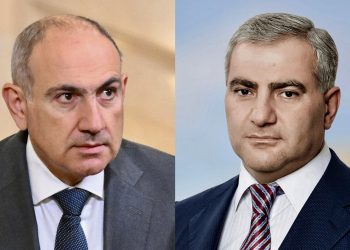
In Armenia itself, a post‑election identity crisis continues. The opposition Strong Armenia bloc, led by entrepreneur and former Russian businessman Samvel Karapetyan, has not yet decided whether to work in the new National Assembly. This was stated on June 10 by bloc representative Gohar Meloyan.
“The Strong Armenia bloc does not yet have a political decision on whether to take the mandates or not. We have also not yet held comprehensive discussions on this issue,” Interfax quoted Meloyan as saying.
The bloc came second in the elections with 23.29% of the vote, losing only to the ruling Civil Contract party (49.81%). Karapetyan had begun the process of renouncing his Russian and Cypriot citizenship before the vote to participate in the country’s political life, but now his political force appears to be deliberating its further strategy.
The delay may be linked to an attempt to challenge the election results or a desire to strengthen its position in bargaining for ministerial portfolios if Civil Contract offers a coalition.
IMF Allocates $25 Million
Against the backdrop of tensions with the CSTO, Armenia received a signal of support from the West. On June 10, the IMF Executive Board completed the first review of the Stand‑By Arrangement for Armenia and approved the allocation of funds. The total amount of the tranche was about $25.1 million (18.4 million Special Drawing Rights).
The IMF’s official statement stressed that the decision was taken after the victory of Nikol Pashinyan’s party in the parliamentary elections of June 7. This suggests that Yerevan continues to receive macroeconomic support from Western financial institutions even as relations with Moscow deteriorate.
Some observers link the prompt disbursement to the desire of Brussels and Washington to strengthen the pro‑Western course of the Armenian leadership and compensate for possible economic losses from the severance of ties within the EAEU.