

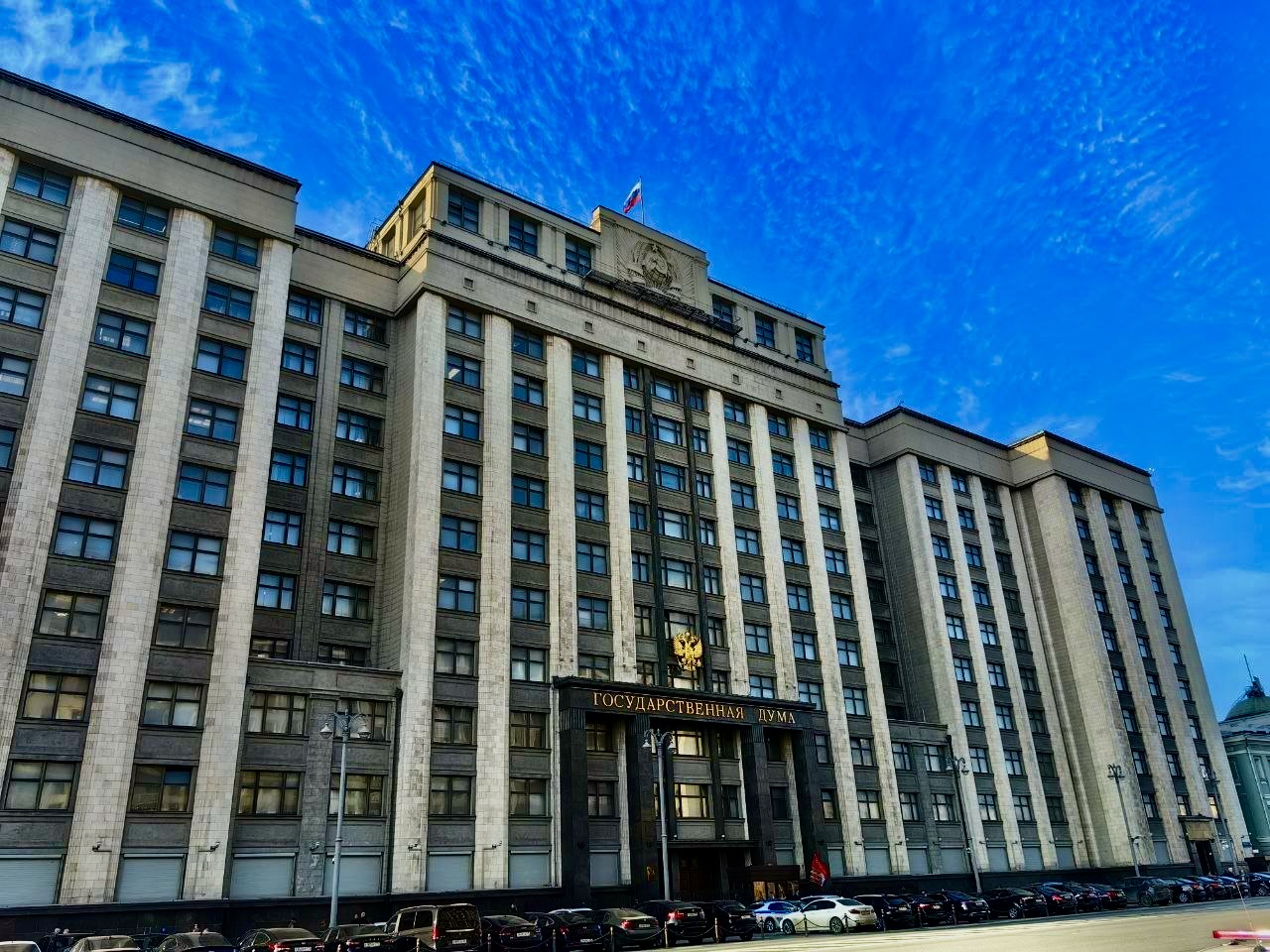
MOSCOW (Realist English). Against the backdrop of a sharp deterioration in US‑Cuban relations, the Russian State Duma on June 10 unanimously adopted a statement “In connection with the intensification of the aggressive policy of the United States of America toward the Republic of Cuba.”
The document calls on the UN, international parliamentary organizations and parliaments around the world to condemn Washington’s actions and demand the immediate lifting of the decades‑old blockade. At the same time, Russia has stepped up its diplomatic support for Havana, strengthening strategic partnership amid US threats, including discussion of a possible military intervention.
Key Points of the State Duma Statement
In its unanimous statement, the State Duma set out a number of fundamental provisions.
- Blockade as interference in internal affairs. The deputies called the ongoing economic, financial and now near‑total energy blockade by the US “an overt interference in the internal affairs of a sovereign state” and an example of “interstate relations based on illegitimate restrictive measures”, which directly violates the UN Charter.
- Carrier strike group as an instrument of blackmail. The statement expressed particular alarm over “the demonstrative deployment of a US naval carrier strike group in the Caribbean basin.” In the deputies’ view, these actions are aimed at “using economic and military blackmail to force the Cuban leadership to make unacceptable concessions and create conditions for regime change in the country”.
- Demand to the US and appeal to the world community. The deputies insist that Washington immediately renounce all forms of political and economic pressure on Cuba and end “the American neocolonial practice of conducting affairs through blackmail and threats”. The Duma calls on the UN and world parliaments to condemn Washington’s policies and demand the lifting of the blockade.
- Support for the Cuban people. The document expresses “firm support for the Cuban people, the leadership of a friendly country, our colleagues in the National Assembly of People’s Power of the Republic of Cuba and the Council of State of the Republic of Cuba in their selfless struggle for their independence.” The parliamentarians reaffirmed their commitment to strengthening Russian‑Cuban strategic partnership.
State Duma Speaker Vyacheslav Volodin, commenting on the statement, stressed that “Cuba lives its own life” and that the problems created for it “do no good”, urging the US to leave the island alone. “As for the United States of America: they should have calmed down long ago,” he said.
Position of the Russian Foreign Ministry and International Diplomatic Support
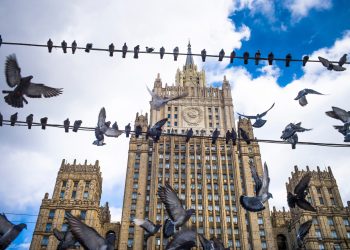
The Russian Foreign Ministry consistently expresses solidarity with Cuba. Deputy Foreign Minister Sergey Ryabkov said that the issue of US pressure on Cuba “is present in Moscow’s contacts with Washington”, adding that the sides’ approaches “differ radically” but that Russia cannot remain indifferent.
In early June, at a meeting in Harare, Russian representatives expressed “solidarity with Havana and Tehran”, stressing the right of countries to determine their own destiny and resist neocolonial practices.
Foreign Ministry spokeswoman Maria Zakharova said on the sidelines of the St. Petersburg International Economic Forum that Russia is providing “multi‑profile assistance” to Cuba – from fuel supplies to political support in building infrastructure. Reaffirming unwavering solidarity, she noted that Russian‑Cuban cooperation “is not directed against third countries”.
Position of the Communist Party: Zyuganov and Novikov on the Defense of Cuba
The Communist Party of the Russian Federation has consistently taken the harshest stance in criticizing US policy toward Cuba, demanding that the Russian leadership take more active action.
Gennady Zyuganov, leader of the Communist Party, as early as January 27, 2026, at a plenary session of the State Duma, called for defending Cuba against external threats, calling US pressure on the island “a challenge for every one of us”. He said that US President Donald Trump “dictates his terms, creating a ‘Peace Council’ and abducting the leaders of other states”.
According to Zyuganov, “the US has not yet seized Greenland, but has already obtained everything it needs. They abducted Venezuelan President Maduro, but have not yet developed the oil fields. Now they have set their sights again on Iran, and Trump has openly stated that he will do everything to ‘strangle’ Cuba.” Zyuganov stressed that Cuba is a “moral and political authority for all mankind”, having withstood US pressure for more than 60 years.
In a February 2026 interview with NSNA, Zyuganov said that Russia “cannot allow the United States to ‘strangle’ individual leaders and entire nations, as is happening with Cuba and Venezuela”. He called the blockade of Cuba a “shame of American civilization” and urged not to be afraid of “quarrelling” with the US, because “America only recognizes the smart, the strong and the strong‑willed”. Russia, he said, must continue to help “unblock” the island, and within BRICS and the SCO Moscow has every opportunity to impress upon Washington the need for a peaceful solution.
On February 26, 2026, Zyuganov said that Russia is obliged to help Cuba with energy supplies and everything necessary, stressing that Cuba is a “moral and political example for all mankind” and trains “first‑class teachers and excellent doctors”.
Dmitry Novikov, Deputy Chairman of the Central Committee of the Communist Party, on May 27, 2026, on NTV’s “Meeting Place” program, sharply rebuked those who call on the Island of Freedom to capitulate. He stressed that the main cause of Cuba’s current problems is not the erroneousness of the socialist course, but the illegal blockade by the United States, which has lasted more than 60 years.
Novikov reminded that Cuba is as much a UN member as any other country, and if the sovereignty of states means anything, the world must respond to the criminal blockade of a small country by the US. He noted that Russia stands with the Cuban people, but could help its allies more actively.
Commenting on the host’s reference to a poll according to which 86% of Cubans want to change their lives, Novikov retorted: “When you have no light, you will not applaud it. But that does not necessarily make you a traitor. You can turn off the lights for people, but you cannot turn off their minds.”
Earlier, on January 31, 2026, the Presidium of the Communist Party Central Committee issued a separate Statement in support of Cuba, and on February 6, 2026, the Central Council of the Union of Communist Parties – Communist Party of the Soviet Union adopted a Statement describing Washington’s actions as “an act of undisguised aggression” and “another campaign of aggression against the Republic of Cuba”.
The document stressed that official Washington has returned to the practice of applying the “criminal, essentially fascist Monroe Doctrine”, and that the capture of Venezuelan President Nicolás Maduro and pressure on Cuba are links in the same chain. The Communist Party called on all progressive and patriotic forces of the world to mobilize and act together in support of Cuba.
Escalation of Tensions: US Sanctions and Military Threats
The State Duma’s statement came amid a sharp deterioration in relations triggered by a new package of US restrictions. On June 4, the White House imposed sanctions against Cuban President Miguel Díaz‑Canel, his wife, his stepson, and the son and grandson of former leader Raúl Castro. Cuban organizations were also sanctioned.
Miguel Díaz‑Canel called these actions aimed at “intensifying the blockade measures and the conflict scenario”, promising to resolutely resist “imperialist onslaught”. Cuba’s Foreign Ministry described the sanctions as a “ruthless act of economic aggression”.
At the same time, military threats intensified. Pentagon chief Pete Hegseth, speaking at the Guantánamo base, called the United States a “great friend” of Cuba but warned of “unacceptable consequences” if Havana tried to acquire weapons capable of reaching US territory or the base. Hegseth also suggested the possibility of the Cuban president being abducted by US special services, noting that “all options are on the table”. These statements heightened the Cuban side’s perception of the risk of a full‑scale invasion along the Venezuelan scenario.
International Reaction
- China. On June 5, a Chinese Foreign Ministry spokesman said Beijing firmly opposes the tightening of sanctions, which “has exposed the hegemonic, arrogant and bullying nature of the US”, and called on Washington to immediately stop the pressure.
- Mexico and Brazil. The leaders of Mexico and Brazil, in a joint statement, reaffirmed their commitment to the principle of non‑interference and the need to lift the embargo, expressing concern over the humanitarian situation in Cuba.
- UN. UN High Commissioner for Human Rights Volker Türk called on the US to immediately lift the sanctions because of the threat to human life.
Conclusions
Russia consistently supports Cuba in the face of increasing US pressure. The unanimously adopted State Duma statement and the simultaneous diplomatic steps of the Russian Foreign Ministry, backed by China and Latin American countries, form a united front against the American blockade.
The Communist Party takes the most radical position, demanding that the Russian leadership take more active action to defend the Island of Freedom and condemning any attempt to capitulate to Washington’s pressure. Although Washington continues its rhetoric of partnership, its actions (new sanctions, military demonstrations and discussion of forceful options) indicate an intention to further tighten its policy toward Cuba.