MOSCOW (Realist English). The Russian Foreign Ministry has made a number of important statements regarding the Ukrainian settlement, outlining key conditions for starting negotiations and assessing the actions of Western partners.
Officials from the ministry — from Minister Sergey Lavrov to his deputy Mikhail Galuzin and official spokeswoman Maria Zakharova — have consistently stated Moscow’s readiness for dialogue, stressing that without addressing the root causes of the conflict and ending arms supplies to Kyiv, the negotiation process is impossible.
On June 8, Lavrov, at a press conference following talks with the Foreign Minister of Bangladesh, outlined Moscow’s position. He stressed that Russia is ready for honest negotiations, “without cheating.”
At the same time, the Foreign Minister doubted that such talks could be held against the backdrop of a new agreement between the leaders of Britain, France and Germany with Volodymyr Zelensky to supply Ukraine with long-range weapons for strikes deep into Russian territory.
“I don’t know how any negotiations can be discussed against this backdrop,” Lavrov said.
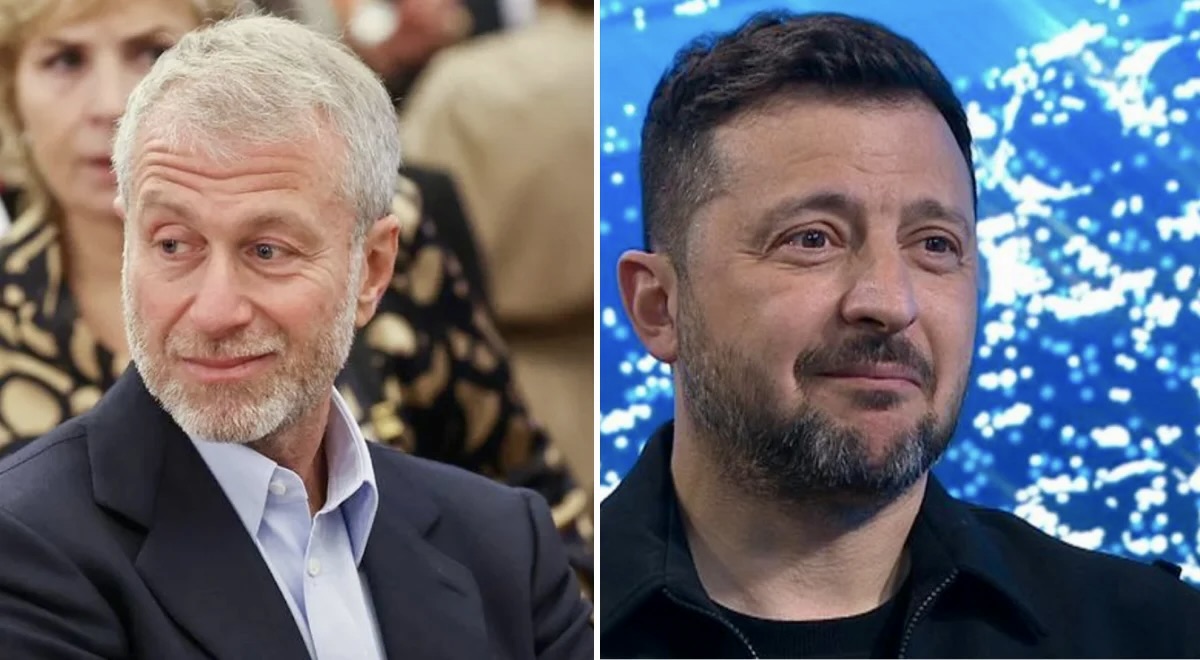
Earlier, Volodymyr Zelensky invited former Chelsea FC owner Roman Abramovich to Kyiv in mid‑May to deliver a personal message to Russian President Vladimir Putin.
The Ukrainian leader sought to convince the Russian president to meet for direct peace talks — for the first time since the start of the special military operation in 2022. This was reported by the Financial Times, citing four informed sources.
Lavrov noted that the message was addressed to the Russian president but for some reason was distributed worldwide, and such actions cannot be called polite. According to the minister, the Russian president regarded the letter as an indication that the Ukrainian side does not need negotiations.
“We Are Ready for a Meeting in Any Format”: Zelensky’s Message
According to sources, Zelensky asked Abramovich to convey to Putin that he is ready for a personal summit. The Ukrainian side wanted to demonstrate its seriousness amid the fact that the United States, which is trying to broker a ceasefire, is distracted by the war in the Middle East.
Putin: “No Point in Meeting”
On June 5, 2026, during his address at the St. Petersburg International Economic Forum, Putin confirmed the contact. He said that he had met with “a representative of our business circles” — “a, shall we say, colleague” — on May 21 after his trip to Kyiv.
The Russian president stated that he saw no point in meeting Zelensky, calling its only purpose “to halt the advance of our Armed Forces.” Putin also stressed that the businessman was not acting in an official capacity.
Zelensky Confirms: “It’s Not About Us”
On June 7, in an interview with Sky News during his visit to London (where he met with British Prime Minister Keir Starmer, as well as the leaders of France and Germany), Zelensky confirmed the FT report.
“He came and wanted to convey to me that they are ready, that they want to understand what we are going to do. We will not leave… and we will not give you victory in such a way,” the politician said.
Zelensky called a ceasefire “the biggest compromise” on Ukraine’s part and asked Abramovich to tell Putin that he was ready to meet “anytime” and “in any format.”
Abramovich’s Role: From Istanbul to Prisoner Exchanges
Abramovich has acted as a mediator in talks between Russia and Ukraine since the first weeks of the special military operation in 2022. He participated in organizing a round of negotiations in Istanbul in March 2022. He also helped broker a deal on Ukrainian grain exports via the Black Sea in 2022.
Although his role has become less prominent since Russia began direct talks with the United States, he remains involved in prisoner exchanges and bilateral consultations, including aspects of the stalled peace plan promoted by the United States. A source close to Abramovich called him indispensable: “He is needed because he is the only Russian they (the Ukrainians) are willing to tolerate. He gets along with everyone.”
According to another source, Zelensky believes he can “solve everything through the magic of his personal charisma” in a face‑to‑face meeting of leaders. Abramovich calls this persistence “the captain’s competition” — a term from KVN, the comedy show in which the Ukrainian president performed before entering politics.
“Putin doesn’t respond to that at all. And it doesn’t really work on Trump either. But Zelensky is completely fixated on it,” the source added.
On June 4, Zelensky published an open letter on his website addressed to Putin, in which he proposed a ceasefire and direct talks, while mocking Russia’s battlefield setbacks and long‑range drone strikes on St. Petersburg. The letter also mentioned Moscow’s dependence on North Korea and China. Moscow called the letter “rude” and said it only made a personal meeting impossible.
Drone Strike in Starobilsk as an Obstacle
In his address on June 5, Putin also pointed to a Ukrainian drone strike on a teacher‑training college in Russian‑controlled Starobilsk, which killed 21 people. That strike occurred on May 22 — the day after Zelensky’s meeting with Abramovich. According to Putin, this proves that Kyiv is not seeking peace.
European Mediator and Russia’s Position
EU countries are discussing the appointment of a special envoy who could negotiate with Putin on behalf of the continent. However, Putin has repeatedly floated the candidacy of former German chancellor Gerhard Schröder (his closeness to Moscow makes him unacceptable to the bloc) and dismissed virtually all others.
On June 4, Putin stated that Russia is open to talks at the level of foreign ministers or intelligence services, which effectively rules out his own participation.
According to a source close to Zelensky, no serious progress should be expected “until the end of summer,” since Washington is focused on Iran.