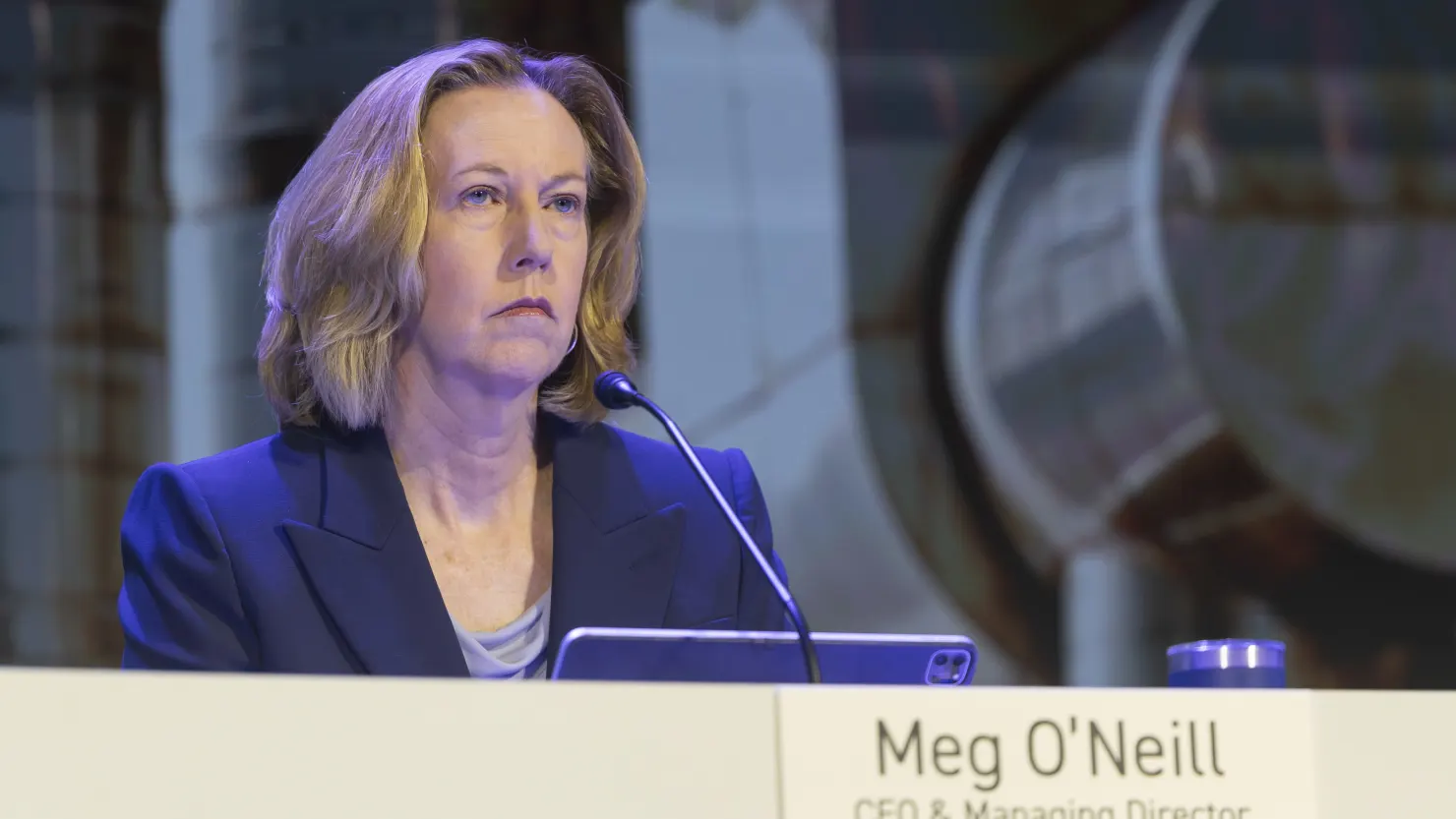
LONDON (Realist English). British oil major BP has appointed Meg O’Neill, the current chief executive of Australia’s Woodside Energy, as its next CEO, replacing Murray Auchincloss, who is stepping down after less than two years in the role.
Auchincloss will leave his post on Wednesday. Carol Howle, BP’s executive vice president for supply, trading and shipping, will serve as interim chief executive until O’Neill formally takes over on April 1. O’Neill will become BP’s fourth CEO in six years.
Auchincloss assumed the top job in January 2024 after serving as chief financial officer, following the departure of Bernard Looney, who left the company over a failure to disclose a personal relationship with a colleague. Looney, appointed in 2020, had pursued an ambitious strategy to reposition BP as a low-carbon energy company, but faced growing investor pressure amid weak share performance.
Under Auchincloss, BP reversed course, refocusing on its core oil and gas businesses. In a statement on Wednesday, Auchincloss said he had informed recently appointed chair Albert Manifold that he was willing to step aside if a suitable successor were found.
The leadership change comes after BP fended off takeover speculation earlier this year, when rival Shell publicly denied reports it was considering acquiring the struggling UK peer. Founded in 1909 as the Anglo-Persian Oil Company, BP has lagged behind competitors in recent years, reporting falling annual profits in both 2023 and 2024.
Pressure on the company has eased somewhat following a broader strategic reset, including a retreat from earlier green pledges, management changes, cost-cutting measures and a series of new oil discoveries. BP shares are up more than 15% so far this year and 21% over the past five years, rising 0.7% on Thursday after the CEO announcement.
O’Neill brings more than 25 years of experience in the oil and gas sector, including 23 years at ExxonMobil. She currently chairs industry group Australian Energy Producers and sits on the board of the American Petroleum Institute, having also served on the board of the Business Council of Australia.
She is expected to maintain BP’s renewed focus on traditional energy, particularly liquefied natural gas (LNG), which major oil companies increasingly view as a transition fuel. Speaking last year about Woodside’s strategy, O’Neill said investment decisions were based on long-term demand, describing LNG as a balance between reliability, affordability and sustainability.
Woodside has projected LNG demand to grow by around 50% over the next decade. Shares in the Australian company closed 1.3% lower on Wednesday.