Realist: news and analytics

Русский / English / العربية

  • News
  • Russia
  • Caucasus
  • Opinion
  • Interviews
  • Experts
No Result
View All Result
Realist: news and analytics
  • News
  • Russia
  • Caucasus
  • Opinion
  • Interviews
  • Experts
No Result
View All Result
Realist: news and analytics

Canada bets on LNG to fuel its energy future and counter US trade risks

With LNG Canada finally operational, Ottawa eyes a global energy role — but opposition, costs, and infrastructure gaps remain.

   
July 4, 2025, 07:38
Business & Energy
Speer Group launches Germany’s first defence-focused venture fund to bridge critical investment gap

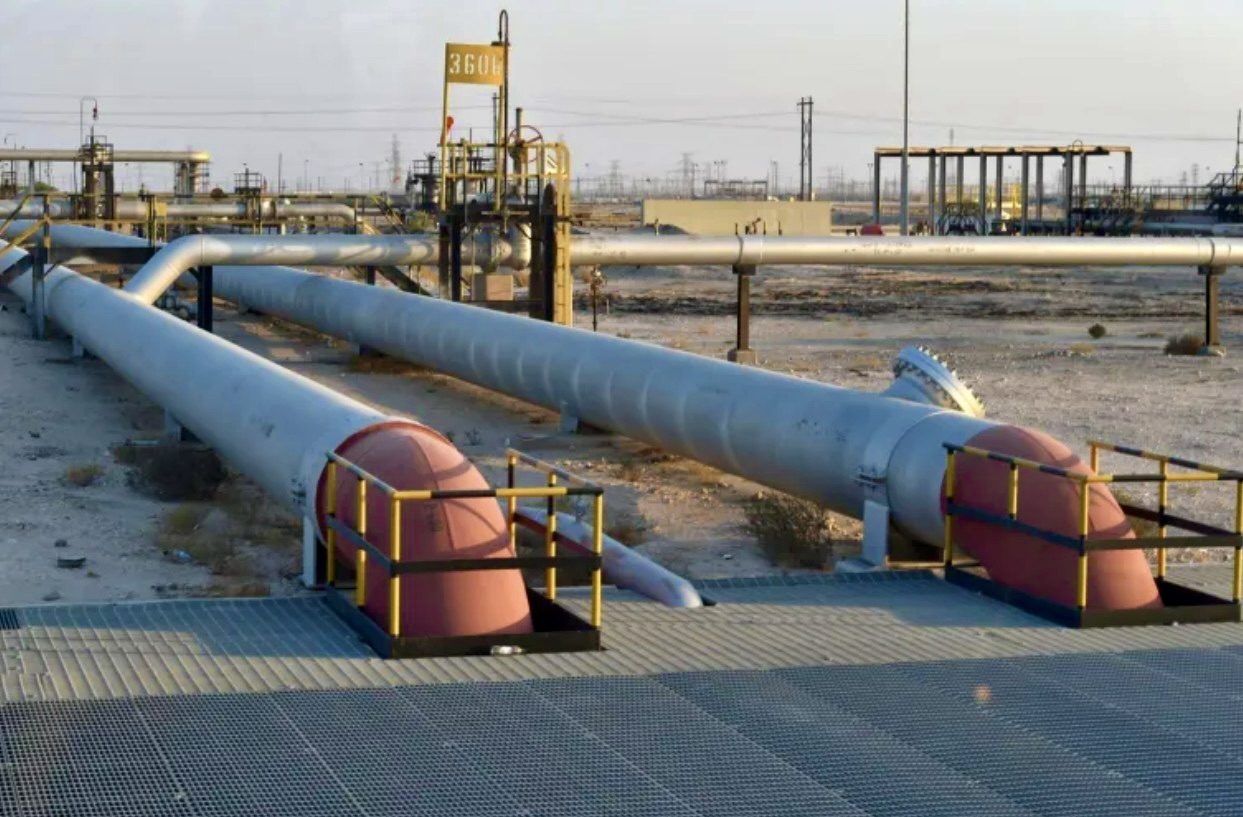
KITIMAT (Realist English). Once dubbed “the town of tomorrow,” the remote community of Kitimat in British Columbia is again at the center of Canada’s industrial ambitions. This week, the multibillion-dollar LNG Canada terminal began shipping liquefied natural gas (LNG) to Asia, marking a milestone in Ottawa’s effort to reposition the country as an energy superpower.

Backed by Shell, Mitsubishi and other Asian firms, the C$40bn facility is the largest energy infrastructure project in Canadian history and the country’s first LNG terminal. For Kitimat, it signals a potential rebirth after decades of industrial decline. For Prime Minister Mark Carney, it’s a centerpiece in a broader strategy to boost energy exports, diversify trade routes beyond the US, and counterbalance rising geopolitical uncertainty.

“President Trump’s tariffs are disrupting trade and threatening Canadian jobs,” said Energy Minister Tim Hodgson, referencing the Biden-to-Trump policy shift in Washington. “Projects like LNG Canada are a cornerstone of our plan to secure long-term competitiveness while building the world’s most reliable low-carbon energy system.”

A delayed energy pivot

Despite abundant gas reserves, Canada has long struggled to build infrastructure to access global markets. Over 90% of oil and gas exports go to the US, often sold at a discount due to lack of international transport links. Decades of regulatory delays, environmental opposition, and infrastructure deficits have stymied efforts to build pipelines or LNG terminals.

That left the field open to the US, now the world’s top LNG exporter, which has rapidly expanded its Gulf Coast terminals. Canada, meanwhile, saw over a dozen LNG projects canceled in the past 15 years. Only LNG Canada, plus two smaller projects — Woodfibre LNG and Cedar LNG — are currently under construction.

According to Masaru Saito of Mitsubishi, the Canadian opportunity remains immense: “We believe Canada can become a major player in the global energy landscape. The resource base and capacity are there.”

Still, the route to that future is complex. Construction of the Coastal GasLink pipeline — the lifeline to the LNG Canada terminal — faced opposition from First Nations, cost overruns, and protests, eventually doubling in cost to C$14.5bn. Indigenous leaders like Chief Na’moks of the Wet’suwet’en Nation continue to warn of environmental and democratic erosion: “We will not support the destruction of our lands or our rights.”

Competing visions, competing pressures

Carney’s government recently passed legislation to fast-track environmental reviews for “national interest” energy projects, hoping to compress approval timelines to two years. But indigenous groups say it undermines their legal right to meaningful consultation.

At the same time, Canada’s energy sector sees the need for urgency. A proposed emissions cap introduced under Trudeau-era climate policies remains in place, even as Carney has scrapped the controversial carbon tax. According to François Poirier, CEO of TC Energy, Canadian LNG can play a critical role in helping Asia reduce coal use — if regulatory burdens are eased.

“Canada can’t afford to delay any longer,” said Lisa Baiton, head of the Canadian Association of Petroleum Producers. “We’re facing $100bn in potential projects — but they need a clear path forward.”

Local partnerships as a new model

Some First Nations leaders are embracing development — under specific conditions. Last month, Enbridge sold a 12.5% stake in its Westcoast pipeline system to a consortium of 36 Indigenous communities, backed by a federal loan program. Meanwhile, the Haisla Nation is preparing to host Cedar LNG, a majority-indigenous-owned floating plant set to begin operations near Kitimat.

“Partnership is the key,” said Crystal Smith, chief councillor of the Haisla. “If Canada wants to be an energy superpower, First Nations must be in the driver’s seat.”

Strategic upside, competitive pressure

According to Wood Mackenzie, Canadian LNG has a cost advantage on shipments to Japan — especially due to Kitimat’s 10-day shipping time, compared to over 20 from the Gulf Coast. The facility is also powered by hydroelectricity, giving it one of the lowest carbon footprints in the global LNG market.

Still, global competition is fierce. Shell projects a 60% surge in LNG demand by 2040, driven by Asian markets seeking to reduce coal use. But for Canada to claim a significant share, it must overcome decades of inertia, resolve internal political divides, and win investor confidence.

For now, the flame flares over Kitimat’s skyline again — this time not as a symbol of decline, but of a nation testing its energy ambitions in a fractured world. Whether that ambition translates into lasting infrastructure, market power, and domestic consensus remains Canada’s next big test.
CanadaLNG Market
Previous Post

Microsoft lays off 830 employees in Washington as part of broader job cuts

Next Post

AI-powered heartbreak: How ChatGPT became the ghostwriter of modern break-ups

Related Posts

Russian Urals becomes world’s most expensive oil: $101.5 vs $98 for Brent
Business & Energy

Russian Urals becomes world’s most expensive oil: $101.5 vs $98 for Brent

22 April, 2026
Food crisis inevitable? Traders warn of consequences of Strait blockade
Business & Energy

Food crisis inevitable? Traders warn of consequences of Strait blockade

22 April, 2026
Apple CEO Tim Cook to hand over to John Ternus in September
Business & Energy

Apple CEO Tim Cook to hand over to John Ternus in September

21 April, 2026
Polish finance minister criticizes plan to sell gold reserves for army
Business & Energy

Polish finance minister criticizes plan to sell gold reserves for army

21 April, 2026
Oil shock: Brent breaks $96 as US-Iran talks collapse
Business & Energy

Oil shock: Brent breaks $96 as US-Iran talks collapse

20 April, 2026
War in Iran brings coal miners $513 million per day: Russia, Indonesia and Australia ramp up supplies
Business & Energy

War in Iran brings coal miners $513 million per day: Russia, Indonesia and Australia ramp up supplies

19 April, 2026
Most Popular
Most Popular
«The Kurdish card is a weapon of major powers»: Yaşar Yakış on why Turkey missed its chance to solve the Kurdish issue

«The Kurdish card is a weapon of major powers»: Yaşar Yakış on why Turkey missed its chance to solve the Kurdish issue

18 April, 2026

ANKARA (Realist English). Yaşar Yakış — a Turkish diplomat and statesman who served as Turkey's Minister of Foreign Affairs, ambassador to Saudi...

Dmitry Novikov on his path to politics, the intelligentsia, the left movement, and why US aggression against Iran is a threat to Russia

Dmitry Novikov on his path to politics, the intelligentsia, the left movement, and why US aggression against Iran is a threat to Russia

12 April, 2026

MOSCOW (Realist English). Dmitry Novikov, Deputy Chairman of the CPRF Central Committee and First Deputy Chairman of the State Duma...

“We Are Witnessing the Messianic Footsteps”: Avigdor Eskin on Israel’s War with Iran

“We Are Witnessing the Messianic Footsteps”: Avigdor Eskin on Israel’s War with Iran

11 April, 2026

JERUSALEM (Realist English). Israeli public figure and publicist Avigdor Eskin argues that we live in an era of “incredible acceleration,” when...

“Israel is not fighting the Iranian people, but the regime”: Alexander Tsinker on the goals of the operation against Iran

“Israel is not fighting the Iranian people, but the regime”: Alexander Tsinker on the goals of the operation against Iran

9 April, 2026

TEL AVIV (Realist English). The war in the Middle East, which began with US-Israeli strikes on Iran, has entered its fifth...

Opinion

Venezuela after Maduro: oil instead of democracy?

Venezuela after Maduro: oil instead of democracy?

22 April, 2026

CARACAS (Realist English). When U.S. forces swooped into Caracas in January 2026 and seized President Nicolás Maduro, many Venezuelans inside and outside...

The deal was close, but Trump blew it up with social media posts

The deal was close, but Trump blew it up with social media posts

21 April, 2026

WASHINGTON (Realist English). Toward the end of last week, the US and Iran appeared to be closing in on a deal...

The story of Russian girl Kristina Romanova: a Mexican thriller with a terrible ending

The story of Russian girl Kristina Romanova: a Mexican thriller with a terrible ending

20 April, 2026

MEXICO CITY (Realist English). Tatyana Poloskova, Doctor of Political Science, First Class State Advisor of the Russian Federation, based on her...

From Ayatollahs to Generals: Has Iran Shifted Under the Rule of Security Forces?

From Ayatollahs to Generals: Has Iran Shifted Under the Rule of Security Forces?

19 April, 2026

TEHRAN (Realist English). The Islamic Republic of Iran was built to be governed by clerics. It is now widely acknowledged as...

All rights reserved.

© 2017-2026

  • About Us
  • Mission and Values
  • Contact Us
  • Privacy Policy

Follow Realist English

No Result
View All Result
  • News
  • Russia
  • Caucasus
  • Opinion
  • Interviews
  • Experts

Русский / English / العربية