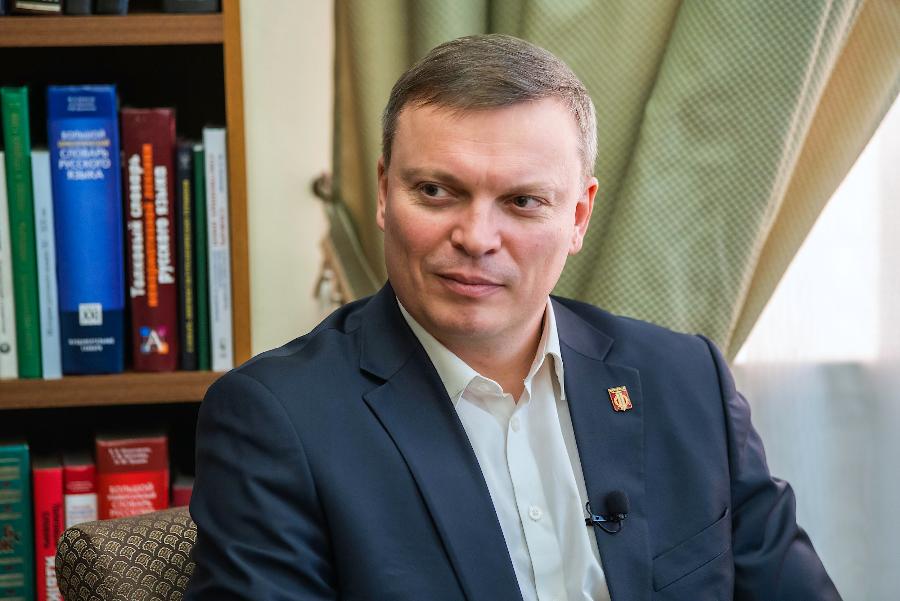
CHELYABINSK (Realist English). Deputy Governor of the Chelyabinsk Region Andrey Faleychik was detained on Thursday morning as part of a criminal investigation related to his previous role as head of the Kopeysk urban district, regional Governor Alexey Teksler announced on Telegram.
“Today in the morning Deputy Governor Andrey Faleychik was detained. The investigative actions are related to his previous position as head of the Kopeysk urban district. I will refrain from assessments and am confident that the investigation will be objective,” Teksler wrote. He added that if guilt is established, “he will answer to the fullest extent of the law, without regard to rank or title.”
Law enforcement sources told Interfax that Faleychik was detained by officers of the regional branch of the Federal Security Service (FSB) in cooperation with the Main Investigative Directorate of Russia’s Investigative Committee (central office). A criminal case has been opened under Part 6 of Article 290 of the Russian Criminal Code — accepting a bribe on an especially large scale. The charge carries a maximum penalty of up to 15 years in prison, along with a substantial fine and a ban on holding certain public offices.
According to investigators, the alleged bribe was transferred by the director of LLC Yunost, a children’s recreation company, in exchange for granting a commercial entity a long-term lease of the municipal Yunost summer camp complex owned by the Kopeysk administration.
Searches are currently being conducted at Faleychik’s residence and workplace. A court hearing to determine pre-trial measures is expected to take place in Moscow, where he will be transferred for further investigation.
Earlier, according to a source cited by Interfax, the director of LLC Yunost and intermediaries involved in the alleged transfer of funds — former deputy heads of the Kopeysk administration Frolov and Shadrin — had already been charged.
The case centers on the management of municipal property, a politically sensitive area for regional authorities. Its дальнейшее развитие will signal how far federal law enforcement agencies are prepared to pursue corruption cases involving sitting senior officials. The political consequences for the regional administration will depend on the strength of the evidence and subsequent court decisions.