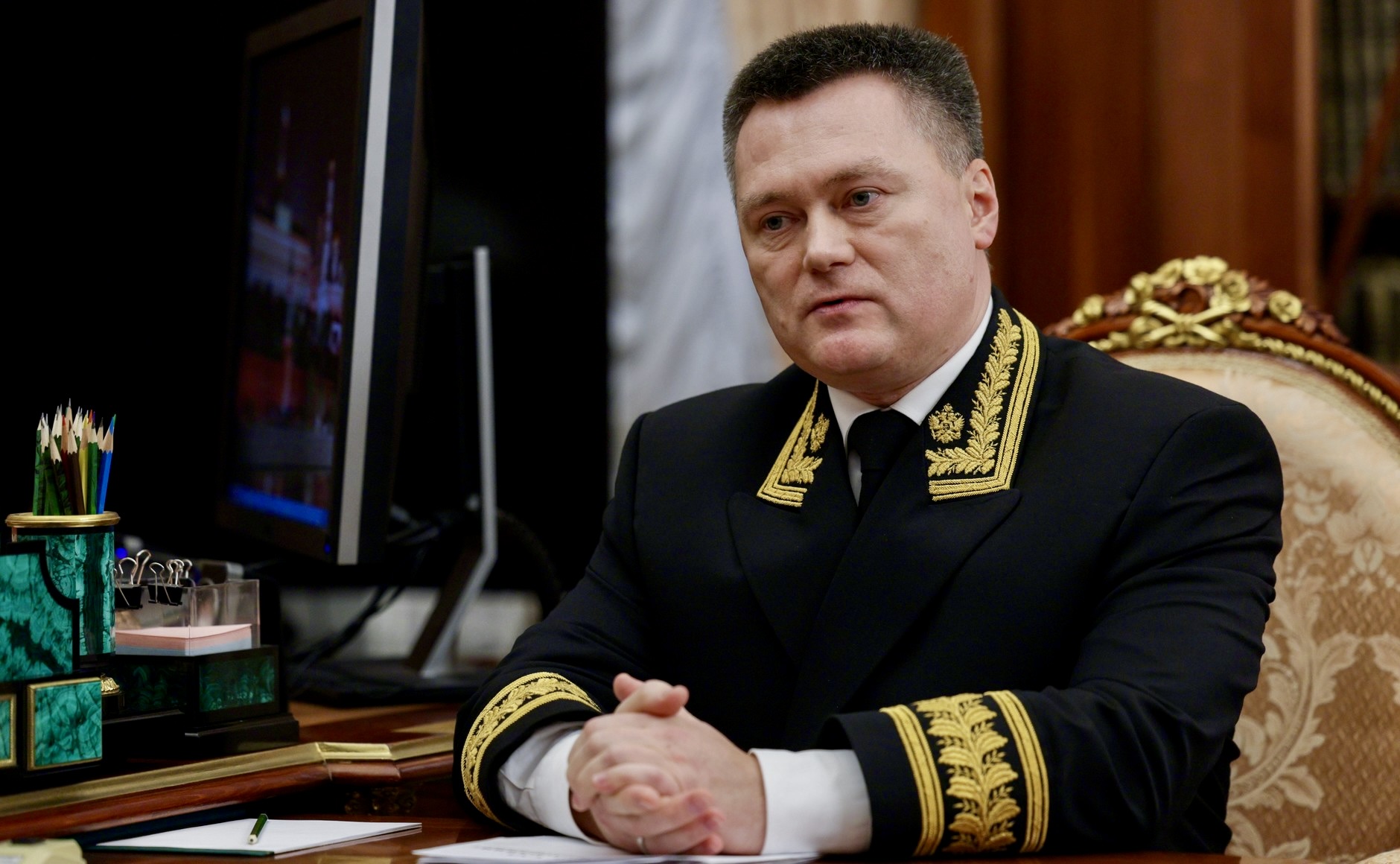
MOSCOW (Realist English). Chief Justice of the Russian Supreme Court Igor Krasnov has published an article analyzing the crisis of the international judicial system and arguing the advantages of Russian jurisdiction for resolving economic disputes. According to him, the era of “fashion” for London and New York arbitration is over: today, predictability, speed and accessibility of justice come to the fore.
“British justice” turned out to be biased: the case of the Novosibirsk entrepreneur
Krasnov cited an illustrative case. In 2020, a Novosibirsk supplier of flax seeds entered into a contract with a German counterparty, agreeing to the application of English law and the resolution of disputes in London arbitration. Due to drought, the entrepreneur could not fulfill the contract on time. Foreign arbitration awarded the Russian $600,000 in damages and nearly €4,000 in costs.
At the same time, as the Russian Supreme Court found, the British arbitration:
- unreasonably rejected arguments about force majeure;
- did not accept the application regarding violations in the appointment of arbitrators (who turned out to be citizens of Ukraine, Great Britain and Denmark);
- did not explain the appeal procedure and did not even send a copy of the decision.
Due to anti-Russian sanctions, the supplier could not pay for legal assistance in the UK. The Supreme Court sent the case for a new hearing to Novosibirsk, after which the buyer withdrew his claims.
“Can we speak of objectivity and impartiality in such proceedings? Definitely not. It all sounds more like an instruction for discrimination based on country of origin,” Krasnov stated.
European justice has become inaccessible due to sanctions
Another example — a lawsuit by a Russian company from Komi against a French manufacturer for the return of a prepayment. Despite an arbitration clause providing for the dispute to be heard in Geneva under French rules, resolving the dispute became impossible: the European Union prohibited satisfying claims of Russian legal entities.
“It is obvious that such practice makes European justice a priori inaccessible to domestic entrepreneurs,” the Chief Justice emphasized.
Why Russian jurisdiction is “chess” and foreign is “poker.”
Krasnov highlighted several key advantages of the Russian judicial system.
Predictability. Russian legislation is well-developed, and judicial proceedings follow a “strictly delineated corridor.” Resolutions of the Plenum and Presidium of the Supreme Court create uniform legal positions without excessive casuistry. “The Russian system can be compared to a chess game, where pieces are visible, rules are transparent, and the decision-making field is limited by clear logic. However, in some foreign jurisdictions, it more resembles a game of poker,” Krasnov wrote.
Speed. International arbitration lasts from one and a half to three years. Russian arbitration courts complete cases in three months, and the full cycle with appeal and cassation takes 6–12 months.
Digitalization. A high level of electronic interaction and remote participation allows proceedings without being tied to physical presence. “The Russian judicial system surpasses even traditionally technologically advanced jurisdictions,” Krasnov noted.
Accessibility. Court costs in Russia are incomparably lower than abroad. “The protection of rights ceases to be a privilege of large players. In our country, law performs its basic function — to be a tool, not a luxury.”
Interim measures. Russian courts quickly impose asset seizures and prohibit registration actions, which is critical when assets may be concealed.
Enforcement of decisions. Through the Federal Bailiff Service, the percentage of actual recovery is relatively high, especially when the debtor has liquid assets in Russia. Foreign arbitration decisions are de facto unenforceable due to sanctions.
Impartiality. Amid the politicization of cross-border disputes, Russian jurisdiction treats economic disputes as a legal category, not an element of geopolitics.
“There are problems, but they are being overcome.”
Krasnov acknowledged the existence of “long-standing problems” in domestic legal proceedings, including corruption risks, and stated that measures are being taken to reduce them. “There is no point in hiding problems when they exist,” he stressed.
In conclusion, the Chief Justice summarized: “The call to choose Russian jurisdiction for litigation is not an advertisement of its universal attractiveness or competition with London or New York. It is an objective reality. Unlike foreign jurisdictions, justice in Russia remains more impartial, predictable, and, most importantly, accessible to all participants in economic turnover, regardless of the country of origin and the color of the passport of the plaintiff and defendant.”
Decline of rule of law and attacks on civil liberties
According to reports from Western human rights organizations for 2026, EU institutions and member states do not always respect human rights, which undermines democracy and the rule of law. The European Union Agency for Fundamental Rights (FRA) in its 2025 report recorded “alarming trends”: election manipulation, rising violence against women, and serious rights violations at EU borders.
The Liberties 2026 report classified six EU countries as “declining,” including Belgium and Malta, and five countries — Bulgaria, Croatia, Hungary, Italy, and Slovakia — as “deliberately undermining the rule of law.”
Digital surveillance and restrictions on online freedoms
The European Union is actively promoting legislation that raises concerns among digital rights advocates. In 2025–2026, initiatives such as Chat Control 2.0 (total monitoring of messenger chats) and the “Digital Comprehensive Package” were discussed, which, according to civil society organizations, lead to deregulation and the creation of mass surveillance systems under plausible pretexts. Pavel Durov accused the EU of promoting mass surveillance and censorship.
Criticism from the US and human rights defenders
In August 2025, the US State Department published a report stating that there are “serious restrictions on freedom of speech” in the United Kingdom and that “the human rights situation has deteriorated” after Labour came to power.
Restrictions on freedom of assembly and protests
Police and courts continue to use protest laws (Police, Crime, Sentencing and Courts Act 2022 and Public Order Act 2023) to restrict and criminalize peaceful protests. The Court of Appeal found that part of the Public Order Act 2023, which gives police “almost unlimited powers” to restrict protests, was passed unlawfully. In July 2025, the activist group Palestine Action was declared a terrorist organization.