ADDIS ABABA (Realist English). China and the African Union issued a joint call on Thursday for strict adherence to international law, sovereignty and territorial integrity, signaling a coordinated response to Washington’s recent military operation in Venezuela.
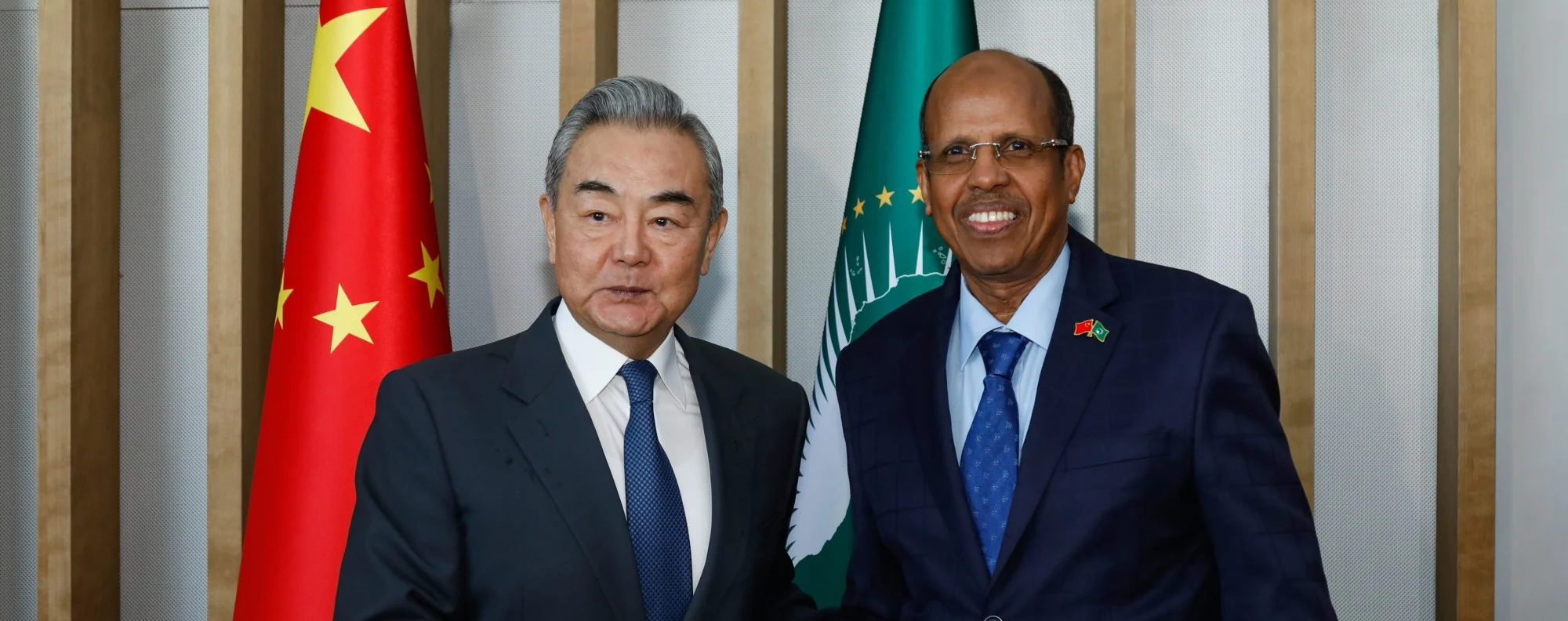
The statement followed talks in Ethiopia between Chinese Foreign Minister Wang Yi and African Union Commission Chair Mahmoud Ali Youssouf, during which both sides expressed concern over developments in Venezuela. The United States carried out a raid over the weekend that resulted in the detention of Venezuelan leader Nicolas Maduro and his wife, after which U.S. President Donald Trump said Washington would assume direct control over Venezuela, including its oil sector.
In their joint statement, China and the African Union reaffirmed that “the sovereignty and territorial integrity of all countries must be respected” and that the principles of the United Nations Charter and international law should be upheld. Framing their position as members of the Global South, both parties pledged to support one another’s core interests and to strengthen coordination to promote global and regional peace, stability and development.
The meeting took place as Wang began his annual tour of Africa, with Ethiopia — host of the African Union headquarters — as the first stop. Africa has been the first overseas destination of the year for Chinese foreign ministers for 36 consecutive years, underscoring Beijing’s long-term diplomatic focus on the continent.
During a separate meeting in Addis Ababa, Wang held talks with Ethiopian Prime Minister Abiy Ahmed, telling him that China would continue to advance its peace and development vision for the Horn of Africa and play a “constructive role” in regional stability. Wang said Beijing was ready to deepen cooperation with Ethiopia across infrastructure, energy, transport and emerging sectors such as the digital economy, artificial intelligence and green energy.
Chinese analysts say the Horn of Africa occupies a central place in Beijing’s diplomacy and its Belt and Road Initiative. Zhou Yuyuan of the Shanghai Institutes for International Studies noted that peace and stability in the region align closely with China’s strategic and economic interests, adding that Beijing has pursued active mediation through a special envoy for Horn of Africa affairs since 2022.
Wang’s tour, which runs until January 12, will also include visits to Somalia, Tanzania and Lesotho. The Somalia leg comes amid heightened tensions following Israel’s recent recognition of Somaliland, a move Beijing has openly opposed as undermining Somali sovereignty. China is expected to reiterate its support for Somalia’s territorial integrity, a stance that also aligns with Beijing’s broader position on Taiwan.
Beyond the Horn of Africa, China’s agenda includes reinforcing economic ties. In Tanzania, Beijing has pledged to upgrade the aging Tanzania–Zambia railway, a strategic route for accessing copper resources in Zambia and the Democratic Republic of Congo, seen as a counterweight to U.S.-backed infrastructure corridors. In Lesotho, discussions are expected to focus on trade access and China’s zero-tariff treatment for exports, contrasting with Washington’s recent rollback of preferential trade arrangements.
Taken together, the Africa tour and the joint statement with the African Union highlight Beijing’s effort to position itself as a defender of sovereignty and multilateral norms, while quietly pushing back against what it portrays as growing U.S. unilateralism on the global stage.