BEIJING (Realist English). China has reacted with concern to renewed statements by Donald Trump signaling U.S. intent to take control of Greenland, a move that follows Washington’s recent military operation in Venezuela and has heightened anxieties over stability in the Arctic.
Speaking to reporters aboard Air Force One on Sunday, Trump reiterated that Greenland was of critical strategic importance to the United States, citing what he described as an expanding Russian and Chinese presence in surrounding waters. “We need Greenland from a national security situation. It’s so strategic,” he said.
In comments to China’s state-run Xinhua News Agency, White House spokesperson Karoline Leavitt said Trump views the acquisition of Greenland as a national security priority and that his administration is assessing a range of options, including potential military measures, to counter U.S. rivals in the Arctic.
China’s Foreign Ministry rejected Washington’s framing. Spokesperson Lin Jian said Beijing opposed the use of a so-called “China threat” as justification for unilateral actions aimed at advancing U.S. interests, warning that such rhetoric risks destabilizing the region.
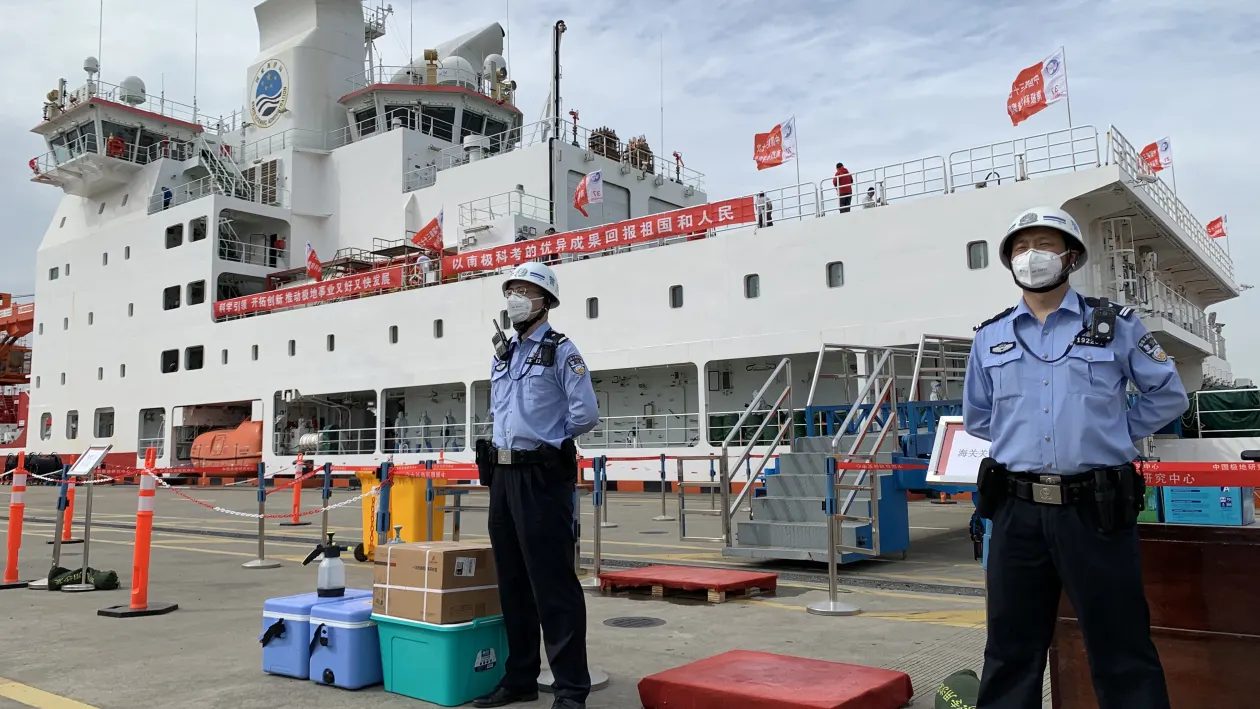
China has identified itself as a “near-Arctic state” since the publication of its Arctic Policy in 2018 and has expanded its economic and scientific footprint across the region. State-linked Chinese companies have invested in Arctic energy projects, shipping routes and mineral exploration, while Beijing has promoted the development of a “Polar Silk Road” linking Asia and Europe through newly accessible northern sea lanes.
Analysts in China argue that any U.S. attempt to assert control over Greenland would be met with firm diplomatic resistance. Wu Xinbo, director of the Center for American Studies at Fudan University, said Beijing has significant commercial and strategic interests tied to Arctic shipping corridors and natural resources, including rare earth elements and uranium.
U.S. defense officials, for their part, have increasingly identified China and Russia as key competitors in the Arctic, pointing to joint naval patrols and expanded military capabilities as potential threats. Some Chinese experts say Beijing could respond to U.S. pressure through multilateral diplomacy or closer coordination with Moscow in the region.
Greenland, an autonomous territory within the Kingdom of Denmark, holds some of the world’s largest undeveloped rare-earth deposits, making it a focal point of global competition for critical minerals. While Chinese investors have scaled back several projects in recent years due to environmental restrictions and geopolitical risks, Beijing maintains diplomatic and research links, including a representative office opened in 2023.
Observers note that Trump’s renewed focus on Greenland has sharpened international debate over Arctic governance. Analysts warn that any unilateral move could be framed by China as a step toward militarization of the North Atlantic, further intensifying rivalry among major powers in a region already transformed by climate change and strategic competition.