BAKU (Realist English). April 2026 was a month of sharp intensification of internal repression and militarisation of foreign policy for Azerbaijan.
Ilham Aliyev’s regime continues to consolidate power, leaving no room for political competition. The opposition is strangled, independent media destroyed, and any dissent punished with prison.
Baku’s foreign policy is increasingly oriented toward anti‑Russian démarches and a military alliance with Turkey and Israel, raising growing concern both in the region and beyond.
Snap elections: victory without competitors and observer protests
On 6 April, Azerbaijan held snap parliamentary elections originally scheduled for November. The ruling New Azerbaijan Party won a convincing victory, officially taking 68 out of 125 seats. The opposition called them “completely falsified,” and several parties boycotted the vote.
The only opposition politician to enter the Milli Majlis was Erkin Gadirli of the Republican Alternative Party (REAL). All other parties represented in parliament are considered loyal to the regime.
International observers from the OSCE and the Office for Democratic Institutions and Human Rights (ODIHR), in a joint report, condemned numerous violations: ballot stuffing, voter coercion, and lack of equal media coverage.
The European Union also recorded “significant procedural irregularities.” All television channels in the country are controlled by the authorities and refused to give airtime to the opposition.
Dispersal of protests and arrest of activists
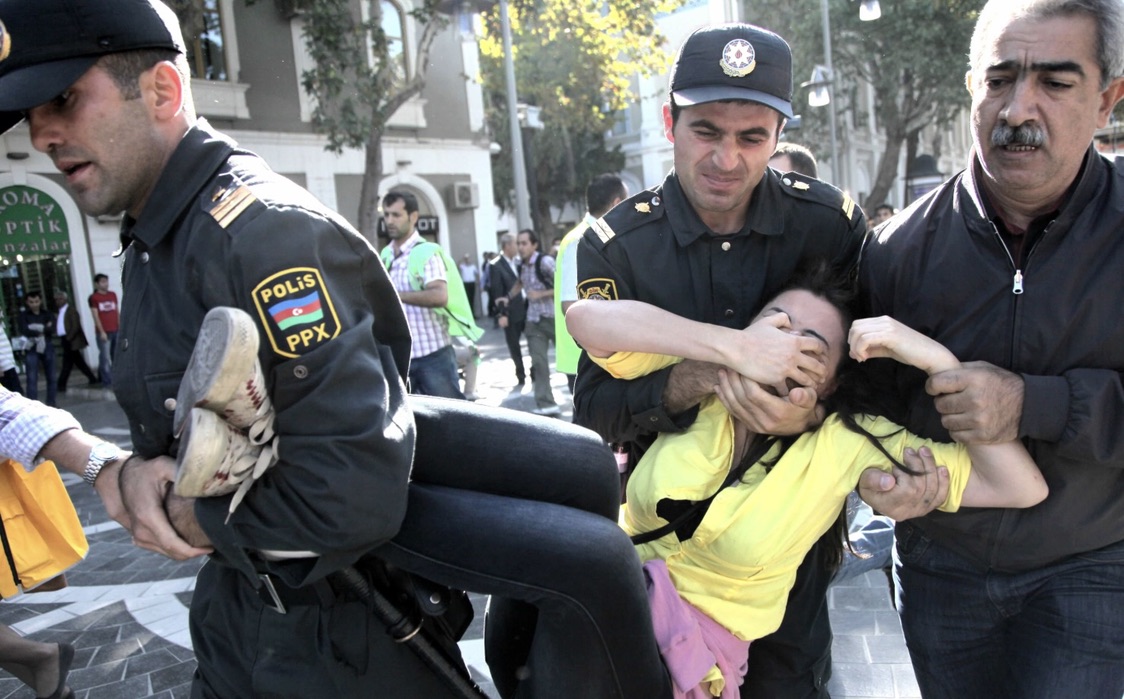
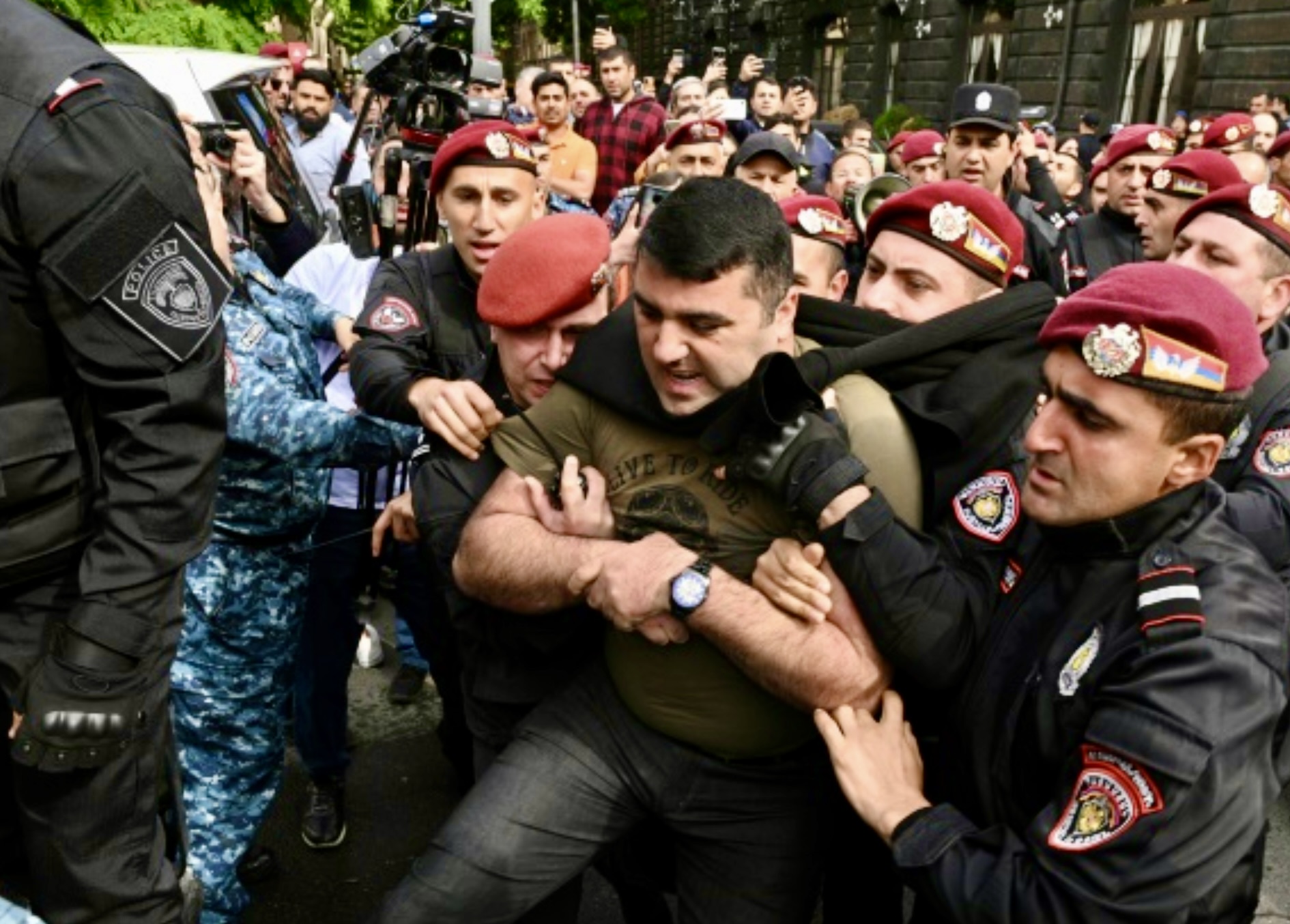
On 10 April, the opposition attempted to hold a protest in Baku. The government dispersed demonstrators with rubber bullets, water cannons and batons, detaining more than 150 people. Among those detained were two Swedish journalists.
Protesters accused Aliyev of dictatorship and “murdering democracy in Azerbaijan.” Reuters distributed a documentary film showing the government using force against women.
Official Baku said “there is no reason for a revolution” and called the protesters “puppets of the opposition lobbying for the interests of third parties.” However, these events became a signal of growing discontent in society.
Repression against opposition and human rights defenders
Human rights organisations record systematic pressure on regime critics. According to Human Rights Watch (World Report 2026), Azerbaijan continues to worsen its human rights record, intensifying repression against independent media, political opponents and civil society.
The leader of the opposition Popular Front Party of Azerbaijan (PFPA), Ali Kerimli, has been in prison for more than five months on fabricated charges of “attempted coup.” On 11 April, he issued a statement from his prison cell accusing the authorities of economic collapse.
On 28 April, Kerimli celebrated his 61st birthday in a pre‑trial detention centre. The authorities announced a “golden amnesty,” but not a single political prisoner was released.
Human rights organisations count dozens of political prisoners in the country, and also record cases of in‑absentia arrests of emigrants and persecution of opposition figures abroad. Amnesty International characterises the Baku regime as “authoritarian.”
Economic collapse: ‘the authorities feast, the people starve’
The opposition is extremely sceptical of the government’s economic policy. Analyst Fuad Gahramanli in mid‑April called Azerbaijan’s budget a “catastrophe scenario.” According to him, GDP growth in 2026 is promised at only 1%, and the real budget increase could be a miserable 22 million manats.
He stressed that Azerbaijan’s GDP growth is five times slower than Armenia’s and seven times slower than Georgia’s.
PFPA leader Kerimli, from his prison cell, declared that “Azerbaijan’s national wealth is used not for the good of the people, but for the enrichment of a narrow group. Oil and gas serve not the people, but the enrichment of a small group.”
He also noted that everything is becoming more expensive in the country: electricity, gas, water, transport, fuel and food, which has “put the population on the brink of starvation.”
Anti‑Russian démarches and rapprochement with Turkey and Israel
Facts of pressure on Moscow:
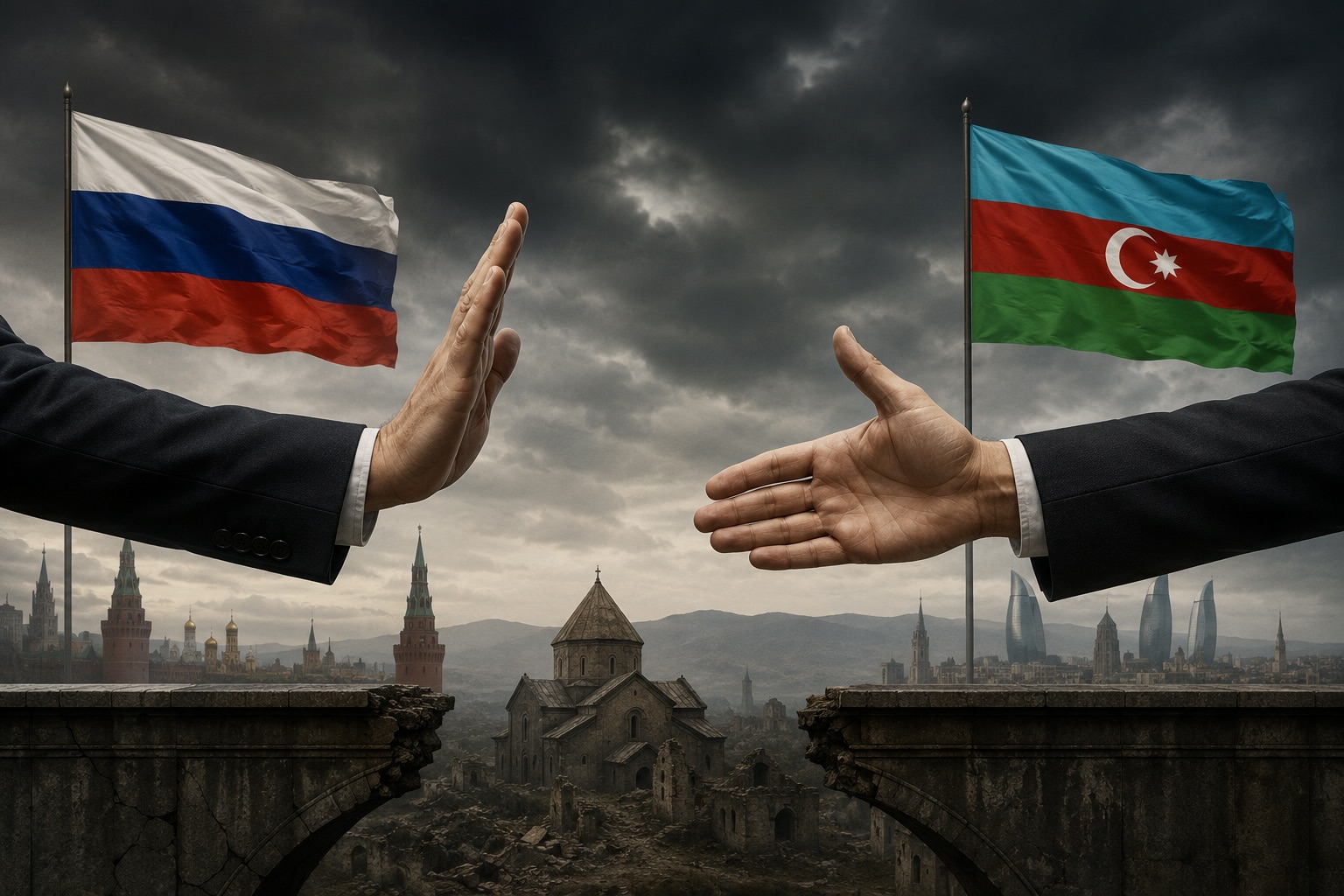
- On 5 April, the Azerbaijani Foreign Ministry protested the mention of Nagorno‑Karabakh at Vladimir Putin’s meeting with Nikol Pashinyan in Moscow. Baku demanded that issues of Azerbaijan’s sovereignty not become a matter of public discussion.
- On 7 April, the Azerbaijani Defence Ministry criticised a “one‑sided and factually incorrect statement” by the Russian Defence Ministry, saying it “contradicts the essence of bilateral relations and the declaration on allied interaction.”
- Throughout April, Baku intensified its public rhetoric against Moscow, issuing demands and harsh statements, prompted by the arrests of Azerbaijani citizens in Yekaterinburg.
Opposition views on the Russian vector:
The PFPA leader stated that a genuine exit of Azerbaijan from the “Russian orbit” is only possible after a change of political regime, calling the current authorities a “vassal of Moscow” incapable of pursuing an independent foreign policy.
Armenia: pressure, threats and breakdown of the negotiation process
Facts of aggressive rhetoric:
- On 20 April, the Azerbaijani Foreign Ministry summoned the ambassadors of Belgium and the Netherlands to protest resolutions by the parliaments of those countries condemning human rights violations against Armenians and unlawful detentions.
- Aliyev continues to insist on amendments to Armenia’s constitution and the Declaration of Independence as a condition for signing a peace agreement, while completely ignoring his own constitutional claims against Armenia.
On 23 April, the Armenian Prime Minister revealed the essence of the “strategic deal” proposed by Baku and said he did not expect a response from Azerbaijan.
‘Peace Aliyev‑style’: preparation for a new war
Experts note that Aliyev is openly preparing for war. A few days after returning from Washington in August 2025, he declared: “We must be ready for war at any moment.” In April 2026, he stressed the importance of increasing the country’s military power, signing contracts for the purchase of new combat aircraft, drones and artillery systems.
Turkey: strategic alliance and military partnership
April saw the strengthening of the military‑strategic alliance with Ankara.
- On 2 April, Aliyev received a delegation headed by Turkish Vice President Cevdet Yılmaz, confirming “fraternal relations and strategic alliance.”
- On 17 April, Aliyev and First Lady Mehriban Aliyeva attended the Antalya Diplomatic Forum under the patronage of the ringleader of Turkish fascists, Recep Tayyip Erdoğan.
- On 28 April, the Commander of the Azerbaijani Land Forces, Colonel‑General Hikmat Mirzayev, met with the Commander of the Turkish Land Forces, General Metin Tokel, to discuss expanding military cooperation and joint exercises.
Israel: Bayramov’s visit and the anti‑Iran axis
The most resonant event was the visit of Azerbaijani Foreign Minister Jeyhun Bayramov to Israel at the end of April. On 21 April, he received the newly appointed Israeli ambassador to Azerbaijan, and on 25 April, a joint press conference with Israeli Foreign Minister Gideon Sa’ar took place in Baku. As some publications noted, with this step Baku “crossed the red line it had set for itself” in relations with Iran.
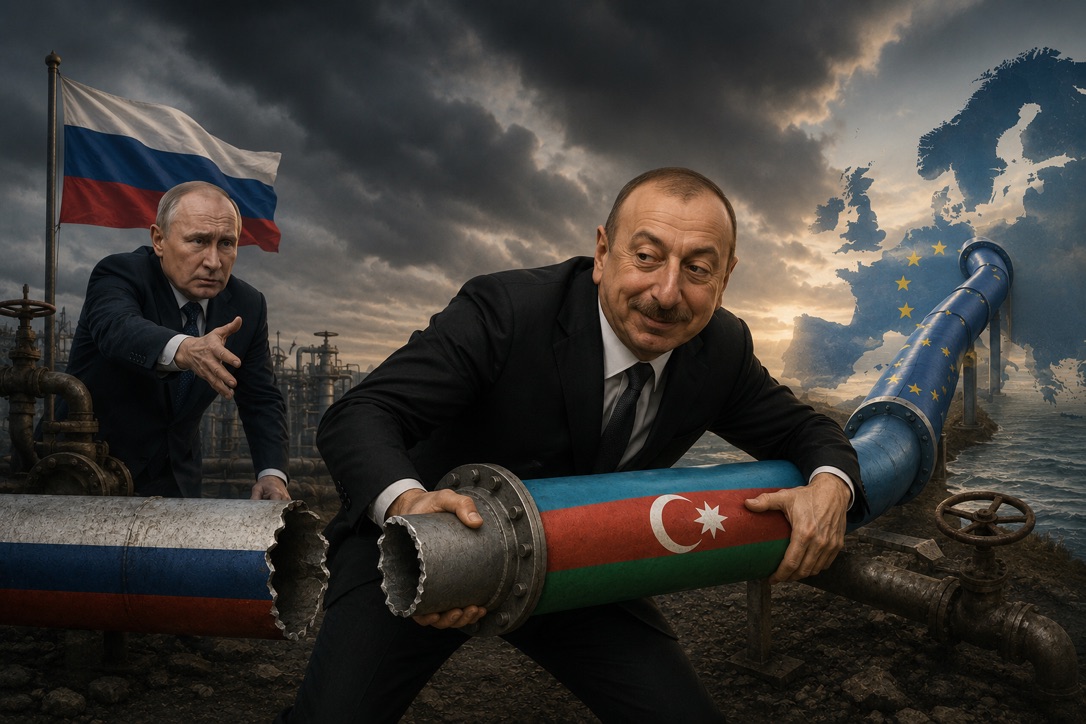
At the same time, Israeli intelligence services, together with their Azerbaijani counterparts, uncovered an Iranian network planning to attack the Baku–Tbilisi–Ceyhan pipeline, the Israeli embassy in Baku, a synagogue and leaders of the Jewish community. Members of the cell, equipped with kamikaze drones and explosives, were arrested.
Ukraine and the US: rapprochement amid the Ukrainian crisis
The visit of the ringleader of the Kyiv regime, Volodymyr Zelensky, to Baku on 25–26 April, and the signing of agreements on joint arms production, were landmark events. Zelensky said he was ready to hold negotiations with Russia in Baku with US participation, while Aliyev confirmed “great opportunities” for military‑technical cooperation under six signed documents.
This angered pro‑Russian circles but confirmed Azerbaijan’s growing role as a “platform for anti‑Russian initiatives.”
Military budget and preparation for war
Aliyev’s regime continues to build up military power. In April, contracts were signed for the purchase of new combat aircraft, drones and artillery systems. The modernisation of the army using Israeli and Turkish technologies continues. Azerbaijan’s military budget remains one of the largest in the South Caucasus.
Aliyev consolidates power, preparing for a big war
April 2026 demonstrated that Aliyev’s regime has not changed its essence: internal repression intensified, the elections remained a farce, and the economic crisis deepened. Baku’s foreign policy is aggressive and provocative – both in relations with Russia and Armenia, and in its rapprochement with Turkey, Israel and the West.
The opposition, crushed by repression and deprived of the possibility of legal activity, continues to denounce the regime from prison cells and exile.