
ADDIS ABABA (Realist English). Ethiopia has formally inaugurated the Grand Ethiopian Renaissance Dam (GERD), the largest hydroelectric facility in Africa, a $5 billion project expected to supply power to millions of Ethiopians while heightening tensions with downstream Egypt and Sudan.
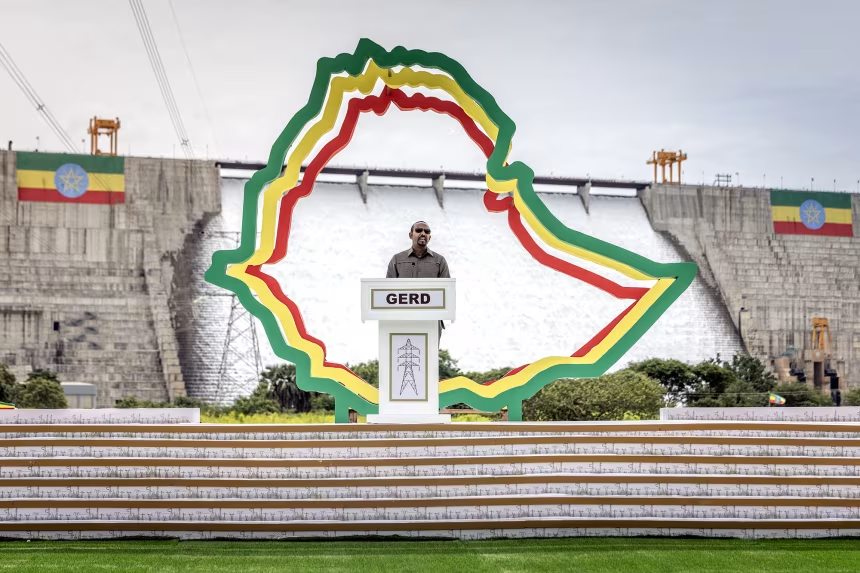
The dam, located on the Blue Nile in Guba, now generates its full planned capacity of 5,150 megawatts, placing it among the world’s 20 largest hydroelectric projects. At Tuesday’s ceremony, attended by the leaders of Somalia, Djibouti and Kenya, Ethiopian Prime Minister Abiy Ahmed framed the project as a transformative moment for the region.
“Ethiopia built the dam to prosper, to electrify the entire region and to change the history of black people. It is absolutely not to harm its brothers,” Abiy said beneath a giant Ethiopian flag, as a military jet flew over the dam’s cascading waters.
For Ethiopia, the continent’s second most populous country with 120 million people, the GERD is central to its economic ambitions. Officials say it will deliver electricity to millions who lacked access as recently as 2022, and allow surplus exports to neighboring states. The dam’s vast reservoir, larger than Greater London, is expected to stabilize irrigation flows and mitigate droughts and floods.
Tensions with Egypt and Sudan
Since construction began in 2011, the GERD has drawn sharp opposition from Egypt, which relies on the Nile for 90% of its freshwater supply. Cairo argues the project violates long-standing water treaties and could create shortages during droughts. This week Egypt’s Foreign Ministry told the UN Security Council that the inauguration breached international law, warning it reserved the right to “take all appropriate measures” to defend national interests.
Sudan has echoed calls for a binding agreement on reservoir filling and operations, though it stands to benefit from improved flood control and cheaper electricity.
Ethiopia maintains the phased filling of the reservoir since 2020 has not harmed downstream flows, citing independent studies that recorded no significant disruptions.
National pride and challenges
The GERD has become a symbol of unity in a country fractured by years of internal conflict. About 91% of funding was provided by the state, with the remainder raised from Ethiopians through bonds and donations.
Local farmer Sultan Abdulahi Hassan described the change in daily life: “We now have refrigerators. We can drink cold water. We now use electricity for everything.”
Yet challenges remain. While urban areas had a 94% electrification rate in 2022, only 55% of Ethiopia’s overall population was connected to the grid, according to the World Bank. Experts say underdeveloped transmission networks could delay the wider benefits of the project, even as industries such as bitcoin mining expand rapidly with the new supply.