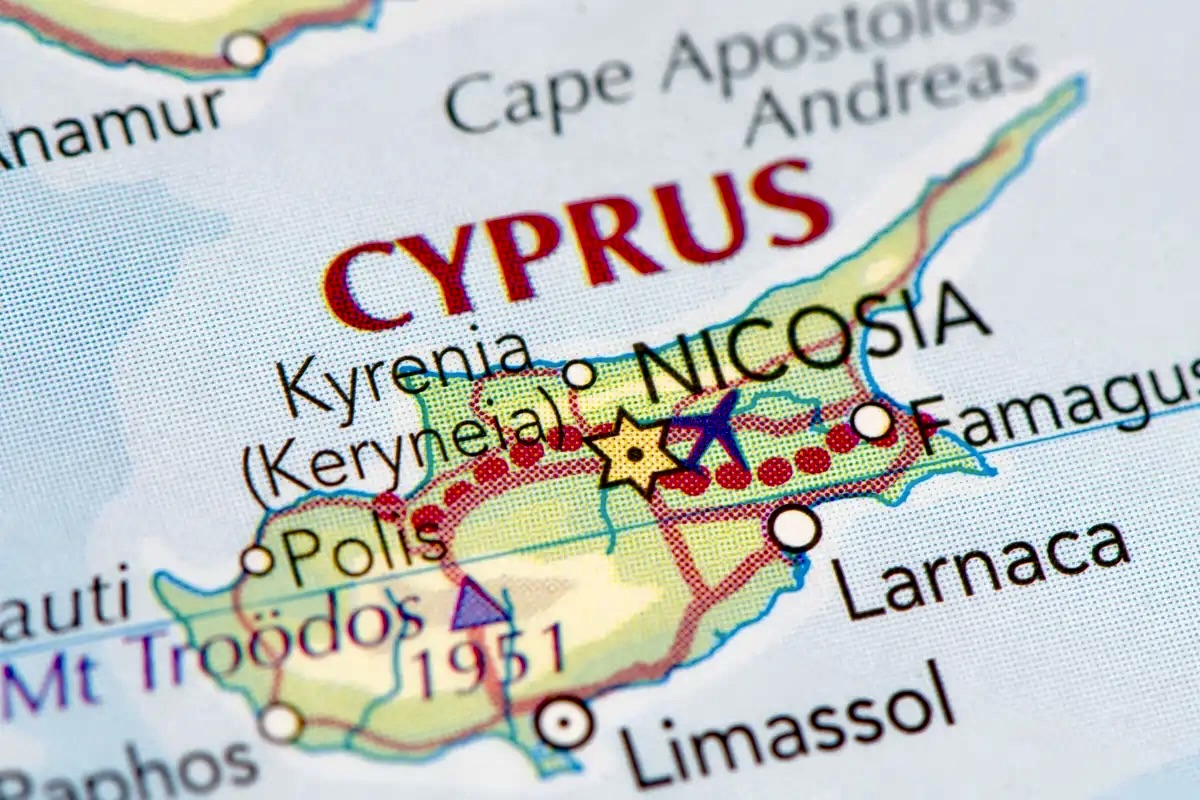
NICOSIA (Realist English). Cyprus, divided since 1974 into Greek and Turkish parts, remains one of the most militarised regions in the world.
In 2026, amid the war between the US and Israel against Iran and the worsening of Greek‑Turkish relations, the military presence on the island has reached a critical point.
Both sides are building up their forces: the Greek National Guard is modernising with the support of Israel, France and the United States, while Turkish Northern Cyprus has become a forward base for the Ankara army.
Greek Cypriot Armed Forces (National Guard)
Key statistics
The Cypriot National Guard (Greek: Εθνική Φρουρά) is the combined military force of the Republic of Cyprus, consisting of land, air, naval and special forces. Key figures as of 2026:
- Active personnel: 12,000 service members.
- Reserve: 75,000 well‑integrated into the armed forces structure.
- Paramilitary formations: 750 personnel.
- Greek contingent (ELDYK): 950 troops deployed on the island, formally outside the National Guard and directly subordinate to the Greek command.
- Procurement budget: €176.8 million in 2026; €180 million in 2027; €175 million in 2028.
- Defence spending (total budget approx. $350 million in 2023): 1.8% of GDP (2023).
Equipment and modernisation
The National Guard is actively re‑equipping, moving away from Soviet‑era equipment towards Western systems.
Aviation (Cyprus Air Forces):
- Helicopters: 6 H145M light multi‑role helicopters acquired from Airbus Helicopters (contract ~€140 million). They will replace obsolete Russian Mi‑35Ps, which were sold to Serbia because they could no longer be maintained under EU sanctions.
Greek aviation deployed to Cyprus:
- As part of an air defence reinforcement, 4 F‑16V Block 72 fighters were deployed to Andreas Papandreou air base in Paphos (2 March 2026). This was a response to an Iranian drone attack on the British Akrotiri base.
Navy:
- Having abandoned the Russian‑built Tarantul‑class missile boats, Cyprus is focusing on coast guard vessels, anti‑submarine and search‑and‑rescue ships.
Greek frigates in Cypriot territorial waters:
- Kimon (Belharra‑class FDI HN): The most modern ship in the Greek fleet. Equipped with SEAFIRE radar, ASTER 30 surface‑to‑air missiles (long‑range air defence). Also carries Exocet MM40 Block 3c anti‑ship missiles and MU90 torpedoes. Protects the southern coast and the Vassilikos energy complex.
- Psara (Kimon class): Equipped with the domestically built Kentavros anti‑drone system.
External support
Cyprus and Greece are actively cooperating with the United States, Israel, France and other EU countries. The Greece–Cyprus–Israel “triangle” established in 2026 involves joint military exercises and security coordination.
Turkish Cypriot (TRNC) Armed Forces and the Turkish contingent
Key statistics
In the northern part of Cyprus, de facto controlled by the Turkish Republic of Northern Cyprus, military power consists of a Turkish expeditionary corps augmented by local security forces.
- Turkish military contingent: Between 35,000 and 40,000 troops. Sources variously cite 35,000 or more than 40,000.
- TRNC Security Forces Command (Güvenlik Kuvvetleri Komutanlığı): A small army (estimates range from 4,000 to 15,000 personnel, based on data from 2005–2007), employed for internal tasks and supporting Turkish forces.
Equipment and modernisation
Turkey substantially strengthened its military potential on the island in 2026.
- Fighters (latest deployment, March–April 2026):
- 6 F‑16C/D fighters (various versions: Block 30/40/50) deployed to Geçitkale (Tymbou) and Ercan airfields.
- This is the first combat deployment of Turkish fighters on the island (a “phased measure to protect northern Cypriots”). The decision was taken against the backdrop of the war with Iran, but is perceived as a response to the Greek military presence.
- Air defence systems (latest deployment, April 2026):
- HİSAR‑A — Turkey’s newest short‑range air defence system — deployed in the northern part of the island to protect airspace from Iranian and Greek threats.
- Drones and artillery:
- Long‑standing presence of Bayraktar TB2 and Bayraktar Akıncı reconnaissance‑strike drones.
- Heavy armour: 200 tanks, about 500 armoured personnel carriers, between 200 and 250 self‑propelled artillery pieces.
Comparative analysis
| Parameter | Greek Cyprus (Republic of Cyprus) | Turkish Cyprus (TRNC + Turkish contingent) |
| Active standing army | ~12,000 (National Guard) + 950 ELDYK | ~35,000–40,000 (Turkish troops) + up to 15,000 local forces |
| Reserves | 75,000 | ~10,000 (local forces) |
| Fighters on the island | 4 F‑16V (Greek, deployed 2026) | 6 F‑16C/D (Turkish, deployed 2026) |
| Own aviation | 6 H145M (acquired, replacing Mi‑35Ps) | No own aviation |
| Own navy | Mostly coast guard vessels | TRNC coast guard |
| Allied naval presence | Greek frigates Kimon and Psara | — |
| Air defence | Patriot on Karpathos (Greece), ASTER 30 on Kimon | HİSAR‑A (Turkey) |
| Armour | Outdated, undergoing modernisation | 200 tanks, ~500 APCs, 200–250 SPGs |
| Drones | None in National Guard inventory | Bayraktar TB2, Bayraktar Akıncı |
| Procurement budget (2026) | €176.8 million | Funded directly by Turkey |
| External guarantors/allies | Cyprus, Greece, France, US, Israel | Turkey (recognised only by Ankara) |
The conclusion is clear: the Turkish grouping vastly outnumbers the Greek side in terms of personnel and heavy weaponry. Greek Cyprus relies on quality and technological superiority, counting on its allies (especially Greece), while the Turkish camp relies on numerical dominance and close integration with the Turkish armed forces.
Expert opinions: sharpening triangle
Events in March 2026 demonstrated the growing militarisation of the region, when the deployment of six Turkish F‑16s to the north coincided with the arrival of Greek F‑16s in the south, supported by frigates and the French aircraft carrier Charles de Gaulle.
Angelos Syrigos, professor of international law at Panteion University and a New Democracy MP, called the Turkish fighter deployment a political rather than a military move. “For Turkey, six F‑16s change nothing; Cyprus is on its doorstep. This was done exclusively for domestic consumption,” he stressed. At the same time, he noted the lack of a strong Turkish reaction to the presence of Greek F‑16s at Paphos: “This hasn’t happened in the last 66 years.” The professor linked Turkey’s restraint to the general instability in the region caused by the war in Iran, which prevents Ankara from opening a “second front.”
Greek sources interpret the deployment of Turkish F‑16s as direct military signalling — Ankara has moved beyond deterrent rhetoric to actually deploying strike aircraft in the Cypriot theatre. On the other hand, Turkish officials (e.g., ruling party spokesman Ömer Çelik) describe these measures as “purely defensive,” stressing that they are “not directed against anyone.”
Turkish experts note that the deployment may be aimed at protecting Turkish assets in northern Cyprus rather than at a genuine deterrent against the Republic of Cyprus.
At the same time, independent analysts highlight the risk: two NATO members (Greece and Turkey) have reinforced opposite sides of the same divided (non‑NATO) island, with no integrated air traffic management system, shared radars or unified command structure. This increases the risk of an accidental incident, even if neither side is seeking a conflict.
Finally, from the Turkish Cypriot perspective: newly elected leader of the puppet TRNC, Tufan Erhürman, warned that the military build‑up in the south risks turning the whole island into a potential target and damaging the tourism industry. He called the Greek Cypriot military alliances “an unrealistic attempt to create a military counterweight to Turkey.” Turkish political scientists, for their part, accuse Greek Cyprus of aggressive and hostile policies that provoke militarisation.