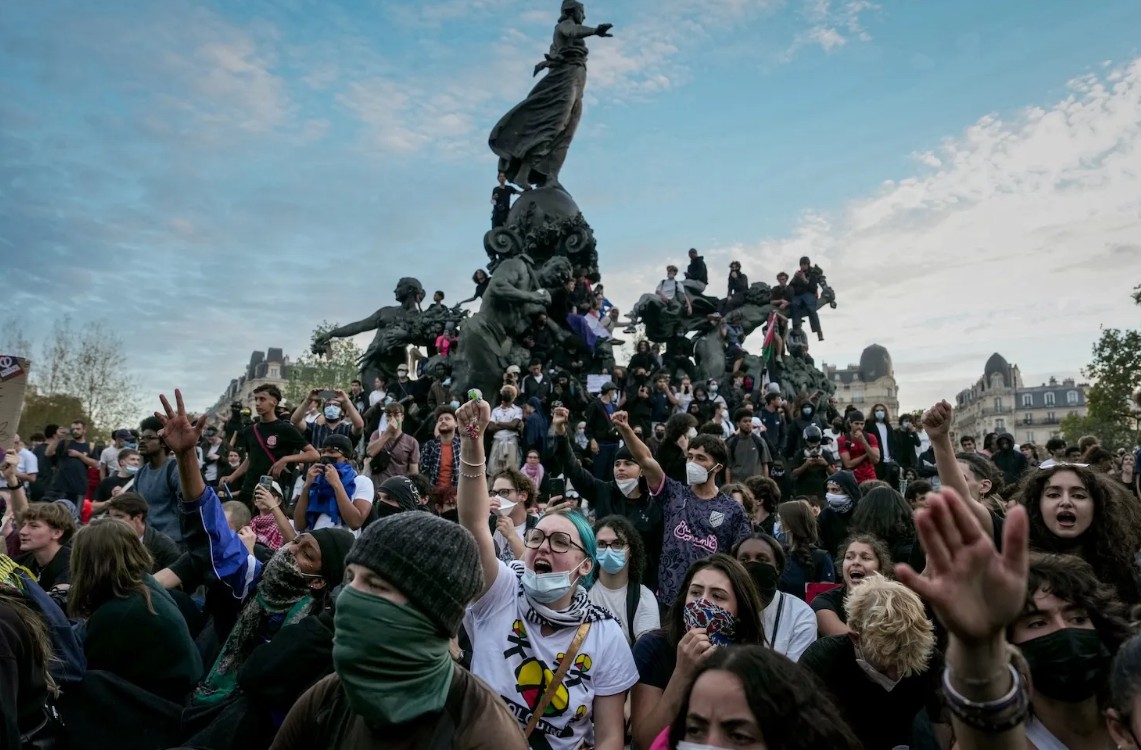
PARIS (Realist English). On 5 November, France experienced its largest day of protests since the autumn movement began. According to the Interior Ministry, about 600,000 people took part in actions across the country. The CGT union, one of the largest in the country, claimed 1.6 million participants, including 350,000 in Paris. These figures exceed those of previous mobilisations: 550,000 on 17 October, 410,000 on 24 October and 320,000 on 31 October.
From student demands to a nationwide movement
The protest movement began in mid-September 2026 with student actions demanding better conditions in schools and increased funding for education. Gradually, workers, pensioners and the Yellow Vests joined them, and demands expanded to higher wages, pensions and a lower cost of living. In a joint statement, the unions stressed: “Fuel, food, rent, gas, electricity… everything is rising except wages and pensions.”
Violence and unprecedented security measures
Although most demonstrations were peaceful, clashes occurred in a number of cities. In Lyon, police used tear gas; in Toulouse and Lille, schools were set on fire. According to the Interior Ministry, during the unrest 448 people were detained, 53 police officers were injured, and 86 arson attacks were recorded. The authorities deployed about 70,000 police officers and gendarmes, supported by armoured vehicles, drones and helicopters. Interior Minister Laurent Nuñez promised an “extremely firm response” to excesses.
Political background: Macron before the elections
The protests became a serious challenge for Macron’s government five months before the presidential elections. France is mired in debt approaching 120% of GDP, and unions warn of a risk of recession. The government is seeking to “get the river back into its bed” and conduct the campaign in “maximally calm conditions,” but the opposition, including the far-right Marine Le Pen, is gaining support amid discontent over the cost of living. Prime Minister Sébastien Lecornu announced a “social conference” with unions and employers on 9 November.
The current mobilisation is not just another union action but an indicator of a deep crisis of confidence in the authorities. The movement, which began with problems at a single school, has grown into a nationwide protest against economic policy that critics say protects the interests of the wealthy.
For Macron, this is a test of his ability to keep control of the streets while maintaining budget manageability. The key question is whether the authorities will manage to avoid a repeat of the October unrest and whether this wave will turn into a sustained campaign capable of influencing the outcome of the 2027 elections.