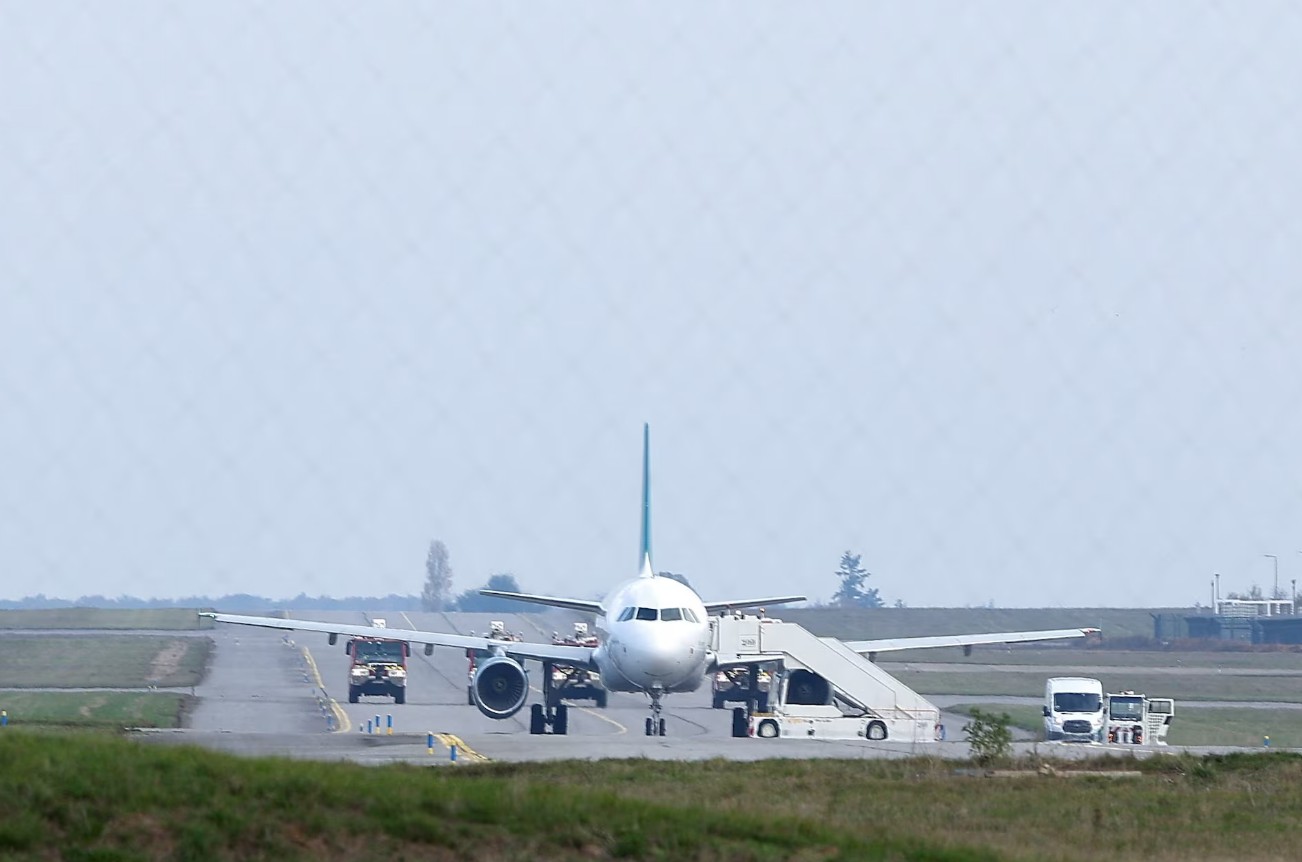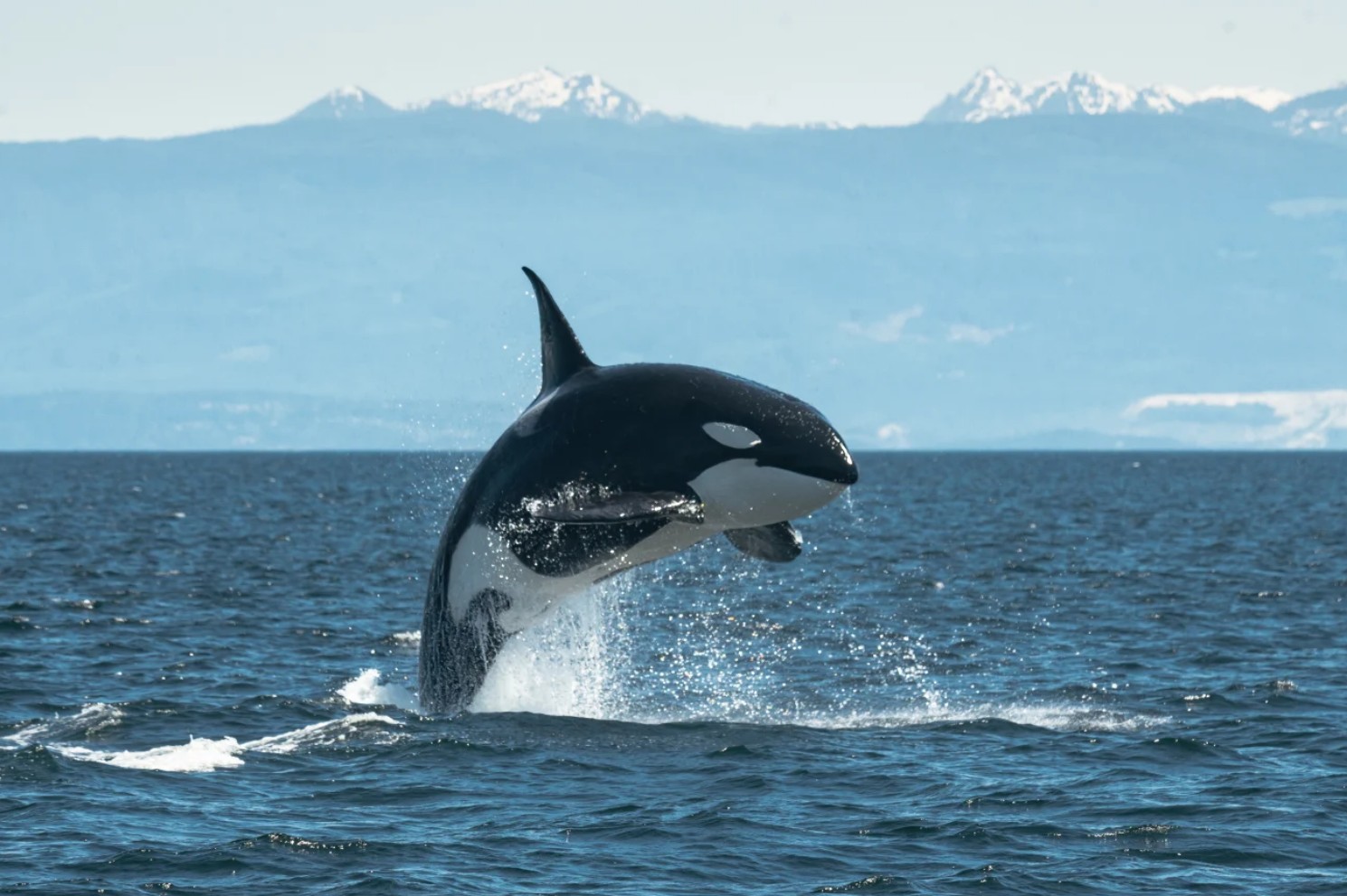
SEATTLE (Realist English). The population of southern resident killer whales (Orcinus orca ater), consisting of three pods, remains one of the most vulnerable marine populations in the world. As of December 2025, there were 76 individuals in the wild. Shipping and underwater noise are active threats to their survival, as killer whales use clicks and echolocation to hunt and navigate the ocean.
Scale of the problem: decibels on the edge of survival
Noise from a typical modern vessel can raise underwater sound levels by 12–17 decibels at frequencies below natural background noise, which is extremely damaging to killer whales. Because the decibel scale is nonlinear, a 10 dB increase means a tenfold increase in sound intensity.
Research shows that the probability of successful hunting by killer whales drops by 12.5% for each additional decibel of maximum noise, and for females the probability of pursuing prey falls by 58%. “Noise is a controllable threat that exacerbates the Chinook shortage. More fish won’t help if the whales can’t ‘hear’ it,” explains researcher Ruth Joy of Simon Fraser University.
OrcaHello: round-the-clock listening to the ocean
One of the most advanced solutions has been the OrcaHello platform, developed at a 2019 hackathon and since expanded to seven locations. The system uses a network of underwater microphones (hydrophones) from the Orcasound project, which stream audio in real time. A trained machine learning model recognizes the characteristic calls of southern resident killer whales specifically, filtering out false positives.
After expert confirmation, the signal is automatically sent to ferry operators, ports and response teams. The Port of Seattle and Washington State Ferries use these alerts to coordinate vessel speed reductions and pause noisy construction work, such as pile driving, when whales are nearby.
Since launch, positive alerts have been published on more than 150 days, and in 2026 alone, southern resident killer whale calls were recorded on 19 separate days.
HALLO and SPARROW: from detection to prediction
The HALLO (Humans and Algorithms Listening for Orcas) project, led by Simon Fraser University, received almost $1 million in funding from the Digital Research Alliance of Canada. The system integrates acoustic and visual data, vessel tracking and citizen scientist reports to not only determine the current location of the J, K and L pods but also predict their movement several hours ahead.
“We are exploring the possibility of dynamic speed reduction, so that real-time whale detection triggers vessel slowdowns exactly when and where the whales are present, rather than on fixed schedules,” explains Ruth Joy. Currently, the Port of Vancouver coordinates voluntary static slowdowns from June to November, but slowing down can increase voyage time beyond an eight-hour pilot shift, requiring a second specialist.
In parallel, Microsoft AI for Good Lab and SMRU Consulting developed the SPARROW system, which uses hydrophones and edge AI to detect whales in real time and send signals.
At the heart of the project is the Communication Acoustics Buoy (CAB), a solar-powered floating platform with hydrophones that listens to the ocean around the clock. AI classifies sounds, automatically alerting mariners to the presence of endangered species. It is estimated that slowing vessels in the presence of whales reduces underwater noise by up to 50%.
Whale-E: AI-powered thermal camera
The Quiet Sound program installed an AI-powered thermal camera nicknamed Whale-E on a Coast Guard radar tower at the entrance to Puget Sound.
Unlike hydrophones, which need the whale to make a sound, the camera detects whales by the heat of their blow at a distance, including at night and in bad weather. “From the first day we installed it — we finished around 5–6 p.m. — by 8 p.m. we already had our first recording of a whale in the area,” said Quiet Sound program manager Gonzalo Banda-Cruz. Mariners can slow down or safely change course, reducing engine noise.
AI does not solve the noise problem as such, but it changes the game in protecting rare whales: it turns monitoring from episodic and expensive into continuous and scalable. The key advantage of these systems is not just detection but timeliness: the alert arrives quickly enough for a vessel to slow down or change course, and for construction to pause.
However, questions of scale and mandatory application remain. Most measures are still voluntary, and dynamic slowdowns are being tested only in pilot mode. If AI detection is integrated into mandatory shipping rules — along with expanded speed restriction zones and vessel exclusion areas — southern resident killer whales will have a real chance of recovery. Otherwise, the technology will remain a tool that documents the problem but does not eliminate its cause.