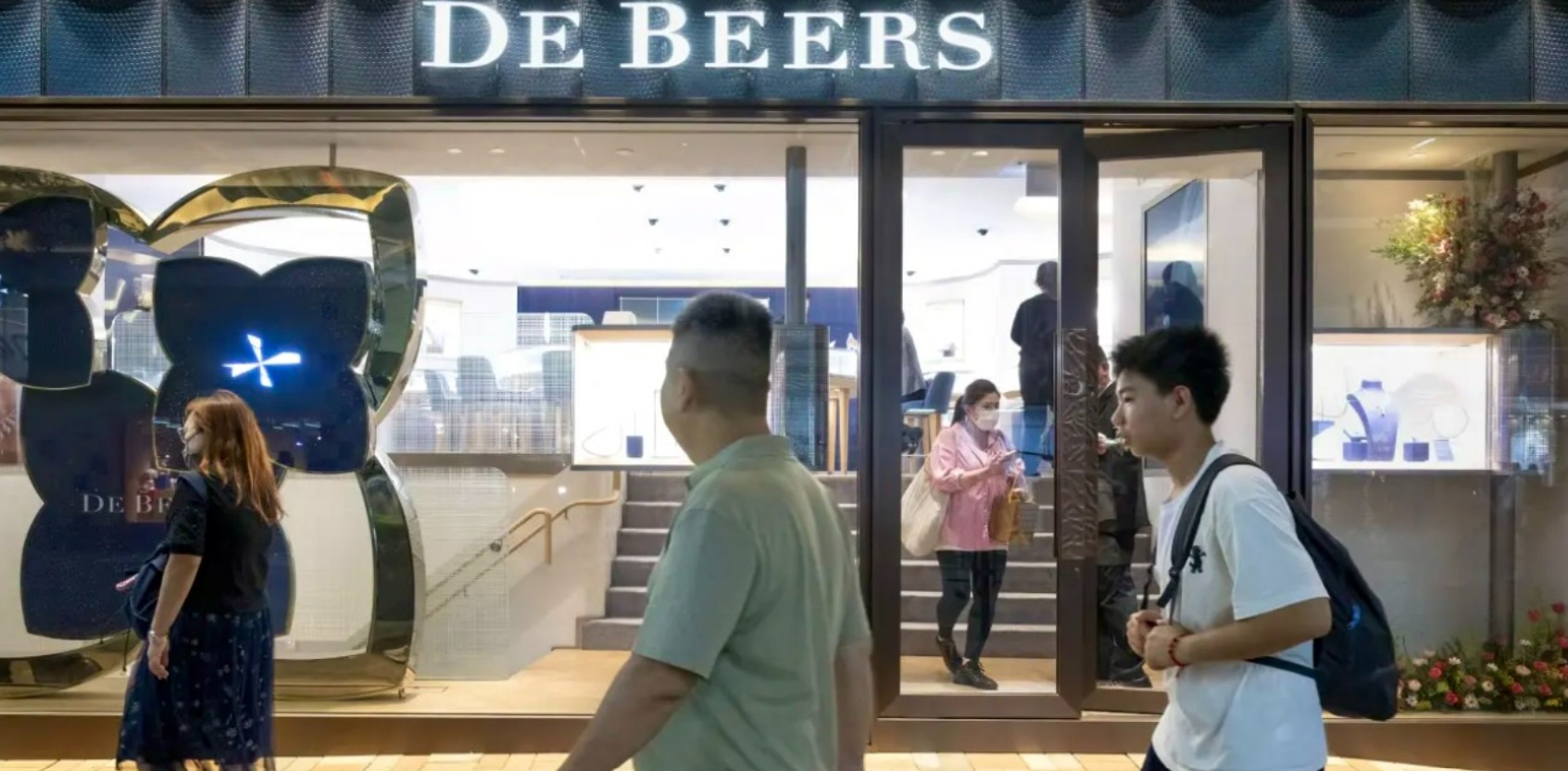
LONDON (Realist English). De Beers, facing the most severe crisis in its nearly 140-year history, is betting on consumer demand for authenticity.
The company has closed its own lab-grown diamond brand Lightbox, cut production, suspended operations at the Venetia mine in South Africa, and refocused marketing on “real” stones — natural, rare, with a history.
The bet is that consumers are tired of synthetics.
The Essence of the Strategy: “Authentic Individuality” vs. “The Same but Cheaper”
De Beers CEO Al Cook formulated it with utmost clarity: “We closed Lightbox because we do not believe that lab-grown diamond jewelry will generate significant profit.”
According to him, synthetic diamonds make sense in technology — heat transfer, quantum computing — but not in the jewelry showcase. De Beers, following the example of Chinese manufacturers, is refocusing synthetic production toward industrial applications.
Natural diamonds, by contrast, are positioned as a good that cannot be reproduced: “No two natural diamonds are alike. That is the driver.” Cook compares natural diamonds to gold, emphasizing their potential value as an asset, not just as decoration.
The Numbers That Explain the Pivot: Price Collapse and Trust Collapse
The strategy is a response to a structural shift the industry long refused to acknowledge. De Beers’ average realized price for rough diamonds in the first half of 2026 fell to $105 per carat — down 32% year-on-year and below the pandemic year of 2020.
The company recorded a cash loss of $113 million for the half-year. Anglo American, De Beers’ owner, has written down the asset’s value three times in three years and is now trying to sell it.
The admission came late. “In hindsight, we probably would have wanted to act more aggressively in response to the signals,” admitted Anglo American CEO Duncan Wanblad, adding that the industry mistakenly expected a rapid recovery, as after previous downturns.
The Market Has Split: Lab-Grown Took Volume, Natural Kept Price
The gap between the two segments has become glaring. In the US, the largest consumer market, lab-grown diamonds accounted for 25% of volume and 18% of the value of diamond jewelry sold from January to May 2026. But in engagement rings — the key category — synthetics already took 57% by unit count and 30% by value, versus 10% and 9% respectively in 2020.
Price dynamics explain this shift. The average retail price of a one-carat lab-grown diamond fell 79% — to $768 — from January 2020 to May 2026. A comparable natural diamond fell in price by only 24%, to $4,553, but solely due to the overall drop in demand.
Tenoris analyst Edahn Golan describes this as a “migration to lab-grown stones” among consumers aged 25–35, for whom the marketing formula of synthetics — “the same thing, but cheaper” — proved irresistible when buying an engagement ring.
Betting on Authenticity: Marketing Instead of Discounts
De Beers’ answer is not a price war. The company returned to global category marketing in 2024 after a decade of underinvestment in advertising — and Cook acknowledges this. Campaigns are built around “authentic individuality”: the natural diamond as a physical, rare, irreproducible object, standing against the “artificial” in an era when consumers are tired of synthetics — from plant-based meat to NFTs.
The industry has picked up this logic. The Natural Diamond Council is working to create a “quality mark” for natural diamonds that will allow consumers to distinguish them from lab-grown. In April, the first World Diamond Day was held, and in 2025 producers signed the Luanda Agreement on joint financing of global marketing.
China: A Market That Must Be Won Back
A separate direction is China, where demand remains weak amid the real estate crisis and falling marriage rates. In September, the Declaration on Natural Diamonds and Sustainable Development was signed in Beijing, aimed at strengthening ties between African producers and the Chinese market.
Cook outlined three tasks: work at the government level, “reinforcing value” for the consumer, and creating designs that the Chinese buyer will love.
Supply Exceeds Demand — and This Works in Favor of the Bet
Paradoxically, the supply crisis plays into De Beers’ strategy. Global rough diamond production is falling by more than 10%: old mines are closing. De Beers suspended Venetia for two years and postponed the expansion of Gahcho Kué in Canada. About a fifth of the current supply of natural diamonds is “leaving the market within the next 12 months,” and “few” operations will return, according to Wanblad.
Analyst Paul Zimnisky notes that his natural diamond index rose 4% over six months, while its synthetic analog fell 7%. But he also warns: the price recovery is driven more by supply reduction than by sustainable demand growth.
A Pivot or a Reprieve?
Within the industry there is no unity in assessing De Beers’ bet. Formally, the company demonstrates consistency: exiting synthetics, focusing on natural stones, cutting costs, selling non-core assets. Losses, however, continue, and the deal to sell De Beers to a consortium led by former company head Gareth Penny is valued at about $1 billion — a sum incomparable to the asset’s former value.
Skeptics point out that the bet on “authenticity” is not a strategy but a retreat. The natural diamond is becoming a luxury good for the upper segment, while the mass market goes to synthetics. “Natural diamonds are going to the luxury market; lab-grown will probably take everything else,” Golan formulates.
De Beers is making not so much a business bet as an ideological one: the company sells not a stone, but a difference.Marketing of the “real” may work — consumer trends are indeed shifting from artificial to authentic. But the bet on authenticity does not eliminate the structural split: the upper segment will retain value, the lower will go to synthetics. The question is whether the luxury segment is sufficient to keep the company afloat while Anglo American seeks a buyer. So far, the numbers — loss, writedown, price decline — speak louder than the campaigns.