

TEHRAN (Realist English). Escalation in the Persian Gulf has reached a new dangerous level. Over the past 24 hours, Iran has launched coordinated attacks on two US destroyers in the Strait of Hormuz and on the oil infrastructure of the United Arab Emirates.
The United States struck positions of the Islamic Revolutionary Guard Corps (IRGC), destroying seven speedboats. Global oil prices made a sharp jump, and US President Donald Trump threatened to completely destroy Iran.
Chronicle of the clash over the past 24 hours
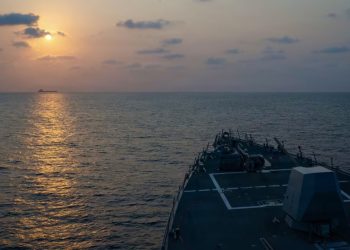
The incident began with an attempt by two US destroyers to break through the Strait of Hormuz – the world’s main artery for oil trade. Iranian military opened warning fire and declared the passage blocked for enemy vessels.
Versions of the parties:
- Iranian news agency Fars reported a precise hit by two missiles on a US ship that ignored warnings while attempting to transit the strait.
- US Central Command (CENTCOM) completely denied the hit. «No US Navy vessel has been damaged,» the Pentagon said, adding that US forces continue to maintain a naval blockade of Iranian ports.
Despite the denial, Trump ordered the destruction of Iranian speedboats. According to Fox News, seven IRGC boats were destroyed in the retaliatory action.
Attack on the UAE
Simultaneously with the conflict at sea, Iran launched a combined missile and drone strike on the United Arab Emirates:
- Fujairah: A large fire broke out near the oil industrial complex in the emirate of Fujairah after an Iranian drone strike. Three Indian citizens were injured.
- Missile interception: The UAE Ministry of Defense reported intercepting 19 Iranian missiles and drones. Four cruise missiles were launched at the country: three were shot down by fighter jets over the sea, the fourth fell into the water.
Official Tehran denied involvement in the Fujairah fire, stating that it «had no plans to strike the UAE,» and accused the US military of setting fire to the oil zone, calling it a consequence of «Pentagon adventurism.»
Reaction and rhetoric
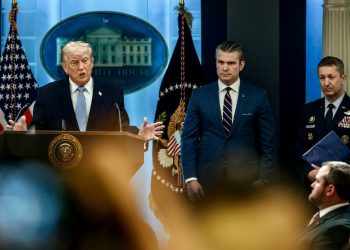
The US President made an unprecedentedly harsh statement. In an interview with Fox News, he promised that the Islamic Republic would be «wiped off the face of the earth» in the event of an attack on US ships escorting commercial vessels through the Strait of Hormuz. When asked about the status of the ceasefire, Trump avoided a direct answer: «We’ll let you know.»
Figures and economics
The oil market reacted instantly.
Price dynamics, May 4–5, 2026:
| Indicator | May 4 (evening) | May 5 (morning) | Change |
| Brent (July) | $115 (+8.48%) | $113.76 | -0.6% |
| WTI (June) | $106.42 (+4.4%) | $104.4 | -1.9% |
Collapse in Iran: As Bloomberg reports, due to the inability to export crude (tankers are blocked by the US Navy), Tehran is forced to cut production as storage facilities fill up rapidly. This has led to a sharp rise in gasoline prices inside the country.
According to expert Sergey Balmasov, the end of active hostilities does not mean the end of the confrontation. The conflict is moving into a phase of economic strangulation of Iran and undermining the regime from within.
Geopolitical landscape: Russia and China
The crisis has revealed a divergence in the positions of Iran’s two key allies.
- Russia is taking a maximalist hardline stance in support of Tehran. Russian President Vladimir Putin received Iranian Foreign Minister Abbas Araghchi in St. Petersburg, stating his readiness to help restore stability and counter American protectionism.
- China is more cautious, avoiding sharp public statements and preferring the role of a behind-the-scenes mediator, using its economic influence on Tehran to seek a diplomatic solution.
Expert opinions
The events of May 4 were not a random incident, but a logical outcome of stalled negotiations and mounting military fatigue. Iran is demonstrating its ability to respond asymmetrically through proxy forces (the attack on the UAE). The United States, even without confirmation of direct hits on its ships, uses any threat to increase pressure. The $115 per barrel Brent price is just one of the consequences of the prolonged confrontation.
Economist Jeffrey Sachs believes the US does not have sufficient naval power to fully blockade Iran, calling such actions «piracy». Moreover, he predicts the decline of US military dominance: «One of the lessons of the war against Iran is that US military dominance in the world is no longer significant».
Retired Admiral James Stavridis, former Supreme Allied Commander of NATO in Europe, holds the opposite view, calling the blockade a «game of chance» that could potentially «pay off.» According to his calculations, its implementation would require at least two aircraft carriers, more than a dozen destroyers, and the help of regional allies.
However, he warns that Iran still has «aces up its sleeve»: they could strike at shipping, infrastructure, use cyber weapons, or carry out terrorist attacks on US soil.
Political scientist Robert Pape of the University of Chicago, known for his «escalation trap» theory, believes Iran is consistently gaining the upper hand: «Iran is simply outplaying us in great power politics… almost every day».
In his view, Tehran’s main strategy is to drag out the conflict at least until the November US elections in order to inflict maximum damage on Trump’s presidency, and Tehran is not interested in a «diplomatic exit» that would allow the White House occupant to save face.